
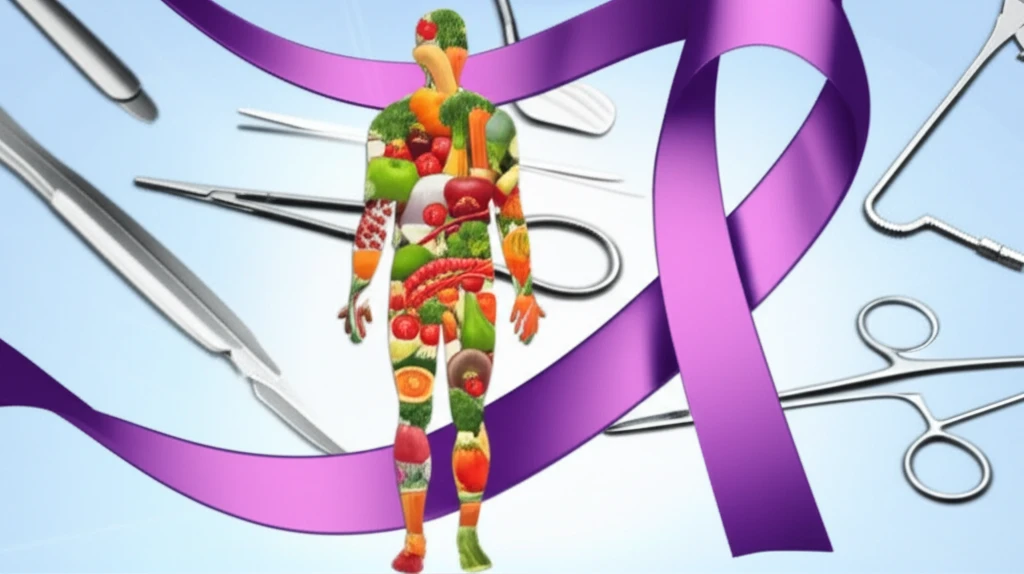
Surreal illustration balancing nutrition and medical intervention in pancreatic cancer treatment.

Boosting Immunity in Pancreatic Cancer Patients: Can Diet Make a Difference?

"Explore how targeted nutrition, including immune-enhancing diets, can help counteract the negative effects of surgery and malnutrition in pancreatic cancer treatment."


Pancreatic cancer surgery is a highly invasive procedure often leading to complications due to extensive tissue damage and malnutrition, which can weaken the immune system, making patients more vulnerable to infections. Addressing these immune system deficiencies through targeted nutrition strategies, such as immunonutrition, is emerging as a promising approach to improve patient outcomes after surgery.

Immunonutrition involves using specialized diets enriched with specific nutrients that support and enhance immune function. While the potential benefits are recognized, the precise mechanisms by which these diets work to regulate the immune system, particularly in the context of pancreatic cancer and surgery, remain an area of active research.

A study investigated the effects of surgical trauma and immunonutrition on key components of the immune system. The research focused on how these factors influence apoptosis—a process of programmed cell death—in lymphocytes (a type of white blood cell) and the overall immune response in patients undergoing surgery for pancreatic cancer.

How Immunonutrition Impacts the Immune System After Pancreatic Cancer Surgery

Surreal illustration balancing nutrition and medical intervention in pancreatic cancer treatment.

The study closely examined how surgical trauma and specific nutritional interventions affected the delicate balance of apoptotic signaling pathways in lymphocytes. These pathways are crucial for regulating immune responses, and any disruption can significantly impact a patient's susceptibility to infections and overall recovery. By understanding these changes, healthcare professionals can better tailor nutritional support to optimize immune function.

Researchers assessed the expression of specific proteins—TNFRI/CD120a, Fas/CD95, and Bcl-2—in lymphocytes. These proteins play key roles in the apoptotic process. Measurements were taken before surgery and at various points afterward (days 1, 3, and 7) to track changes in their levels. Patients were randomly assigned to receive either a standard enteral diet or an immune-enhancing enteral diet before surgery.

  • TNFRI/CD120a and Fas/CD95: These proteins promote apoptosis (cell death). The study found that the percentage of lymphocytes expressing these proteins was significantly higher in pancreatic cancer patients compared to a control group, both before and after surgery.
  • Bcl-2: This protein inhibits apoptosis, helping cells survive. Researchers observed a significant decrease in Bcl-2-positive lymphocytes after surgery, indicating increased cell death.
  • Immunonutrition Effects: Preoperative immunonutrition significantly increased the percentage of CD95 and TNFRI positive lymphocytes after surgery, suggesting a potential boost in pro-apoptotic signaling.
The findings suggest that immunonutrition can modulate apoptotic signaling pathways in malnourished patients undergoing pancreatic cancer surgery. This modulation could help counteract the immune suppression often seen after surgery, potentially improving patient outcomes. However, the study also points to the need for careful consideration of the potential pro-apoptotic effects, ensuring that interventions are appropriately targeted to maximize benefits without unintended consequences.

Looking Ahead: Optimizing Nutritional Strategies for Pancreatic Cancer Patients

This research sheds light on the intricate relationship between surgical trauma, malnutrition, and immune function in pancreatic cancer patients. The study highlights the potential of immunonutrition to influence apoptotic signaling pathways and modulate the immune response after surgery.

While the findings are promising, questions remain about the precise anti-apoptotic effects of immunonutrition in this specific patient population. The need for further research is clear. Future studies should explore how different immunonutrients affect apoptotic signaling proteins, allowing for the development of more refined and effective nutritional strategies.

By continuing to investigate and optimize nutritional interventions, healthcare professionals can strive to improve immune function, reduce complications, and ultimately enhance the quality of life for individuals undergoing treatment for pancreatic cancer. A personalized approach to nutrition, tailored to the specific needs and immune status of each patient, may hold the key to unlocking even greater benefits.

About this Article -

This article was crafted using a human-AI hybrid and collaborative approach. AI assisted our team with initial drafting, research insights, identifying key questions, and image generation. Our human editors guided topic selection, defined the angle, structured the content, ensured factual accuracy and relevance, refined the tone, and conducted thorough editing to deliver helpful, high-quality information.See our About page for more information.

This article is based on research published under:

DOI-LINK: 10.5114/pg.2011.22800, Alternate LINK

Title: The Up-Regulation Of Pro-Apoptotic Signalling Systems In Peripheral Blood Lymphocytes Of Malnourished Patients With Pancreatic Cancer After Preoperative Enteral Immune-Enhancing Diet ( Immunonutrition )

Subject: Gastroenterology

Journal: Gastroenterology Review

Publisher: Termedia Sp. z.o.o.

Authors: Robert Słotwiński, Waldemar L. Olszewski, Maciej Słodkowski, Gustaw Lech, Marzanna Zaleska, Sylwia Kędziora, Sylwia M. Słotwińska

Published: 2011-01-01

Everything You Need To Know

1

What exactly is immunonutrition and why is it used?

Immunonutrition involves the use of specialized diets that are enriched with specific nutrients. These diets are designed to support and enhance immune function. This approach is particularly relevant for pancreatic cancer patients undergoing surgery who often experience malnutrition and weakened immune systems. The goal is to counteract the negative effects of surgery and improve patient outcomes by boosting the body's ability to fight infections and heal.

2

Why is the process of apoptosis important in this context?

The significance of apoptosis lies in its impact on the immune system's ability to function effectively, especially after pancreatic cancer surgery. Apoptosis is programmed cell death, and the balance of apoptotic signaling pathways in lymphocytes directly affects a patient's susceptibility to infections and their overall recovery. Specifically, the study examined the expression of proteins like TNFRI/CD120a, Fas/CD95, and Bcl-2, which regulate apoptosis. Understanding these changes allows healthcare professionals to tailor nutritional support, like immunonutrition, to optimize immune function.

3

Why did the researchers investigate TNFRI/CD120a, Fas/CD95, and Bcl-2?

The study investigated the proteins TNFRI/CD120a, Fas/CD95, and Bcl-2, because they are key regulators of apoptosis in lymphocytes. TNFRI/CD120a and Fas/CD95 promote cell death, while Bcl-2 inhibits it. The researchers measured the levels of these proteins before and after surgery in patients receiving either a standard enteral diet or an immune-enhancing enteral diet. The findings revealed how immunonutrition affects these pathways, potentially improving immune response post-surgery in patients with pancreatic cancer.

4

What impact did immunonutrition have on the study?

Immunonutrition, in the context of this research, showed a potential to modulate apoptotic signaling pathways in malnourished patients undergoing pancreatic cancer surgery. It increased the percentage of CD95 and TNFRI positive lymphocytes after surgery. This suggests a potential boost in pro-apoptotic signaling, which could help counteract the immune suppression often seen after surgery. However, the study also points to the need for careful consideration to maximize benefits without unintended consequences.

5

Why is malnutrition a significant problem for these patients?

Malnutrition is a critical issue in pancreatic cancer patients, especially those undergoing surgery, because it weakens the immune system and increases vulnerability to infections. Surgery itself causes significant tissue damage, further contributing to immune deficiencies. Immunonutrition addresses malnutrition by providing targeted nutritional support, which aims to enhance immune function. By improving the immune response, immunonutrition can lead to better recovery outcomes and overall health for these patients.

Newsletter Subscribe

Subscribe to get the latest articles and insights directly in your inbox.