
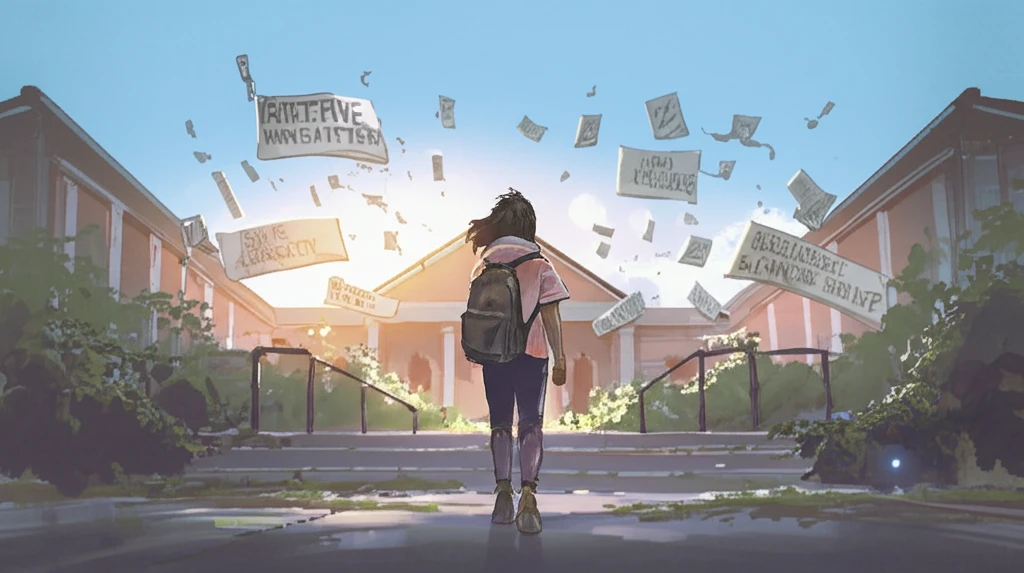
Boost Your Mood: The Power of Optimism for Student Veterans

"Discover how a positive outlook can improve mental health and academic success for veterans transitioning to college life."
Transitioning to college can be challenging, especially for student veterans who often face unique stressors. Balancing academic demands with past experiences requires a resilient mindset. Cultivating optimism can be a game-changer. Dispositional optimism, the belief that positive outcomes are more likely than negative ones, is linked to better mental health, stronger relationships, and increased overall well-being. For veterans navigating higher education, a hopeful outlook can significantly impact their success and quality of life.
Emerging research highlights the profound impact of optimism on mental health. Optimism reduces symptoms of depression and PTSD and enhances resilience, hope, and life satisfaction. These findings are particularly relevant for student veterans, who may be vulnerable to mental health challenges. Understanding and fostering optimism can be a powerful tool for promoting positive adjustment and overall wellness during their academic journey.
A recent study in Military Psychology emphasizes the importance of measuring and understanding dispositional optimism in student veterans. This research validates the use of the Life Orientation Test-Revised (LOT-R) as a reliable tool for assessing optimism levels. By using such tools, educators, clinicians, and researchers can better support veterans in higher education, helping them thrive both academically and personally.
Optimism Linked to Lower Stress and Depression
Research has consistently linked optimism with psychological well-being. Over time, the more optimistic students in a study were less stressed, less lonely, and less depressed than their pessimistic counterparts. Notably, these optimistic students also studied more, expecting that their grades were at least partly in their control, which became a self-fulfilling prophecy. For student veterans, this suggests that a positive outlook can translate directly into better academic engagement.
From Self-Help Advice to Teachable Skills
Optimism has moved from passive self-help advice into structured training programs. Mind Education programs, delivered through lectures on themes such as "The Power of Optimism," highlight hope and self-belief as important personal attributes of positive thinking. The widely read "Learned Optimism" offers additional advice on how to encourage optimistic behavior at school, at work, and in children. However, the research base for such training specifically among student veterans remains limited, so generalizations should be made cautiously.
Foundations of the Positive Thinking Movement
The modern optimism movement has deep roots in popular publishing. Norman Vincent Peale's "The Power of Positive Thinking" became an international bestseller with over five million copies in print, spreading the idea that a positive mindset could shape outcomes. Later scholarly work, such as "Learned Optimism," built on this foundation by offering practical techniques for changing how people think. Together, they established optimism as both a cultural ideal and a teachable mental skill.
Why Optimism Matters for Student Veterans
Optimism isn't just about seeing the glass half full; it's about actively expecting positive outcomes. This mindset can transform challenges into opportunities and setbacks into learning experiences. For student veterans, who may have faced significant adversity, maintaining optimism is crucial for adapting to college life and achieving their academic and personal goals. The benefits of optimism extend to various aspects of well-being:
- Improved Mental Health: Optimism reduces symptoms of depression and anxiety.
- Stronger Resilience: A positive outlook helps veterans bounce back from setbacks.
- Enhanced Relationships: Optimism fosters healthier social connections.
- Increased Life Satisfaction: Believing in a positive future boosts overall happiness.
Optimism Fuels Effort, Not Just Mood
Recent findings show that optimism's power lies in the actions it inspires. Importantly, the optimistic students in one study also studied more, because they expected their grade was at least partly in their control, and they acted accordingly. Their expectations became a self-fulfilling prophecy, a perfect example of how mindset drives behavior. For student veterans, this suggests optimism can support the consistent study habits needed to succeed on campus.
The Limits of a Positive Outlook
Optimism is not entirely a matter of choice. Approximately 25% of optimism is heritable, as shown in a 1993 twin study, which suggests a significant genetic component that individuals cannot simply think their way around. At the same time, pessimists expect negative outcomes even in ordinary situations and are less resilient when difficulties arise. These findings indicate that a purely motivational approach to optimism has real limits and must account for individual differences.
Optimists Versus Pessimists: A Tale of Two Outcomes
The contrast between optimistic and pessimistic students is striking. Over time, more optimistic students were less stressed, less lonely, and less depressed than their pessimistic counterparts, suggesting a strong link between optimism and psychological well-being. Optimists expect positive outcomes even in stressful situations and are more resilient, whereas pessimists expect negative outcomes and cope less effectively. For student veterans navigating the demands of campus life, these differences have direct implications for both mental health and academic performance.
The Path Forward: Fostering Optimism in Higher Education
By understanding the importance of optimism and implementing effective strategies, student veterans can enhance their well-being and academic success. Colleges and universities play a crucial role in supporting veterans by providing resources that promote mental health and positive thinking. Clinicians, educators, and researchers can use tools like the LOT-R to assess optimism levels and tailor interventions to meet the unique needs of this population. Encouraging optimism is an investment in the future of our veterans, helping them thrive in college and beyond.
Hope and Self-Belief at the Center
Experts point to hope and self-belief as the core personal attributes of a positive mindset. During a Mind Education lecture on the theme "The Power of Optimism," specialist Hyun Seok Park highlighted these qualities as important attributes of positive thinking. Such attributes can be deliberately cultivated, making optimism less of an inborn trait and more of an educational outcome.
Making Optimism a Campus Skill
The next frontier is teaching optimism as a practical skill rather than leaving it to chance. "Learned Optimism" provides additional advice on how to encourage optimistic behavior at school, at work, and in children, offering a template for structured programs. Mind Education initiatives likewise aim to introduce these practices into education institutions. Applying such training to student veterans could give them a durable tool for both academic and post-military life.
Beyond the Individual: Institutional Support
Sustained optimism requires environments that support it. Introducing mind education into education institutions creates an opportunity to address deep-seated issues and cultivates a culture of growth, resilience, and progressive thinking. Such systemic efforts matter because student veterans are a diverse group that brings a broad range of experiences, interests, and needs to campuses. No single program will fit everyone, so institutions must adapt optimism-building approaches to these varied realities.
Students First, Veterans Proud
The human side of this story is about identity and belonging. Student veterans are students first, with "veteran" as a proud part of their experience and identity, and while student athletes have the NCAA, student veterans have the SVA to build community. Everyone desires prosperity, and nobody associates with failure, sickness, or disaster, yet a positive outlook helps people pursue success. Optimism, in this light, is a personal resource that supports the transition from service to the classroom.