
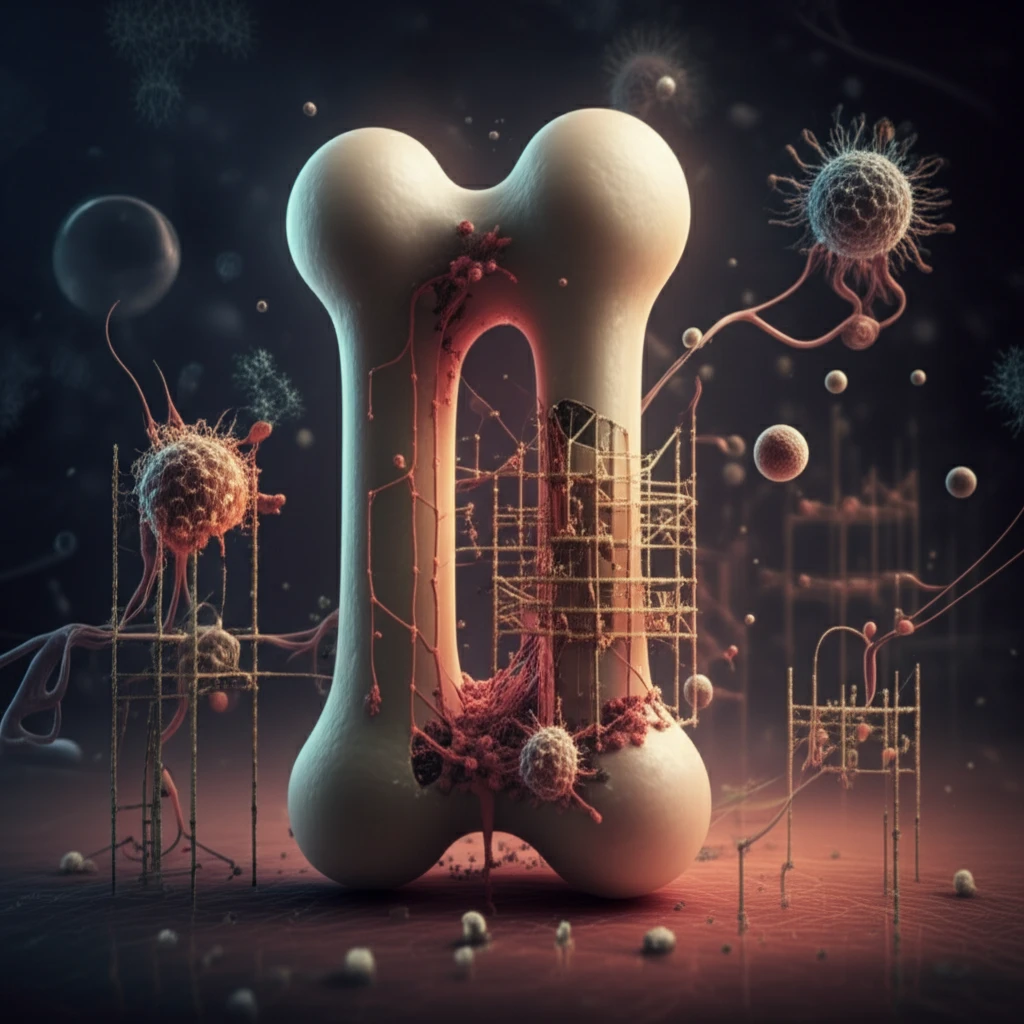
An artistic representation of an osteoblast cell, constructing a miniature bone structure, symbolizing bone tissue engineering and the promise of regenerative medicine.

Bone Engineering: A New Era for Healing and Health?

"From Scaffolds to Solutions: How Osteoblasts Are Revolutionizing Bone Repair and Tissue Engineering"


The human body is an incredible machine, constantly working to repair and rebuild itself. One of the most remarkable processes is bone regeneration, a complex interplay of cells, proteins, and biological processes. This is particularly crucial in a world where bone loss and fractures are increasingly common due to aging, injury, and disease. But what if we could accelerate and improve this natural ability? What if we could engineer solutions to rebuild bone, one cell at a time?

This vision is becoming a reality, thanks to the field of bone tissue engineering. At the heart of this groundbreaking science are osteoblasts, the specialized cells responsible for building new bone. By understanding how osteoblasts work and interact, scientists are developing innovative ways to repair and regenerate bone tissue, offering hope to millions suffering from bone-related ailments.

This article will explore the fascinating world of osteoblasts and their applications in bone tissue engineering. We'll look at how these cells function, the challenges faced, and the exciting future they hold for healing and health. From understanding bone formation to the latest advances in regenerative medicine, we'll discover how osteoblasts are paving the way for a new era of bone repair.

Unveiling Osteoblasts: The Bone-Building Architects

An artistic representation of an osteoblast cell, constructing a miniature bone structure, symbolizing bone tissue engineering and the promise of regenerative medicine.

Osteoblasts are the primary architects of bone tissue. These remarkable cells are derived from mesenchymal stem cells and are responsible for synthesizing and depositing the bone matrix, a complex structure that provides strength, flexibility, and support. The bone matrix is made up of collagen, minerals, and other organic components. As osteoblasts create this matrix, they eventually become encased within it, transforming into osteocytes—the mature bone cells that maintain the tissue.

The process of bone formation by osteoblasts, known as ossification, is tightly regulated by a variety of factors, including hormones, growth factors, and mechanical stimuli. When bone is damaged or needs to be remodeled, osteoblasts are activated to repair and rebuild the tissue. They achieve this by producing a protein-rich substance known as osteoid, which then undergoes mineralization to form the hard, dense structure of bone.

  • Location: Osteoblasts are found on the surface of bones, in areas of new bone formation.
  • Function: Osteoblasts are responsible for synthesizing and secreting the bone matrix.
  • Appearance: These cells are typically mononuclear, around 15-30 µm in size, with a spherical nucleus and abundant basophilic cytoplasm.
  • Key Components: The bone matrix contains collagen, non-collagenous proteins like osteopontin, and glycoproteins.
  • Differentiation: During differentiation, stages of cell maturation and differentiation are observed, from osteoprogenitors to osteocytes.
The remarkable capabilities of osteoblasts are at the forefront of regenerative medicine, providing the potential to repair skeletal defects and treat bone disorders. Researchers have been exploring various strategies to harness their bone-building power for clinical applications. As we delve further, we'll examine how these cells are being utilized to develop novel therapies that could transform the treatment of bone-related ailments.

The Future of Bone Engineering: Promising Avenues

As we look to the future, bone tissue engineering, guided by the science of osteoblasts, holds tremendous promise. Advancements in biomaterials, cell sourcing, and bioreactor technology are paving the way for more effective and personalized treatments. By continuing to unlock the secrets of bone formation and repair, scientists and medical professionals are working to improve the quality of life for millions, one bone at a time. This field is not just about fixing fractures; it's about building a healthier future.

About this Article -

This article was crafted using a human-AI hybrid and collaborative approach. AI assisted our team with initial drafting, research insights, identifying key questions, and image generation. Our human editors guided topic selection, defined the angle, structured the content, ensured factual accuracy and relevance, refined the tone, and conducted thorough editing to deliver helpful, high-quality information.See our About page for more information.

This article is based on research published under:

DOI-LINK: 10.2147/chc.s21845, Alternate LINK

Title: Osteoblasts And Their Applications In Bone Tissue Engineering

Subject: Cell Biology

Journal: Cell Health and Cytoskeleton

Publisher: Informa UK Limited

Authors: Sarah Cartmell, Rupani, Balint

Published: 2012-05-01

Everything You Need To Know

1

What are osteoblasts and why are they important in bone tissue engineering?

Osteoblasts are specialized cells derived from mesenchymal stem cells, and are the primary bone-building cells in the body. Their main function is to synthesize and deposit the bone matrix, a complex structure of collagen, minerals, and other organic components that provides strength and support. Osteoblasts are crucial in bone tissue engineering because understanding their function and interactions allows scientists to develop innovative ways to repair and regenerate bone tissue, offering hope for treating bone-related ailments. Without osteoblasts, the body would not be able to create new bone or repair damaged bone tissue.

2

How does the process of ossification, carried out by osteoblasts, actually work, and what factors regulate it?

Ossification is the process of bone formation carried out by osteoblasts. During ossification, osteoblasts produce a protein-rich substance called osteoid, which then undergoes mineralization to form the hard, dense structure of bone. This process is tightly regulated by various factors, including hormones, growth factors, and mechanical stimuli. When bone is damaged or needs to be remodeled, osteoblasts are activated to repair and rebuild the tissue. After secreting the matrix, osteoblasts become encased within the matrix and transform into osteocytes, the mature bone cells that maintain the tissue.

3

Where are osteoblasts typically found within the bone structure, and what are their key components?

Osteoblasts are located on the surface of bones, specifically in areas where new bone formation is actively occurring. Key components associated with osteoblasts include the bone matrix, which they synthesize. This matrix contains collagen, non-collagenous proteins like osteopontin, and glycoproteins. During their differentiation process, cells mature from osteoprogenitors into osteocytes. Their appearance is typically mononuclear, around 15-30 µm in size, with a spherical nucleus and abundant basophilic cytoplasm.

4

What are some of the current challenges in utilizing osteoblasts for bone tissue engineering, and how are researchers working to overcome them?

Currently, challenges in utilizing osteoblasts for bone tissue engineering revolve around sourcing enough cells, ensuring their proper differentiation, and creating suitable environments for them to function effectively within the body. Researchers are exploring advancements in biomaterials to create scaffolds that mimic the natural bone matrix, enhancing cell sourcing through stem cell technologies, and using bioreactor technology to optimize conditions for bone formation. By addressing these challenges, scientists aim to improve the effectiveness and personalization of bone tissue engineering treatments.

5

How might advancements in bone tissue engineering, specifically those involving osteoblasts, impact the future of healthcare and the treatment of bone-related conditions?

Advancements in bone tissue engineering, driven by the science of osteoblasts, have the potential to revolutionize the treatment of bone-related conditions. By harnessing the bone-building power of osteoblasts, scientists are developing novel therapies to repair skeletal defects and treat bone disorders such as osteoporosis, fractures, and non-union fractures. The future of healthcare could see more effective and personalized treatments using biomaterials, cell sourcing, and bioreactor technology to improve the quality of life for millions affected by bone-related ailments.

Newsletter Subscribe

Subscribe to get the latest articles and insights directly in your inbox.