
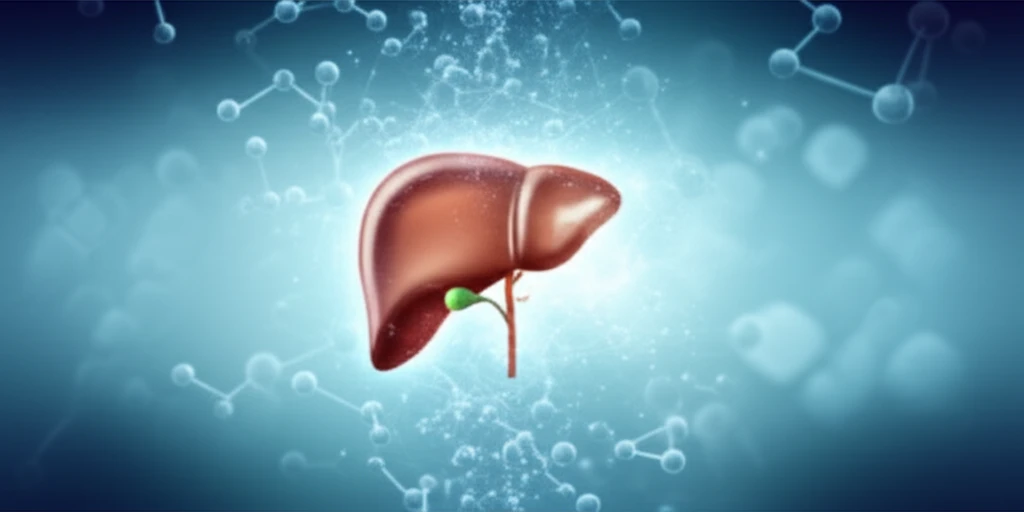
Illustration of a protected, healthy liver with sugar molecules dissolving in the background, symbolizing liver cancer prevention.

Blood Sugar's Hidden Link to Liver Cancer: Are You at Risk?

"New research reveals a surprising connection between fasting blood glucose and liver cancer in men, highlighting a modifiable risk factor you need to know about."


Primary liver cancer (PLC) ranks as a major health threat, especially for men worldwide. In China, it's a particularly pressing concern, accounting for over half of the new cases and deaths globally in 2012. While factors like hepatitis B and C infections are well-known culprits, scientists are increasingly interested in other potential contributors to PLC development.

One area of growing concern is the role of abnormal fasting blood glucose (FBG) levels. Several studies have hinted at a connection between elevated blood sugar and liver cancer risk, but the evidence has been inconsistent. With the rates of high FBG steadily climbing in China, understanding this link is more critical than ever.

Now, a large-scale study is shedding new light on the association between FBG levels and PLC risk in Chinese males. By exploring this link, researchers hope to identify modifiable exposures and pave the way for more effective prevention strategies against this deadly disease. This article will dissect the study's findings, explain what they mean for you, and offer actionable insights to protect your liver health.

The Blood Sugar-Liver Cancer Connection: Unpacking the Research

Illustration of a protected, healthy liver with sugar molecules dissolving in the background, symbolizing liver cancer prevention.

Researchers in China conducted a prospective cohort study, following 109,169 men participating in routine checkups over several years. The goal was to investigate the relationship between baseline FBG levels and the subsequent development of PLC. Participants were categorized based on their FBG levels:

The study followed participants from their initial examination until they were diagnosed with cancer, died, or until December 31, 2013. Researchers meticulously collected data on potential risk factors, including age, education, income, HBV infection status, BMI, smoking, and alcohol consumption.

  • Normal FBG: 3.9 to 6.1 mmol/L
  • Impaired Fasting Glucose (IFG): 6.1 to 7.0 mmol/L
  • Diabetes Mellitus (DM): 7.0 mmol/L or higher
The results revealed a significant association between elevated FBG levels and increased PLC risk. Compared to men with normal FBG, those with IFG and DM had a 60% and 58% higher risk of developing PLC, respectively. This link persisted even after adjusting for other risk factors. Subgroup analyses further revealed that IFG increased PLC risk among non-smokers and current alcohol drinkers, while DM increased the risk particularly in men with normal BMI and those negative for HBV.

Protecting Your Liver: Actionable Steps You Can Take Today

This study adds to the growing body of evidence linking high blood sugar to increased cancer risk. While the research focused on Chinese males, the implications are relevant to everyone. The key takeaway? Maintaining healthy blood sugar levels is crucial for overall health and may play a significant role in preventing liver cancer.

So, what can you do to protect yourself? Here are some actionable steps:

<ul> <li><b>Get Regular Checkups:</b> Know your FBG levels. Talk to your doctor about regular blood sugar testing, especially if you have risk factors like a family history of diabetes, obesity, or unhealthy lifestyle habits.</li> <li><b>Adopt a Healthy Lifestyle:</b> Focus on a balanced diet rich in fruits, vegetables, and whole grains. Limit processed foods, sugary drinks, and excessive alcohol consumption.</li> <li><b>Maintain a Healthy Weight:</b> Achieve and maintain a healthy BMI through diet and exercise.</li> <li><b>Quit Smoking:</b> If you smoke, quitting is one of the best things you can do for your overall health, including reducing your cancer risk.</li> <li><b>Manage HBV Infection:</b> If you have HBV, work with your doctor to manage the infection and monitor your liver health.</li> </ul>

About this Article -

This article was crafted using a human-AI hybrid and collaborative approach. AI assisted our team with initial drafting, research insights, identifying key questions, and image generation. Our human editors guided topic selection, defined the angle, structured the content, ensured factual accuracy and relevance, refined the tone, and conducted thorough editing to deliver helpful, high-quality information.See our About page for more information.

This article is based on research published under:

DOI-LINK: 10.1038/bjc.2017.296, Alternate LINK

Title: The Association Between Fasting Blood Glucose And The Risk Of Primary Liver Cancer In Chinese Males: A Population-Based Prospective Study

Subject: Cancer Research

Journal: British Journal of Cancer

Publisher: Springer Science and Business Media LLC

Authors: Xiaoshuang Feng, Gang Wang, Ni Li, Zhangyan Lyu, Shuohua Chen, Luopei Wei, Yuheng Chen, Shuanghua Xie, Wenjing Yang, Jian Yin, Hong Cui, Hongda Chen, Jiansong Ren, Jufang Shi, Shouling Wu, Min Dai, Jie He

Published: 2017-09-05

Everything You Need To Know

1

What specific aspect of blood sugar was studied in relation to liver cancer?

The study investigated the relationship between Fasting Blood Glucose (FBG) levels and the development of Primary Liver Cancer (PLC) in Chinese males. It categorized participants into three groups based on their FBG levels: Normal FBG (3.9 to 6.1 mmol/L), Impaired Fasting Glucose (IFG) (6.1 to 7.0 mmol/L), and Diabetes Mellitus (DM) (7.0 mmol/L or higher). The research followed these men over several years, collecting data to identify any links between their initial FBG levels and their subsequent diagnosis of PLC.

2

Why is the connection between blood sugar and liver cancer risk important?

The association between Fasting Blood Glucose (FBG) levels and Primary Liver Cancer (PLC) risk is significant because it identifies a modifiable risk factor. The study found that men with Impaired Fasting Glucose (IFG) had a 60% higher risk of developing PLC, and those with Diabetes Mellitus (DM) had a 58% higher risk compared to men with Normal FBG. This suggests that managing blood sugar levels through lifestyle changes or medical interventions could potentially reduce the risk of PLC. This is especially important as PLC is a major health threat and the rates of high FBG are increasing, making it a critical area for prevention.

3

What are the implications of the study's findings?

Implications of this study mean that maintaining healthy blood sugar levels is crucial for liver health. The research revealed a link between elevated Fasting Blood Glucose (FBG) levels, specifically Impaired Fasting Glucose (IFG) and Diabetes Mellitus (DM), and an increased risk of Primary Liver Cancer (PLC) in men. The findings suggest that individuals with IFG and DM may be at a higher risk. This highlights the importance of regular check-ups to monitor FBG levels. Taking proactive steps to manage blood sugar can be a significant part of reducing the risk of PLC, leading to overall improvements in health.

4

What is the significance of Impaired Fasting Glucose (IFG) in the context of this research?

Impaired Fasting Glucose (IFG) is defined as Fasting Blood Glucose (FBG) levels between 6.1 to 7.0 mmol/L, indicating that the body doesn't process glucose effectively but is not yet at the diabetic level. In the study, men with IFG showed a 60% increased risk of developing Primary Liver Cancer (PLC). This finding emphasizes the importance of addressing IFG through dietary changes, exercise, and potentially medication to prevent the progression to Diabetes Mellitus (DM) and reduce the risk of cancer.

5

What does the study suggest people should do regarding blood sugar and their health?

The study highlights the importance of monitoring Fasting Blood Glucose (FBG) levels, particularly for men. The research discovered that individuals with Diabetes Mellitus (DM), defined as having a FBG of 7.0 mmol/L or higher, have an increased risk of Primary Liver Cancer (PLC). This underscores the need for regular health check-ups and management of blood sugar through medical interventions or healthy lifestyle choices. If someone has Diabetes Mellitus (DM), it's important to work with healthcare providers to monitor the disease and prevent cancer.

Newsletter Subscribe

Subscribe to get the latest articles and insights directly in your inbox.