
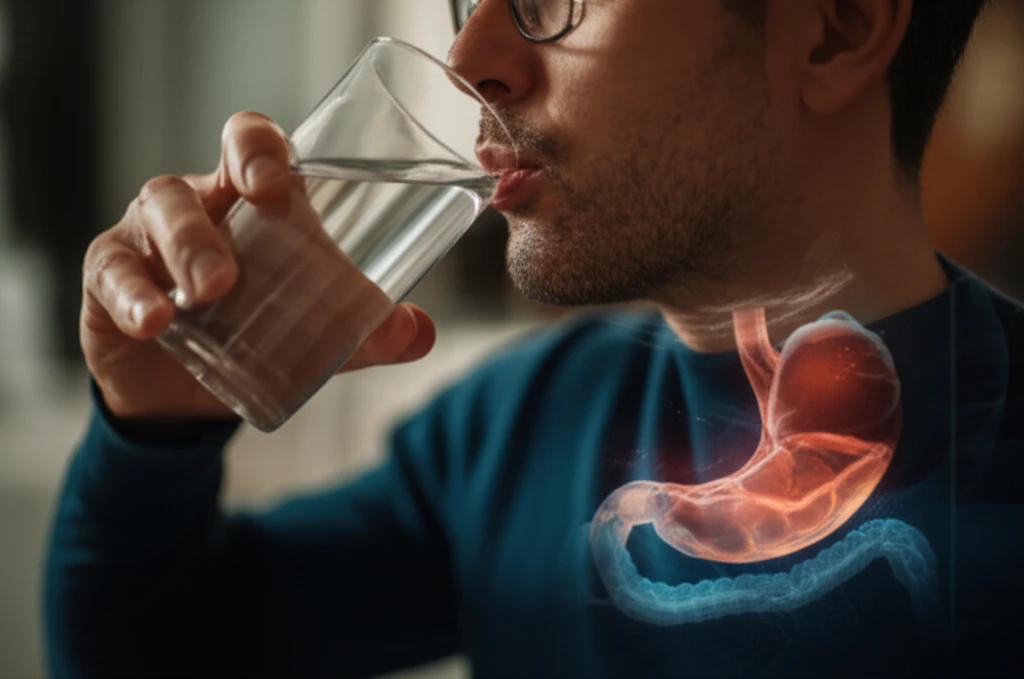
Bloated? How a Simple Water Test Can Reveal Hidden Digestive Issues

"New research suggests a water-drinking ultrasound test can help diagnose the root causes of functional dyspepsia and guide more effective treatments."
Functional gastrointestinal disorders, characterized by symptoms like bloating and stomach pain, are a common problem. Often, standard endoscopies reveal no structural abnormalities, leading to a diagnosis of functional dyspepsia (FD). This condition, affecting a significant portion of the population, can negatively impact quality of life and lead to substantial healthcare costs.
Understanding the underlying causes of FD is crucial for developing effective treatments. While various diagnostic tests exist, many lack convenience or have limitations in evaluating gastric functions. Common symptoms include post-meal distress and epigastric pain, with FD patients often experiencing abnormalities in gut function, such as impaired accommodation (the stomach's ability to relax and expand after a meal), delayed emptying, and heightened sensitivity to stimuli.
Now, new research explores the potential of a water-drinking ultrasonography combined test (WDUCT) to assess gastric motility and sensory functions in individuals with FD. This approach offers a non-invasive, accessible method for evaluating stomach function and guiding more targeted treatment strategies.
The Water Test: Uncovering Hidden Digestive Issues
Researchers in Ukraine conducted a study involving 120 patients diagnosed with FD according to the Rome III criteria and 30 healthy volunteers. All participants underwent a water-drinking ultrasonography combined test (WDUCT). During the test, participants drank 200ml of water every 3 minutes, up to a total of 1000ml, while ultrasound measurements were taken to assess the stomach's response.
- Gastric Accommodation: Measured by the change in the cross-sectional area of the stomach's fundus (upper portion) before and after water intake.
- Gastric Emptying: Evaluated by measuring the cross-sectional area of the fundus 5 and 10 minutes after completing the water intake.
- Visceral Hypersensitivity: Participants rated their pain and discomfort levels during the water-drinking process using a 4-point Likert scale.
Hope for Targeted Treatments
The study highlights the potential of the WDUCT as a valuable tool for diagnosing gastric motor and sensory dysfunction, particularly in patients with postprandial distress syndrome (PDS) and those with overlapping PDS and epigastric pain syndrome (EPS).
By identifying specific abnormalities in gastric function, the WDUCT could pave the way for more targeted therapies, such as medications that promote gastric accommodation or reduce visceral hypersensitivity. While current treatments for FD have limited effectiveness due to the poorly understood underlying mechanisms, this new diagnostic approach offers a path toward personalized treatment strategies.
The WDUCT is easy to perform, well-tolerated, and readily available in clinical practice, making it a promising tool for improving the diagnosis and management of functional dyspepsia and related digestive disorders.