
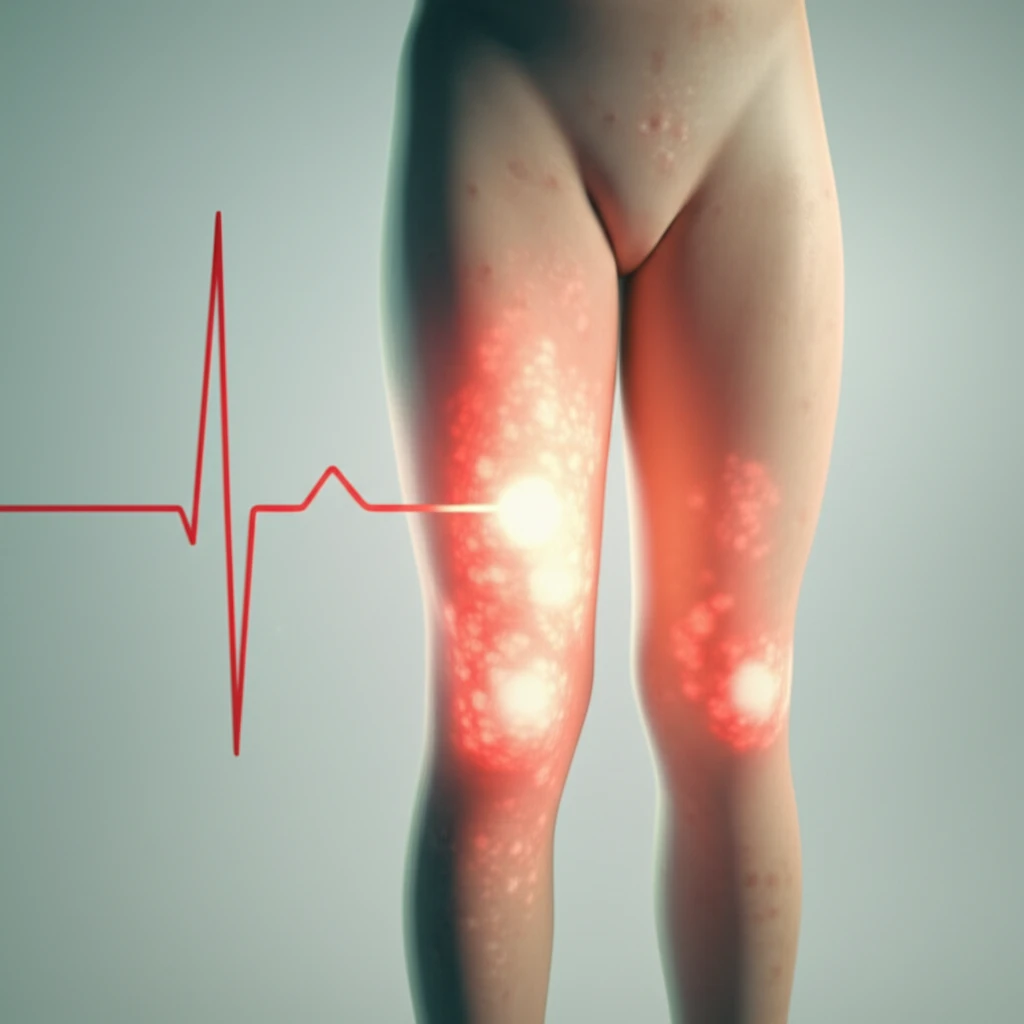
Illustration of pulsating skin lesions on a child, demonstrating the blanching and flushing effect.

Blinking Skin: Decoding the Mystery of Pulsating Papules and Plaques

"Unraveling a Rare Dermatological Puzzle: What Causes Skin to 'Blink'?"


Have you ever heard of skin that seems to 'blink'? While it sounds like something out of a science fiction movie, it's a real, albeit rare, dermatological condition. This intriguing phenomenon involves skin lesions, such as papules and plaques, that pulsate in sync with the heartbeat. This article dives into this rare condition, exploring its causes, symptoms, and treatment.

The concept of pulsating skin is closely tied to the Quincke sign, traditionally linked to cardiovascular conditions. However, when this unusual sign appears on the skin, particularly in the form of 'blinking' lesions, it presents a unique challenge for dermatologists. This article aims to decode this unusual dermatological presentation, shedding light on the underlying mechanisms and the implications for those affected.

This article delves into a specific case study of a 5-year-old boy who developed pulsating skin lesions following insect bites, which serves as a foundation for understanding this rare condition. By exploring this case, we aim to demystify this medical puzzle, offering insights that can be helpful for both medical professionals and individuals experiencing similar symptoms.

What is Pulsating Skin? Unveiling the Mystery

Illustration of pulsating skin lesions on a child, demonstrating the blanching and flushing effect.

Pulsating skin, in the context of this article, refers to a condition where skin lesions exhibit a rhythmic pulsation that corresponds with the individual's pulse. This is not a common occurrence and often presents as an unusual symptom, making it a significant topic in dermatology. This rhythmic movement is typically noticeable in lesions like papules (small, raised bumps) and plaques (raised, often scaly patches).

The underlying mechanism of this pulsation involves the interplay between blood flow and the skin's response to certain stimuli. In cases such as the one discussed, insect bites may trigger the release of chemical mediators that cause localized inflammation and vasodilation (widening of blood vessels). The pulsation is more visible when the blood vessels dilate and constrict in time with each heartbeat.

  • Quincke Sign: Commonly associated with cardiovascular conditions but can manifest in skin lesions.
  • Insect Bites: Often a trigger, initiating the process through inflammatory responses.
  • Vascular Dynamics: The rhythmic expansion and contraction of blood vessels cause the pulsation.
The key aspect is the observable pulsation. In the case study, the pulsating lesions were most prominent on the legs, buttocks, and wrists. The pulsation could be seen as a blanching and flushing, which corresponds to the patient's pulse. This distinct clinical presentation makes it a unique and intriguing case.

Conclusion: Understanding and Managing Pulsating Skin

Pulsating skin, while rare, underscores the importance of thorough dermatological assessment. By understanding the underlying causes, recognizing the symptoms, and seeking appropriate medical care, individuals experiencing this condition can find relief and improve their quality of life. If you notice any unusual skin changes or pulsations, consult a healthcare professional for a comprehensive evaluation and personalized treatment plan.

About this Article -

This article was crafted using a human-AI hybrid and collaborative approach. AI assisted our team with initial drafting, research insights, identifying key questions, and image generation. Our human editors guided topic selection, defined the angle, structured the content, ensured factual accuracy and relevance, refined the tone, and conducted thorough editing to deliver helpful, high-quality information.See our About page for more information.

This article is based on research published under:

DOI-LINK: 10.1111/ced.13830, Alternate LINK

Title: A Paediatric Puzzle: Pulsating, Pruritic Papules And Plaques

Subject: Dermatology

Journal: Clinical and Experimental Dermatology

Publisher: Wiley

Authors: P. Nicholson, M.‐C. Wilmot, I. Chan, E. Mallon, J. Carton, C. Hewitt

Published: 2018-11-12

Everything You Need To Know

1

What exactly is pulsating skin, and how is it identified?

Pulsating skin is a rare dermatological condition characterized by rhythmic pulsations in skin lesions, such as papules and plaques, that synchronize with an individual's pulse. It's identified by observing a visible blanching and flushing of the lesions in time with the heartbeat. The case study of a 5-year-old boy who developed pulsating skin lesions after insect bites illustrates how this condition can manifest. This contrasts with the Quincke sign, typically associated with cardiovascular issues, which highlights the importance of dermatological assessment to differentiate the underlying causes of pulsations observed in the skin.

2

What role do insect bites play in the development of pulsating skin?

Insect bites can act as triggers for pulsating skin. The bites initiate an inflammatory response in the skin, leading to the release of chemical mediators that cause localized inflammation and vasodilation, which is the widening of blood vessels. This vasodilation makes the rhythmic expansion and contraction of blood vessels more visible, resulting in the observable pulsation in lesions like papules and plaques.

3

How is the Quincke sign related to pulsating skin, and what distinguishes them from each other?

The Quincke sign is traditionally associated with cardiovascular conditions, where pulsations are observed in the nail beds. However, when similar pulsations occur in skin lesions like papules and plaques, it presents as a unique dermatological manifestation, termed pulsating skin in this context. The key distinction lies in the location and primary cause of the pulsation: cardiovascular issues for the Quincke sign versus localized inflammation and vascular dynamics within the skin for pulsating skin. The manifestation of pulsations in the skin warrants further investigation to rule out cardiovascular involvement and identify potential triggers like insect bites.

4

Beyond insect bites and cardiovascular issues, what other potential underlying causes or conditions might contribute to the development of pulsating skin?

While insect bites and the Quincke sign related to cardiovascular conditions are noted, other potential causes aren't explicitly detailed here. There could be other inflammatory conditions, vascular abnormalities, or even rare reactions to medications that might contribute to pulsating skin. Further research and case studies would be needed to fully understand the spectrum of potential causes. The underlying mechanism always involves localized inflammation, vasodilation, and the rhythmic expansion and contraction of blood vessels.

5

What steps should someone take if they notice unusual skin changes or pulsations that seem to correspond with their heartbeat?

If someone notices unusual skin changes or pulsations that seem to correspond with their heartbeat, they should consult a healthcare professional for a comprehensive evaluation. This evaluation is essential to determine the underlying cause of the pulsations, rule out any serious conditions, and develop a personalized treatment plan. It is important to seek medical care to ensure proper diagnosis and management of pulsating skin.

Newsletter Subscribe

Subscribe to get the latest articles and insights directly in your inbox.