
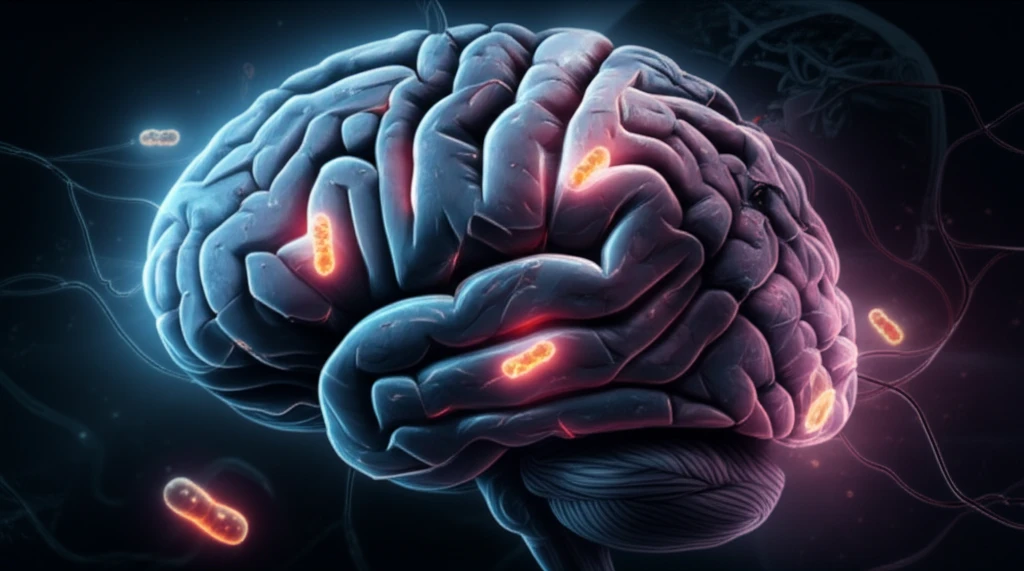
Blast Brain: Unmasking Hidden Damage and Pathways to Recovery

"New research reveals how even low-intensity blasts can trigger mitochondrial dysfunction and long-term brain issues, opening doors to targeted treatments."
The unseen wounds of war and accidental explosions often leave a lasting impact on the brain. While severe brain injuries from blasts are well-documented, the effects of low-intensity blasts (LIBs) have remained elusive, despite their potential to cause long-term neurological problems. This research delves into the hidden damage caused by these seemingly minor blasts, uncovering the intricate mechanisms that disrupt brain function.
Service members, construction workers, and even athletes can be exposed to LIBs. The challenge lies in detecting and understanding the subtle changes that occur. Conventional imaging techniques often fail to reveal the damage, leaving many individuals without a clear diagnosis or appropriate treatment strategy. This study addresses this critical gap by exploring the molecular fingerprints of LIB-induced brain injury.
Using a comprehensive approach combining proteomics and bioinformatics, scientists have begun to map the complex changes that occur in the brain following LIB exposure. This article illuminates these findings, focusing on mitochondrial dysfunction as a key consequence and its implications for developing targeted interventions.
Decoding Mitochondrial Damage: A Blast-Induced Cascade
Researchers employed a sophisticated mouse model to simulate LIB exposure, mirroring the overpressure experienced in real-world scenarios. This model allowed them to examine brain tissue at various time points after the blast (3 hours, 24 hours, 7 days, and 30 days) and identify the dynamic shifts in protein expression. The results revealed a striking pattern of disruption, particularly affecting the mitochondria – the powerhouses of our cells.
- Mitochondrial dysfunction: Impaired energy production and compromised mitochondrial dynamics (fission and fusion).
- Oxidative stress: An imbalance in the production and removal of free radicals, leading to cellular damage.
- Axonal/cytoskeletal/synaptic dysregulation: Disruption of the structural framework of nerve cells and their communication pathways.
- Neurodegeneration: Pathways associated with brain cell death and decline.
Toward Targeted Therapies: Illuminating the Path to Recovery
This research provides a crucial foundation for understanding the long-term consequences of LIB exposure. By identifying the specific proteins and pathways involved, scientists can now focus on developing targeted therapies to address these disruptions.
Potential therapeutic strategies include:
<ul><li>Antioxidant therapies: To combat oxidative stress and protect mitochondria from damage.</li><li>Mitochondrial support: Interventions to enhance mitochondrial function, promote fission and fusion, and stimulate mitophagy.</li><li>Neuroprotective agents: Drugs to safeguard nerve cells from degeneration and promote axonal repair.</li></ul>This study underscores the importance of early detection and intervention to mitigate the long-term effects of LIB-induced brain injury. Further research is needed to translate these findings into clinical applications, offering hope for improved diagnostics and treatments for those affected.