
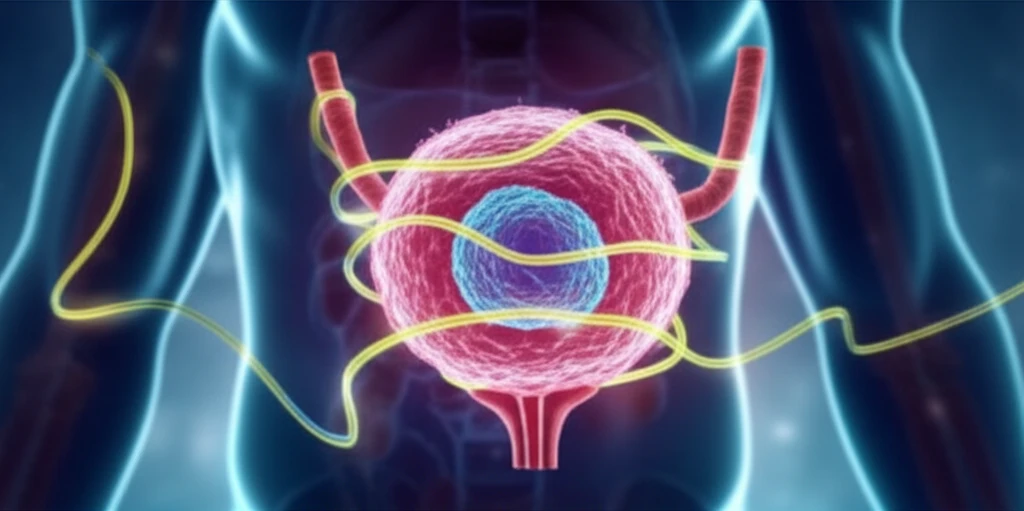
Bladder Cancer Breakthrough: New 'Oncogene' Discovery Offers Hope

"Scientists identify CIRBP as a key player in bladder cancer, potentially paving the way for new treatments by understanding how it promotes tumor growth and spread."
Bladder cancer is a formidable health challenge, ranking as the ninth most common malignancy worldwide. With an estimated 429,000 new cases and 165,000 deaths each year, the need for innovative research and effective treatments is critical. Recent studies have begun to unravel the complex molecular pathways that drive bladder cancer, including the RAS-mitogen-activated protein kinase (MAPK) pathway, Wnt/β-catenin signaling, and epithelial-mesenchymal transition (EMT).
In a significant step forward, researchers have identified cold-inducible RNA-binding protein (CIRBP) as a novel oncogene in bladder cancer. CIRBP, originally identified as a cold shock protein in the testis, is induced by cellular stresses such as UV radiation, cold, and hypoxia. While CIRBP has been implicated in various human tumors, including prostate, colon, breast, and skin carcinomas, its specific role in bladder cancer has remained largely unexplored until now.
This article delves into the groundbreaking research that uncovers CIRBP's role in promoting bladder cancer progression, its interaction with hypoxia-inducible factor-1α (HIF-1α), and the potential implications for new therapeutic strategies. By understanding these mechanisms, scientists hope to develop more targeted and effective treatments to combat bladder cancer.
How CIRBP Fuels Bladder Cancer: The Key Findings
A new study sheds light on how CIRBP acts as an oncogene in bladder cancer. The research demonstrates that CIRBP is significantly overexpressed in bladder cancer tissues and cell lines. This overexpression promotes the proliferation and migration of cancer cells, key factors in tumor growth and spread. The study reveals a direct link between CIRBP and the increased malignancy of bladder cancer cells.
- CIRBP Binds to HIF-1α mRNA: CIRBP directly binds to the 3'-UTR (untranslated region) of HIF-1α mRNA, increasing its stability.
- Increased mRNA Stability: This binding stabilizes the HIF-1α mRNA, preventing its degradation and allowing for increased protein production.
- Elevated HIF-1α Expression: As a result, the levels of HIF-1α protein are significantly elevated in bladder cancer cells.
The Future of Bladder Cancer Treatment: Targeting CIRBP
This research provides a compelling rationale for targeting CIRBP as a novel therapeutic strategy in bladder cancer. By understanding its role in promoting tumor growth and metastasis through HIF-1α, scientists can develop new drugs or therapies to inhibit CIRBP's activity. This could involve strategies to disrupt CIRBP's binding to HIF-1α mRNA, reduce its expression, or block its downstream signaling pathways. Further research and clinical trials are needed, the discovery of CIRBP as a key oncogene offers hope for more effective and targeted treatments for bladder cancer, ultimately improving patient outcomes.