
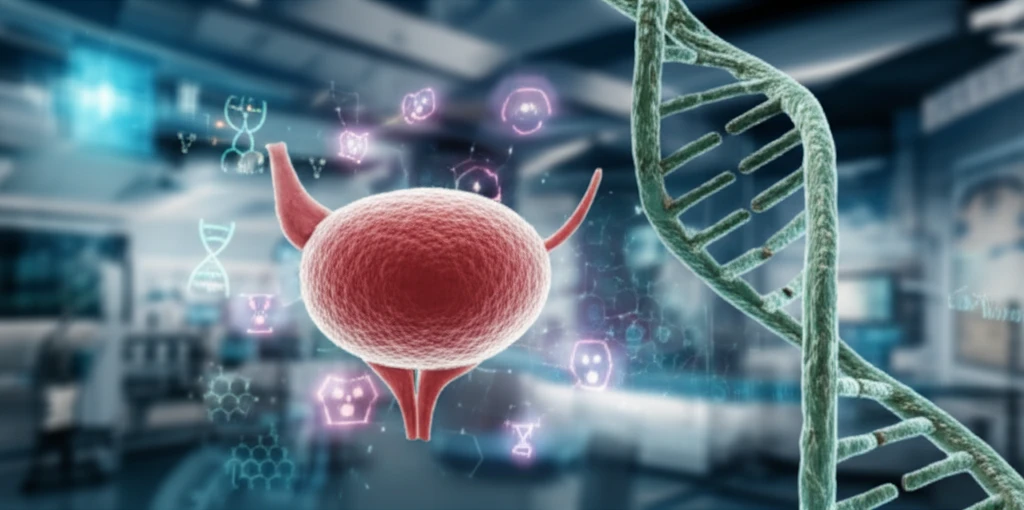
Microscopic view of bladder cancer cells with DNA strands and biomarker symbols.

Bladder Cancer Biomarkers: The Future of Personalized Treatment

"Unlocking molecular profiles for early detection and tailored therapies."


In the realm of modern medicine, precision is key. Treatments are increasingly tailored to individual patients, factoring in their specific biology and disease mechanisms. This personalized approach, a shift from the 'one-size-fits-all' model, relies heavily on identifying molecular biomarkers that can accurately diagnose and predict treatment responses.

Bladder cancer, a common urological malignancy, demands continuous and expensive care. Early detection is crucial for improving survival rates, making ongoing research into better diagnostic tools essential. While microhematuria testing and urine cytology are widely used, their limitations necessitate the exploration of more refined methods.

Current classifications divide bladder cancer into non-muscle invasive (NMIBC) and muscle-invasive (MIBC) types. Although NMIBC has a better survival rate, recurrence is common, and a significant portion of cases progress to the more aggressive MIBC. The need for therapies that can target both types, and especially those resistant to current treatments like cisplatin-based chemotherapy, is urgent.

Molecular Profiling: A New Era of Bladder Cancer Detection

Microscopic view of bladder cancer cells with DNA strands and biomarker symbols.

Molecular profiling is revolutionizing how we understand and treat bladder cancer. By analyzing genomic, epigenetic, transcriptomic, proteomic, and metabolomic profiles, researchers are uncovering critical insights into the disease at a molecular level. This comprehensive approach sets the stage for developing tailored treatment strategies that address the unique characteristics of each patient's cancer.

Several innovative technologies are being used to investigate these molecular profiles:

  • Genomics: Next-generation sequencing identifies genomic alterations that drive bladder cancer development.
  • Epigenetics: Analysis of DNA methylation, histone modifications, and microRNA expression reveals how genes are regulated in cancer cells.
  • Proteomics: Techniques like mass spectrometry (LC-MS/MS, CE-MS, MALDI-TOF MS) identify protein biomarkers in urine, tissue, and blood.
  • Metabolomics: Methods such as NMR and gas chromatography mass spectrometry (GC-MS) uncover metabolic fingerprints associated with bladder cancer.
Urine is an ideal resource for non-invasive biomarker discovery, as it comes into direct contact with the bladder. Researchers have identified several promising urinary biomarkers, including:

Looking Ahead: The Future of Bladder Cancer Treatment

The ongoing research into molecular profiling is not just about identifying biomarkers; it's about changing the landscape of bladder cancer treatment. Subtyping bladder cancer based on molecular signatures offers mechanistic insights into how the disease responds to chemotherapy and immunotherapy, paving the way for more effective treatment strategies.

While significant strides have been made, several challenges remain. Clinically applicable and personalized biomarkers for early diagnosis, recurrence prediction, and treatment response are still needed. Overcoming these hurdles will require continued focused efforts to translate current findings into tangible clinical benefits.

By continuing to explore and refine our understanding of the molecular intricacies of bladder cancer, we can move closer to an era where treatment is precise, effective, and tailored to the unique needs of each patient, ultimately improving outcomes and quality of life.

About this Article -

This article was crafted using a human-AI hybrid and collaborative approach. AI assisted our team with initial drafting, research insights, identifying key questions, and image generation. Our human editors guided topic selection, defined the angle, structured the content, ensured factual accuracy and relevance, refined the tone, and conducted thorough editing to deliver helpful, high-quality information.See our About page for more information.

This article is based on research published under:

DOI-LINK: 10.4111/icu.2018.59.2.72, Alternate LINK

Title: Unmasking Molecular Profiles Of Bladder Cancer

Subject: Urology

Journal: Investigative and Clinical Urology

Publisher: The Korean Urological Association

Authors: Xuan-Mei Piao, Young Joon Byun, Wun-Jae Kim, Jayoung Kim

Published: 2018-01-01

Everything You Need To Know

1

What are molecular biomarkers, and why are they important in treating bladder cancer?

The significance of molecular biomarkers lies in their ability to tailor bladder cancer treatments to individual patients. Current methods like microhematuria testing and urine cytology have limitations. Molecular biomarkers offer more precise methods for diagnosis and prediction of treatment responses, moving away from a 'one-size-fits-all' approach and potentially improving survival rates.

2

What is involved in molecular profiling for bladder cancer detection?

Molecular profiling involves a detailed analysis of genomic, epigenetic, transcriptomic, proteomic, and metabolomic profiles to understand bladder cancer at a molecular level. Researchers utilize technologies such as next-generation sequencing for genomics, analysis of DNA methylation for epigenetics, mass spectrometry (LC-MS/MS, CE-MS, MALDI-TOF MS) for proteomics, and NMR and GC-MS for metabolomics to uncover critical insights into the disease.

3

What are the different types of bladder cancer, and why is it important to understand them?

The common types of bladder cancer are classified as non-muscle invasive (NMIBC) and muscle-invasive (MIBC). NMIBC has a better survival rate, but recurrence is frequent. MIBC is more aggressive. The need for effective therapies targeting both types, especially those resistant to current treatments like cisplatin-based chemotherapy, is urgent.

4

Why is urine useful in identifying bladder cancer biomarkers?

Urine is considered an ideal resource for non-invasive biomarker discovery due to its direct contact with the bladder. It allows for the identification of promising urinary biomarkers that can aid in early detection and personalized treatment strategies. These biomarkers could potentially provide less invasive and more efficient diagnostic methods compared to current techniques.

5

How can molecular profiling change the future of bladder cancer treatment?

Subtyping bladder cancer based on molecular signatures offers insights into how the disease responds to therapies like chemotherapy and immunotherapy. This information allows for more effective and targeted treatment strategies. The ongoing research into molecular profiling is crucial for changing the landscape of bladder cancer treatment, moving towards personalized and more effective therapies.

Newsletter Subscribe

Subscribe to get the latest articles and insights directly in your inbox.