
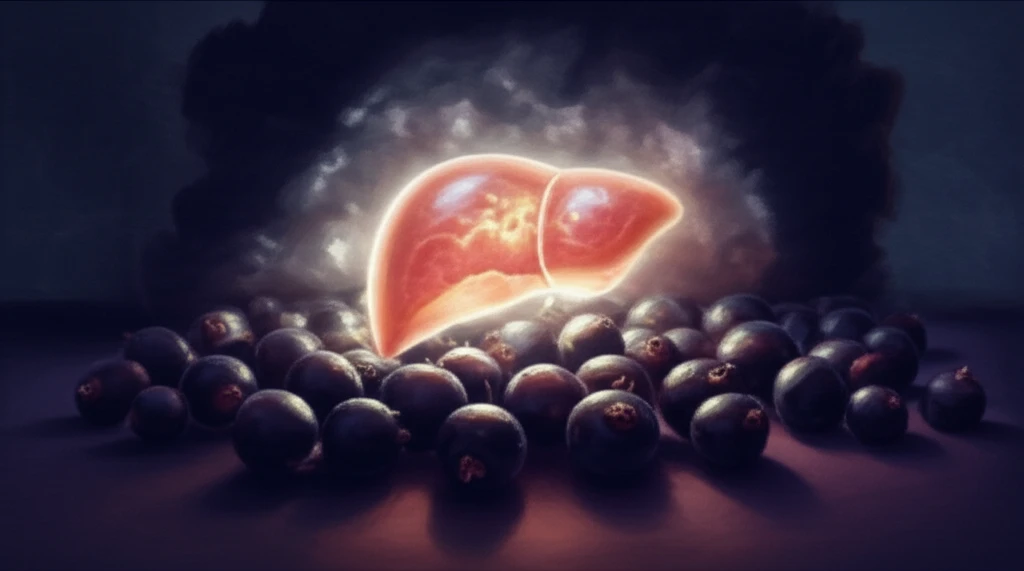
Blackcurrant: The Tiny Berry Battling Fatty Liver Disease

"Could this potent berry be the key to preventing obesity-induced liver damage? New research highlights the power of blackcurrants in fighting NASH."
Nonalcoholic fatty liver disease (NAFLD) has become a widespread health concern, affecting nearly 25% of adults globally. NAFLD encompasses a range of conditions, from simple steatosis (fatty liver) to nonalcoholic steatohepatitis (NASH), fibrosis, and cirrhosis, with NASH being a more aggressive form characterized by inflammation and liver damage. As obesity rates climb, so does the prevalence of NASH, making it crucial to find effective preventive strategies.
Emerging research points to the potential of certain foods, particularly berries rich in polyphenols, to combat NAFLD. Blackcurrants (Ribes nigrum), packed with anthocyanins and known for their antioxidant and anti-inflammatory properties, have shown promise in this area.
A recent study explored whether blackcurrant consumption could prevent the development of obesity-induced NASH in mice. The findings reveal the protective effects of blackcurrants on liver health, offering a potential dietary approach to managing and preventing this increasingly common condition.
How Blackcurrants Shield the Liver: Key Findings
The study, published in Obesity, investigated the impact of blackcurrant powder on mice fed a high-fat, high-sucrose diet, mimicking an obesogenic Western diet. Over 24 weeks, researchers compared the effects of a control diet, a diet with blackcurrant powder, a high-fat diet, and a high-fat diet with blackcurrant powder. The results showcased the remarkable benefits of blackcurrants on several key indicators of liver health:
- Reduced Liver Weight and Triglycerides: Mice on the high-fat diet experienced significant increases in liver weight and triglyceride levels, both indicators of fatty liver disease. However, the addition of blackcurrant powder markedly decreased these levels, suggesting a protective effect against fat accumulation in the liver.
- Attenuated Inflammation: The high-fat diet triggered an influx of macrophages (immune cells) into the liver, particularly the M1 type, which promotes inflammation. Blackcurrants, however, helped to reduce this infiltration, indicating a suppression of obesity-induced liver inflammation.
- Suppressed Fibrosis: Fibrosis, the scarring of liver tissue, is a serious consequence of NASH. Blackcurrants were found to suppress the expression of fibrogenic genes and reduce collagen accumulation in the liver, suggesting a potential to prevent or slow down the progression of liver damage.
- Modulated Immune Response: Flow cytometric analysis revealed that blackcurrants attenuated the increase in monocytes (a type of white blood cell) typically seen in mice on a high-fat diet. Furthermore, blackcurrants decreased the expression of pro-inflammatory cytokines in splenocytes (immune cells from the spleen), indicating a systemic anti-inflammatory effect.
- Lowered NASH Markers: The study also found that blackcurrants decreased the levels of circulating and hepatic miR-122-5p and miR-192-5p, which are known markers for nonalcoholic fatty liver disease.
The Sweet Path to a Healthier Liver
This research provides compelling evidence for the protective effects of blackcurrants against obesity-induced liver damage. The study's findings suggest that blackcurrants can target multiple pathways involved in the development and progression of NASH, including inflammation, fibrosis, and fat accumulation.
While further research is needed to confirm these findings in human studies, incorporating blackcurrants into your diet may be a promising strategy for supporting liver health, especially for individuals at risk of NAFLD due to obesity or other metabolic risk factors.
Whether enjoyed fresh, frozen, or as a supplement, blackcurrants offer a delicious and potentially powerful way to protect your liver and overall well-being. Consult with a healthcare professional or registered dietitian for personalized advice on incorporating blackcurrants into a balanced diet.