
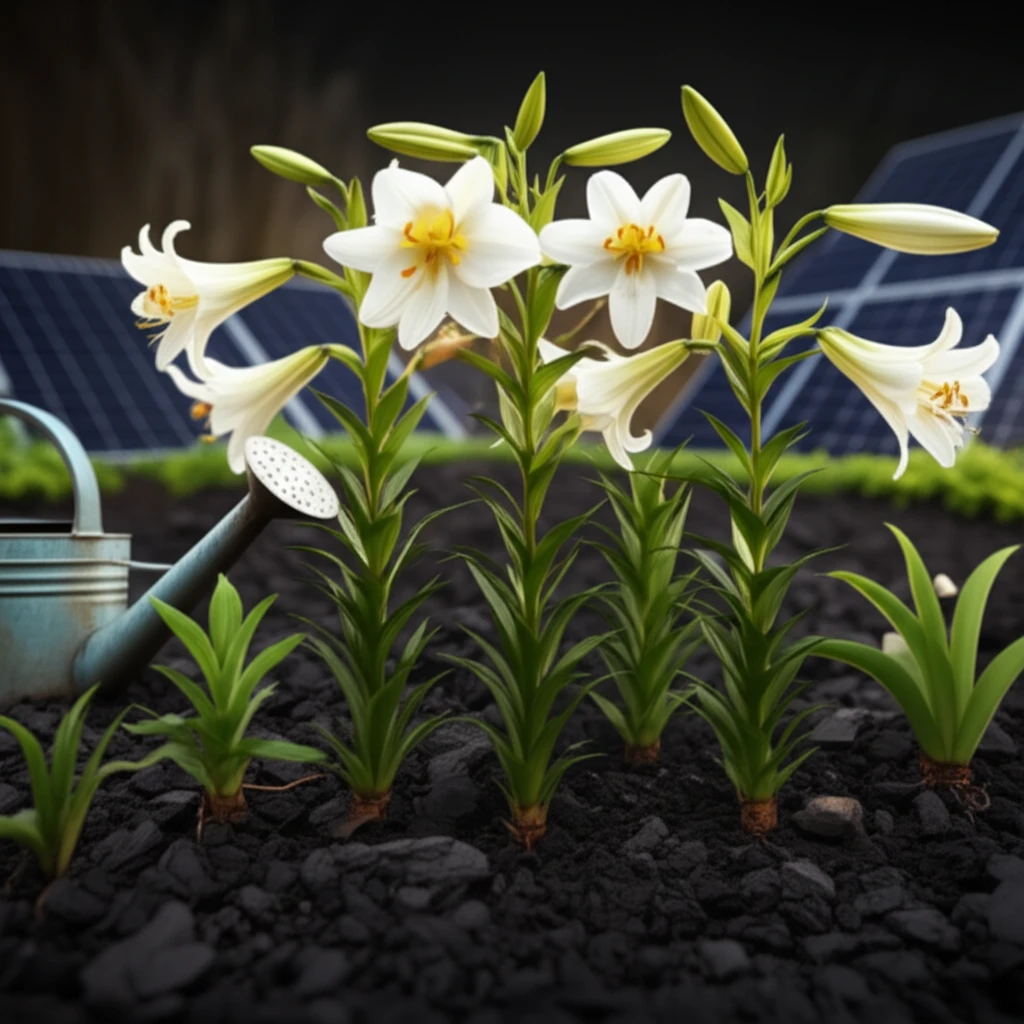
Biochar for Healthier Lilies: A Sustainable Gardening Solution

"Discover how biochar enhances Easter lily growth, offering an eco-friendly alternative to traditional substrates."
Easter lilies (Lilium longiflorum Thunb.) are a beloved symbol of spring, with millions sold each year. Traditionally, these lilies are grown in peat-based substrates, which provide the necessary drainage and aeration for healthy root development. However, the use of peat moss comes with significant environmental concerns.
Peatlands, the source of peat moss, are fragile ecosystems that play a crucial role in carbon sequestration and biodiversity. The harvest and development of these lands contribute to greenhouse gas emissions and a decline in unique habitats. As awareness of these issues grows, gardeners and researchers are seeking sustainable alternatives.
One promising solution is biochar, a charcoal-like material produced from biomass pyrolysis. Biochar has gained attention for its ability to improve soil health, reduce the need for fertilizers, and sequester carbon. Studies have shown that incorporating biochar into container substrates can positively impact plant growth. Now, the question is: can biochar effectively replace peat moss in Easter lily cultivation?
What Makes Biochar a Great Choice for Easter Lilies?
A recent study published in The Journal of Horticultural Science and Biotechnology explored the potential of biochar as a container substrate for Easter lilies. Researchers Yanjun Guo, Genhua Niu, Terri Starman, and Mengmeng Gu investigated how different concentrations of biochar in a commercial substrate affected the growth and development of these iconic plants.
- No Negative Interactions: The combination of different fertigation regimes and biochar percentages didn't negatively impact growth.
- Consistent Growth: The number of days to full flower, flower count, total shoot dry weight, leaves, and leaf gas exchange rates remained unaffected by either fertigation or biochar percentage.
- Enhanced Stem Quality: Plants grown in 80% biochar showed the best ratio of stem length with green leaves to total stem length.
- Improved Foliage: Constant feeding resulted in higher SPAD readings, indicating better foliage greenness.
Ready to Embrace Biochar in Your Garden?
The study’s findings open the door to more sustainable gardening practices, reducing our reliance on peat moss and promoting the use of eco-friendly alternatives like biochar. Whether you're a seasoned gardener or just starting, consider incorporating biochar into your Easter lily cultivation for healthier plants and a greener planet.