
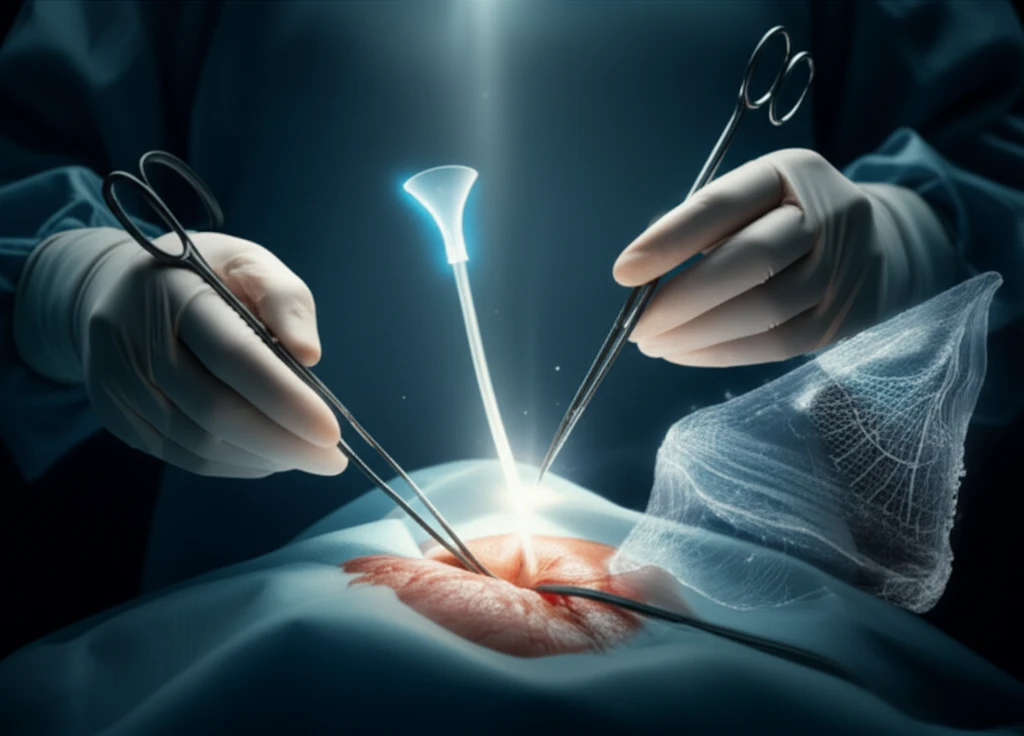
Beyond the Scalpel: Innovative Techniques for Managing Post-Biopsy Bleeding and Streamlining Breast Reconstruction

"Explore groundbreaking methods in urological and plastic surgery that enhance patient safety and improve surgical outcomes through simple, yet effective approaches."
In the ever-evolving landscape of medical science, innovation isn't always about high-tech gadgets or complex procedures. Sometimes, the most impactful advancements come from simple, creative solutions that improve patient outcomes and streamline existing processes. This is especially true in fields like urology and plastic surgery, where practitioners constantly seek ways to enhance safety, minimize complications, and optimize results.
This article delves into two such innovations: a technique for managing severe rectal bleeding following transrectal ultrasound (TRUS) prostate biopsy, and a method for efficiently shaping acellular dermal matrix (ADM) in primary breast reconstruction. Both techniques highlight the power of resourcefulness and ingenuity in addressing common challenges in their respective fields. By exploring these approaches, we aim to shed light on how medical professionals are leveraging readily available tools and materials to make a significant difference in patient care.
Whether you're a healthcare professional looking for practical solutions to everyday challenges, or simply an individual interested in the latest advancements in medical technology, this article offers valuable insights into the world of surgical innovation. Join us as we explore these groundbreaking techniques and their potential to transform the way we approach patient care.
Tackling Post-Biopsy Bleeding: A Simple Solution with a Foley Catheter
Transrectal ultrasound (TRUS) guided biopsy of the prostate is a common procedure, but it comes with a risk of rectal bleeding. While most cases are self-limiting, severe bleeding can occur and requires prompt intervention. Traditional methods range from simple pressure to more invasive endoscopic haemostasis. However, a team of medical professionals has found a novel way to use standard equipment to quickly and effectively resolve this complication.
- Preparation: A 28Fr Foley catheter is threaded through a haemostatic rectal sponge.
- Insertion: Guided by a finger, the catheter is inserted into the rectum.
- Tamponade: The catheter balloon is inflated with 20ml of water, providing effective tamponade to control the bleeding.
Revolutionizing Breast Reconstruction: Streamlining ADM Shaping
In primary breast reconstruction, acellular dermal matrix (ADM) is often used to provide inferolateral coverage of tissue expanders or implants. Traditionally, shaping the ADM to fit the specific dimensions of each case can be time-consuming. However, a new technique streamlines this process, saving valuable time and improving surgical efficiency. This innovative approach utilizes a temporary template drawn directly on the expander/implant during surgery. This template is then transferred onto the ADM, providing a precise guide for cutting and shaping the matrix to the desired size. The shaped ADM is then sutured to the pectoralis major muscle and chest wall, providing optimal coverage and support.