
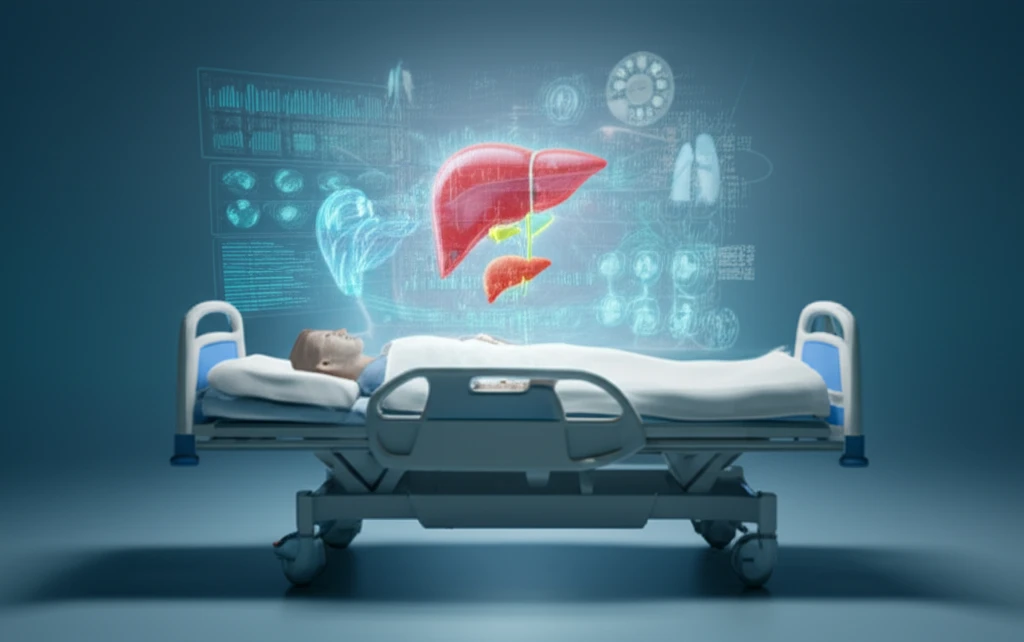
Holographic projections of liver and spleen with medical data streams, symbolizing healing and technology in a modern hospital setting.

Beyond the Scalpel: A Modern Guide to Treating Liver and Spleen Injuries

"Discover how non-operative management is revolutionizing trauma care, offering hope and healing without surgery."


Blunt abdominal trauma, often resulting from sports injuries or accidents, presents a significant challenge in emergency departments. Managing these injuries demands a nuanced approach, especially when dealing with complex clinical scenarios involving the abdomen, chest, limbs, and head.

Traditionally, surgical intervention was the standard approach for hepatic and splenic injuries. However, modern trauma care has seen a paradigm shift towards non-operative management (NOM) in hemodynamically stable patients. This change is driven by the recognition that many minor injuries resolve spontaneously, coupled with concerns about postoperative complications.

This article explores the evolving landscape of blunt liver and spleen injury management. It highlights the practical aspects of NOM, the importance of patient selection, and the role of radiological scoring systems in guiding treatment decisions. By understanding these advancements, healthcare professionals can optimize patient outcomes while minimizing unnecessary surgical interventions.

Why Non-Operative Management is Gaining Ground

Holographic projections of liver and spleen with medical data streams, symbolizing healing and technology in a modern hospital setting.

Non-operative management (NOM) has become increasingly popular for treating blunt liver and spleen injuries in patients who are hemodynamically stable. This approach avoids surgery and its potential complications, such as infections and prolonged recovery times. NOM relies on careful monitoring, advanced imaging techniques, and, when necessary, interventional radiology to address bleeding or other complications.

Several factors have contributed to the rise of NOM:

  • Intraoperative Observations: Many minor injuries stop bleeding on their own, negating the need for surgical intervention.
  • Reduced Costs: NOM is associated with lower hospital costs compared to surgery.
  • Fewer Complications: NOM reduces the risk of intra-abdominal complications and blood transfusions.
  • Improved Outcomes: Studies show that NOM can lead to decreased morbidity and mortality in selected patients.
However, NOM is not suitable for all patients. Careful patient selection is crucial to ensure its success. Hemodynamically unstable patients or those with signs of peritonitis require immediate surgical intervention.

The Future of Trauma Care: Balancing Innovation and Prudence

The management of hepatic and splenic injuries is evolving, with NOM playing an increasingly prominent role. While good evidence from prospective trials may be lacking, careful monitoring, precise imaging, and adherence to strict protocols are essential for maximizing success and minimizing unnecessary surgeries. The ongoing refinement of these strategies promises to further improve outcomes for patients with blunt abdominal trauma.

About this Article -

This article was crafted using a human-AI hybrid and collaborative approach. AI assisted our team with initial drafting, research insights, identifying key questions, and image generation. Our human editors guided topic selection, defined the angle, structured the content, ensured factual accuracy and relevance, refined the tone, and conducted thorough editing to deliver helpful, high-quality information.See our About page for more information.

Everything You Need To Know

1

What are the primary advantages of Non-Operative Management (NOM) in treating blunt liver and spleen injuries?

Non-Operative Management (NOM) offers several key benefits. First, it avoids surgical intervention, thus reducing the risk of postoperative complications such as infections and prolonged recovery periods. Second, NOM is often associated with lower hospital costs compared to surgery. Third, it leads to fewer intra-abdominal complications and a reduced need for blood transfusions. Finally, studies have shown that NOM can result in improved patient outcomes, including decreased morbidity and mortality, particularly in hemodynamically stable patients with blunt liver and spleen injuries.

2

When is surgical intervention still necessary for hepatic and splenic injuries, despite the trend towards Non-Operative Management?

While Non-Operative Management (NOM) is increasingly favored, surgical intervention remains crucial in specific scenarios. Hemodynamically unstable patients, meaning those exhibiting signs of significant blood loss and inability to maintain stable vital signs, require immediate surgical intervention. Additionally, patients presenting with signs of peritonitis, indicating abdominal inflammation or infection, are typically not candidates for NOM and necessitate surgical exploration. Careful patient selection is critical in ensuring the success of NOM, and recognizing these indications for surgery is essential to optimizing patient outcomes.

3

How has the approach to treating blunt abdominal trauma changed over time, specifically concerning liver and spleen injuries?

The management of blunt liver and spleen injuries has undergone a significant transformation. Traditionally, surgical intervention was the standard approach. However, modern trauma care has shifted towards Non-Operative Management (NOM) for hemodynamically stable patients. This change reflects a deeper understanding of the body's healing capabilities and the recognition that many minor injuries resolve naturally. Furthermore, the paradigm shift is supported by the desire to minimize the risks associated with surgery, such as postoperative complications, and to improve overall patient outcomes through less invasive treatment strategies. The focus is now on careful monitoring, advanced imaging, and the judicious use of interventional radiology when necessary.

4

What are the key factors contributing to the growing popularity of Non-Operative Management (NOM) for liver and spleen injuries?

Several factors have fueled the rise of Non-Operative Management (NOM). Firstly, intraoperative observations have revealed that many minor hepatic and splenic injuries cease bleeding spontaneously, eliminating the need for surgery. Secondly, NOM is associated with reduced hospital costs compared to surgical interventions. Thirdly, it lowers the incidence of intra-abdominal complications and the necessity for blood transfusions. Lastly, studies demonstrate that NOM can lead to improved patient outcomes, with decreased rates of both illness and death in selected patient populations. These factors collectively support the shift towards NOM.

5

What role do radiological scoring systems play in the treatment of blunt liver and spleen injuries managed non-operatively?

Radiological scoring systems are instrumental in guiding treatment decisions within Non-Operative Management (NOM). These systems, often involving the analysis of imaging data such as CT scans, help clinicians assess the severity of the liver or spleen injury. By providing a standardized method to evaluate the extent of the damage, these scores assist in determining the appropriate course of action, whether it be continued NOM with close monitoring, the need for interventional radiology to address complications like bleeding, or, in rare cases, the need for surgical intervention. The ongoing refinement of these strategies promises to further improve outcomes for patients with blunt abdominal trauma.

Newsletter Subscribe

Subscribe to get the latest articles and insights directly in your inbox.