
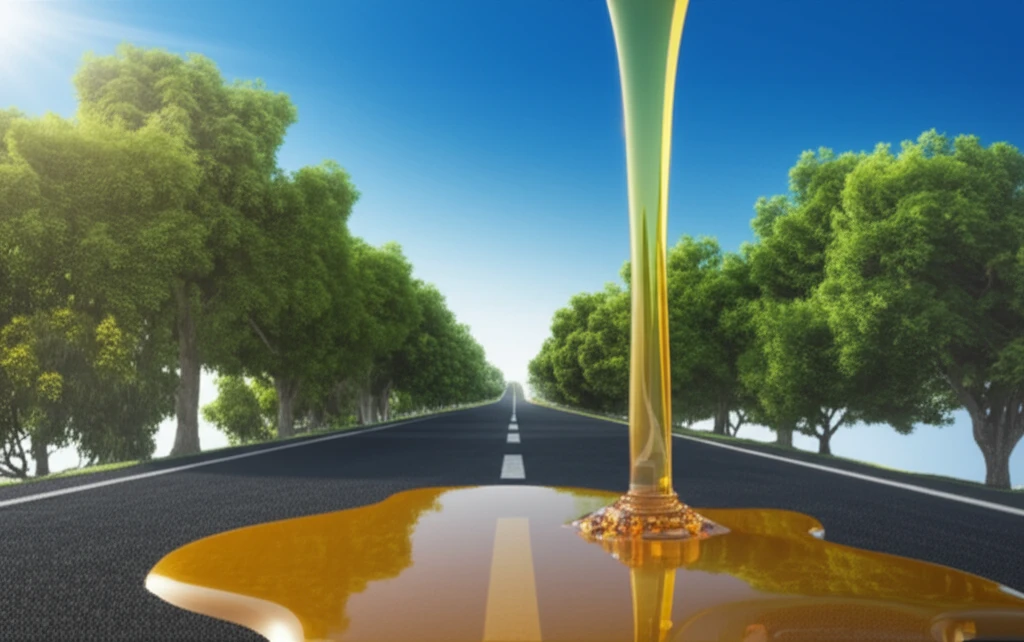
Beyond the Pothole: How Innovative Bitumen is Paving the Way for Sustainable Roads

"Discover the groundbreaking advancements in road construction that are making our streets more durable, eco-friendly, and resilient to the elements."
Roads are the lifelines of modern society, essential for transportation, commerce, and everyday life. Yet, the constant wear and tear from traffic, weather, and environmental factors can take a significant toll, leading to potholes, cracks, and costly repairs. In response, the construction industry is constantly seeking innovative solutions to improve road durability and sustainability. One such breakthrough involves modifying bitumen, the fundamental binder in asphalt, with processed fats and other advanced additives.
Traditional asphalt production often relies on bitumen, a petroleum-based product, which can be susceptible to cracking, oxidation, and environmental degradation. Recognizing the need for more resilient and eco-friendly alternatives, researchers and engineers have been exploring the use of various additives and modifiers. Among these, processed fats, derived from natural and post-refining sources, have emerged as a promising solution. These materials not only enhance the performance of asphalt but also contribute to a more sustainable approach to road construction.
This article delves into the innovative world of bitumen modification, focusing on how processed fats are transforming road construction. We will explore the science behind these advancements, the benefits they offer, and their potential to create roads that are stronger, more durable, and kinder to the environment. Get ready to discover how these innovations are paving the way for a more sustainable and resilient future for our roadways.
The Science of Bitumen and Its Challenges
To understand the impact of these innovative additives, it's essential to first grasp the basics of bitumen. Bitumen, a sticky, black, and highly viscous liquid or semi-solid form of petroleum, serves as the primary binder in asphalt. It holds the aggregate (the mixture of sand, gravel, and other materials) together, providing the structural integrity of the road surface. However, bitumen faces several challenges that can compromise road performance and longevity. Exposure to sunlight, extreme temperatures, and heavy traffic can cause bitumen to oxidize and harden, leading to cracking and reduced flexibility. Water infiltration can also exacerbate these issues, leading to potholes and other forms of damage.
- Bitumen is a petroleum-based product.
- Bitumen is used as a primary binder in asphalt.
- Bitumen is susceptible to cracking, oxidation, and environmental degradation.
- Water infiltration can exacerbate these issues, leading to potholes and other forms of damage.
- Traditional bitumen production has environmental implications.
The Road Ahead: A Sustainable Future for Road Construction
The advancements in bitumen modification, particularly the use of processed fats, represent a significant step toward more sustainable and durable roads. These innovations not only enhance road performance but also contribute to reducing the environmental impact of road construction. As research and development continue, we can expect even more groundbreaking solutions that will further improve the quality and longevity of our roadways. By embracing these advancements, we can pave the way for a future where roads are not only essential infrastructure but also a testament to our commitment to sustainability and environmental stewardship.