
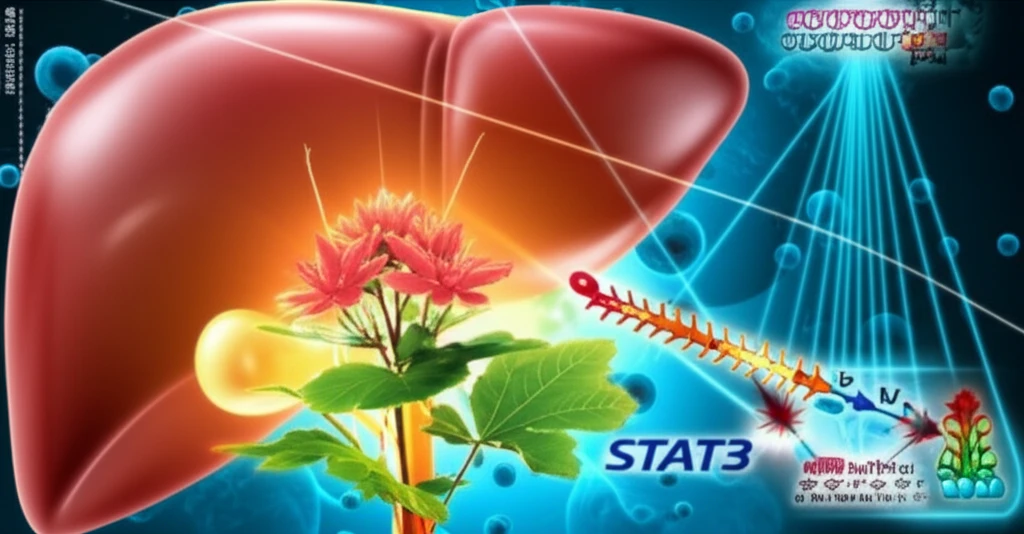
Illustration of Rheum palmatum fighting liver cancer cells, highlighting the STAT3 pathway.

Beyond the Hype: Can a Traditional Herb Really Fight Liver Cancer?

"Scientists Uncover Promising Anti-Cancer Properties of Rheum palmatum Extract"


In the relentless pursuit of combating cancer, scientists are constantly seeking new and effective treatments. Liver cancer, a formidable foe, demands innovative approaches, and the spotlight is now on a traditional Chinese herb: Rheum palmatum. This ancient remedy, often used in traditional medicine, is showing promising signs of potential as an anti-cancer agent.

This article delves into the fascinating findings of a recent study that explores the anti-cancer properties of Rheum palmatum extract. We'll uncover how this extract works at a cellular level, the impact it has on liver cancer cells, and what this means for the future of cancer treatment. Prepare to be informed and intrigued as we navigate the complexities of this groundbreaking research.

Join us on a journey of scientific discovery. We'll explore the research, the implications, and the hope that Rheum palmatum brings to the fight against liver cancer. Whether you're a health enthusiast, a science aficionado, or simply curious, this article promises an enlightening and engaging read.

Unpacking the Science: How Rheum palmatum Fights Liver Cancer

Illustration of Rheum palmatum fighting liver cancer cells, highlighting the STAT3 pathway.

The recent study, published in the Journal of Ethnopharmacology, provides compelling evidence of Rheum palmatum extract's anti-cancer activity. The research team discovered that the extract works by inhibiting the signal transducer and activator of transcription 3 (STAT3) signaling pathway. This pathway plays a significant role in the growth and spread of cancer cells. By disrupting this pathway, the extract effectively targets and hinders cancer cells.

The study's findings are particularly exciting because they shed light on how this traditional herb directly impacts liver cancer cells. Researchers found that the extract reduced the viability of liver cancer cells, essentially slowing down their growth. Additionally, the extract triggered apoptosis, or programmed cell death, in these cells. This dual-action approach, combined with the extract's ability to inhibit angiogenesis (the formation of new blood vessels that feed tumors), highlights its multifaceted anti-cancer potential.

  • Reduced Cell Viability: The extract decreased the growth and survival of liver cancer cells.
  • Induced Apoptosis: The extract triggered programmed cell death in cancer cells.
  • Inhibited Angiogenesis: The extract curbed the formation of new blood vessels that feed tumors.
  • Reduced Metastasis: The extract decreased the migration and invasion of cancer cells.
  • Suppressed Key Proteins: The extract lowered the levels of proteins like Cyclin D1, CDK4, and c-Myc, which are essential for cancer cell growth and survival.
The study's implications extend beyond laboratory results. The researchers also explored the effects of Rheum palmatum extract in a xenograft tumor nude mouse model of HCC. In these mice, the extract significantly reduced tumor growth, further reinforcing its anti-cancer potential. This in vivo evidence adds another layer of credibility to the extract's potential as a therapeutic agent for liver cancer. These findings have paved the way for further research and potential clinical trials, bringing hope to those affected by this devastating disease.

A Glimmer of Hope: The Future of Liver Cancer Treatment

The research on Rheum palmatum offers a beacon of hope in the fight against liver cancer. With its promising anti-cancer effects, this traditional herb has the potential to be a significant therapeutic agent. While more research is needed, the initial findings are encouraging, suggesting that Rheum palmatum could be a valuable addition to the arsenal of treatments for this devastating disease. This is an exciting time for cancer research, and we eagerly anticipate the next steps in this promising journey. This article offers information and insights that are for informational purposes only and should not be considered medical advice. Always consult with a healthcare professional for any health concerns or before making any decisions related to your health or treatment.

About this Article -

This article was crafted using a human-AI hybrid and collaborative approach. AI assisted our team with initial drafting, research insights, identifying key questions, and image generation. Our human editors guided topic selection, defined the angle, structured the content, ensured factual accuracy and relevance, refined the tone, and conducted thorough editing to deliver helpful, high-quality information.See our About page for more information.

This article is based on research published under:

DOI-LINK: 10.1016/j.jep.2018.12.019, Alternate LINK

Title: Rheum Palmatum Extract Exerts Anti-Hepatocellular Carcinoma Effects By Inhibiting Signal Transducer And Activator Of Transcription 3 Signaling

Subject: Drug Discovery

Journal: Journal of Ethnopharmacology

Publisher: Elsevier BV

Authors: Zhang-Bin Tan, Hui-Jie Fan, Yu-Ting Wu, Ling-Peng Xie, Yi-Ming Bi, Hong-Lin Xu, Hong-Mei Chen, Jun Li, Bin Liu, Ying-Chun Zhou

Published: 2019-03-01

Everything You Need To Know

1

What is Rheum palmatum and why is it being researched in relation to liver cancer?

Rheum palmatum is a traditional Chinese herb that has been used in traditional medicine for various ailments. Recent research has focused on its potential anti-cancer properties, particularly its effects on liver cancer cells. Scientists are exploring how Rheum palmatum extract can impact the growth and spread of liver cancer.

2

How does Rheum palmatum extract work to fight liver cancer at a cellular level?

Research indicates that Rheum palmatum extract inhibits the signal transducer and activator of transcription 3 (STAT3) signaling pathway, which is crucial for cancer cell growth. By disrupting the STAT3 pathway, the extract effectively hinders the proliferation of liver cancer cells. Additionally, it can reduce cell viability, induce apoptosis (programmed cell death), and inhibit angiogenesis, which is the formation of new blood vessels that feed tumors.

3

What specific effects did Rheum palmatum extract have on liver cancer cells in the study?

In the study, Rheum palmatum extract demonstrated multiple beneficial effects on liver cancer cells. It reduced cell viability, slowing down the growth of cancer cells. The extract also induced apoptosis, triggering programmed cell death in these cells. Furthermore, it inhibited angiogenesis, preventing the formation of new blood vessels that tumors need to grow. Additionally, the extract decreased the migration and invasion of cancer cells reducing metastasis. The study also showed the extract lowered the levels of proteins like Cyclin D1, CDK4, and c-Myc, which are essential for cancer cell growth and survival.

4

What are the implications of Rheum palmatum extract suppressing proteins like Cyclin D1, CDK4 and c-Myc in relation to liver cancer treatment?

The suppression of proteins such as Cyclin D1, CDK4, and c-Myc by Rheum palmatum extract holds significant implications for liver cancer treatment. These proteins are vital for cancer cell growth and survival, acting as key regulators in cell cycle progression and proliferation. By lowering the levels of these proteins, Rheum palmatum extract can effectively inhibit the uncontrolled growth of liver cancer cells, potentially leading to tumor regression or stabilization. This targeted approach offers a promising avenue for developing more effective and less toxic therapies for liver cancer, by disrupting the fundamental mechanisms that drive cancer cell proliferation.

5

Beyond laboratory studies, is there any evidence of Rheum palmatum's effectiveness in living organisms regarding liver cancer?

Yes, the study extended its investigation beyond laboratory cell cultures. Researchers explored the effects of Rheum palmatum extract in a xenograft tumor nude mouse model of HCC (hepatocellular carcinoma). In these mice, the extract significantly reduced tumor growth. This in vivo evidence provides stronger support for Rheum palmatum's potential as a therapeutic agent for liver cancer, as it demonstrates effectiveness in a living organism. Such findings increase the likelihood of future clinical trials and the potential development of new treatments.

Newsletter Subscribe

Subscribe to get the latest articles and insights directly in your inbox.