
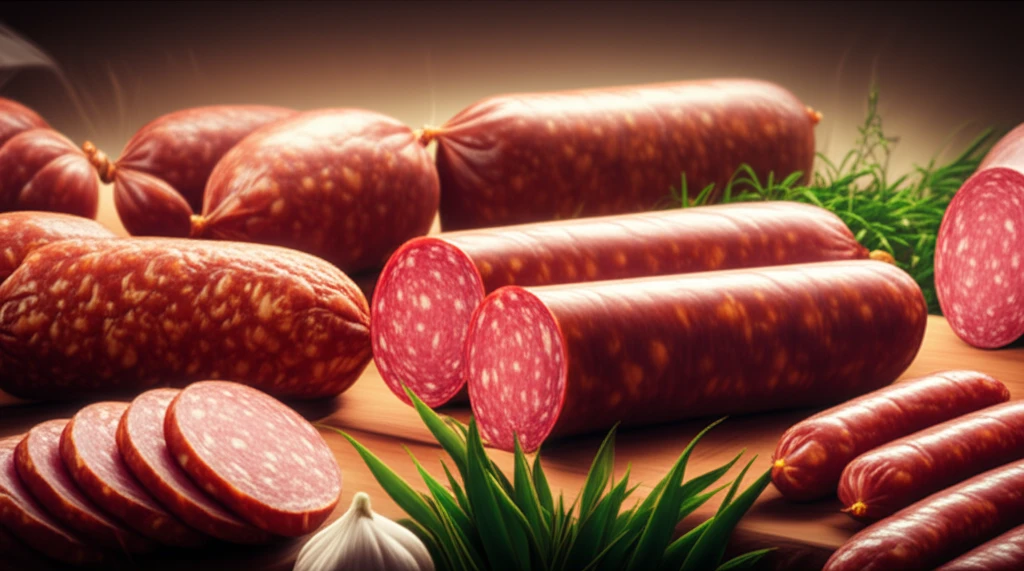
A vibrant Argentine sausage market showcasing healthy salamin.

Beyond the Grill: Unveiling the Nutritional Secrets of Argentine Sausages

"Are traditional Argentine sausages a hidden gem of protein and healthy fats? A deep dive into their nutritional composition might surprise you."


Argentine cuisine boasts a rich tapestry of flavors, and its traditional sausages are no exception. Beyond their savory taste, these sausages hold a complex nutritional profile that's worth exploring. From the dry-cured salamin to the smoky chorizo ahumado, each variety offers a unique blend of nutrients.

While often associated with high fat content, not all fats are created equal. This article delves into the fatty acid composition of Argentine sausages, examining the presence of saturated, monounsaturated, and polyunsaturated fats, as well as the beneficial conjugated linoleic acid (CLA). Understanding these components is key to assessing the potential health impact of these beloved meats.

This article will unpack the findings of a study that analyzed the nutritional composition of traditional Argentine sausages produced in the northeastern region, Chaco. We will explore the differences between varieties and contrast them with similar products from other countries, providing valuable insights for health-conscious consumers.

Decoding the Sausage: Nutritional Value Unveiled

A vibrant Argentine sausage market showcasing healthy salamin.

A recent study dissected the nutritional components of four popular Argentine sausages: salamin (dry-cured and fermented), chorizo (raw), chorizo ahumado (cooked and smoked), and morcilla (blood sausage). The research revealed variations in moisture, protein, fat, and carbohydrate content across the different types, highlighting the impact of processing methods and regional recipes.

Here's a breakdown of key nutritional findings:

  • Carbohydrates: Salamin exhibited slightly lower carbohydrate content compared to other sausages.
  • Fat: Raw chorizo showed significantly lower fat content.
  • Protein: Chorizo ahumado stood out with significantly higher protein levels.
  • PUFA/SFA Ratio: Most sausages, except chorizo, had a PUFA/SFA ratio slightly above 0.4, which is a healthy fat ratio
  • CLA Content: The sausages contained conjugated linoleic acid (CLA) ranging from 0.03% to 0.19%.
These findings suggest that salamin from northeastern Argentina, specifically the Chaco region, stands out with its high protein and polyunsaturated fatty acid (PUFA) content. What makes this particular sausage potentially more healthful than similar products from other regions and countries is its lower atherogenic and thrombogenic indexes.

Savoring Responsibly: Making Informed Choices

The research underscores that not all sausages are created equal. Argentine salamin, in particular, appears to offer a more favorable nutritional profile compared to other varieties and similar products from elsewhere.

For those mindful of their health, opting for salamin from the Chaco region may be a way to enjoy traditional flavors while benefiting from a higher protein and PUFA content, as well as lower atherogenic and thrombogenic indexes. As always, moderation is key.

Further research could explore the impact of different feeding practices on the nutritional composition of Argentine sausages. Understanding how grass-fed versus grain-fed cattle influence fatty acid profiles could provide further insights for consumers seeking the healthiest options.

About this Article -

This article was crafted using a human-AI hybrid and collaborative approach. AI assisted our team with initial drafting, research insights, identifying key questions, and image generation. Our human editors guided topic selection, defined the angle, structured the content, ensured factual accuracy and relevance, refined the tone, and conducted thorough editing to deliver helpful, high-quality information.See our About page for more information.

This article is based on research published under:

DOI-LINK: 10.1590/s0101-20612013005000007, Alternate LINK

Title: Nutritional Value And Fatty Acid Composition Of Some Traditional Argentinean Meat Sausages

Subject: Food Science

Journal: Food Science and Technology

Publisher: FapUNIFESP (SciELO)

Authors: Mara Cristina Romero, Ana María Romero, Mirtha Marina Doval, Maria Alicia Judis

Published: 2013-02-25

Everything You Need To Know

1

What are the main nutritional differences between different types of Argentine sausages?

Argentine sausages, like salamin, chorizo (raw), chorizo ahumado, and morcilla, have varying nutritional profiles due to differences in processing methods and regional recipes. These variations influence moisture, protein, fat, and carbohydrate content. For example, chorizo ahumado has higher protein levels, while raw chorizo has lower fat content. Salamin exhibits slightly lower carbohydrate content. The presence of beneficial components such as conjugated linoleic acid (CLA) and the polyunsaturated to saturated fatty acid ratio (PUFA/SFA) also differ among the sausage types.

2

Why is the fatty acid composition of Argentine sausages important?

The fatty acid composition of Argentine sausages, specifically the presence of saturated, monounsaturated, and polyunsaturated fats, and the beneficial conjugated linoleic acid (CLA), is important. Understanding these components helps assess the potential health impact. The PUFA/SFA ratio of most sausages, excluding chorizo, was slightly above 0.4, indicating a healthy fat ratio. The sausages also contained conjugated linoleic acid (CLA), which is beneficial. These elements are key to understanding the health implications of consuming these sausages.

3

What did the study analyze in the nutritional composition of Argentine sausages?

The study analyzed the nutritional composition of four Argentine sausages: salamin, chorizo (raw), chorizo ahumado, and morcilla. This allowed researchers to identify differences in moisture, protein, fat, and carbohydrate content, revealing the impact of processing methods. These insights are valuable for health-conscious consumers who want to make informed choices about the sausages they consume. The analysis of the Chaco region's products allowed for comparing and contrasting with products of other regions and countries.

4

What makes Argentine salamin from the Chaco region stand out nutritionally?

Salamin from the Chaco region in northeastern Argentina is notable for its high protein and polyunsaturated fatty acid (PUFA) content. This particular sausage may be healthier than similar products due to its lower atherogenic and thrombogenic indexes. These indexes are measures of the impact on the formation of plaque in arteries and blood clot formation, respectively. This suggests that this type of sausage could have a more favorable impact on cardiovascular health.

5

Are all Argentine sausages equally healthy?

Not all sausages have the same nutritional profile. Argentine salamin, in particular, offers a potentially more favorable nutritional composition compared to other varieties and similar products from elsewhere. The study's findings suggest that the processing methods, regional recipes, and ingredients significantly influence the nutritional value of sausages. The variations in fat, protein, and carbohydrate content, along with the presence of beneficial components like conjugated linoleic acid (CLA) and a healthy PUFA/SFA ratio, affect the potential health benefits of each sausage type, making some a better choice than others.

Newsletter Subscribe

Subscribe to get the latest articles and insights directly in your inbox.