
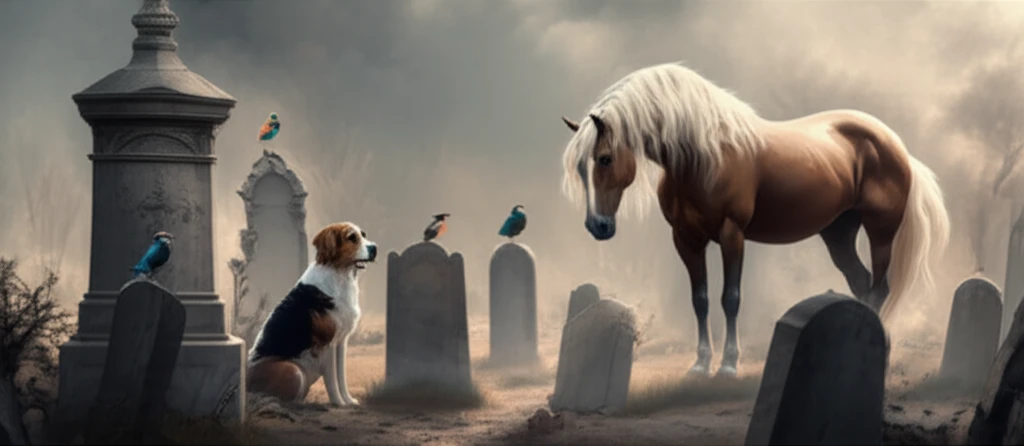
A surreal graveyard scene with animals, symbolizing Romantic poetry's memorialization of animals.

Beyond the Graveyard: How the Romantics Memorialized Animals in Verse

"Discover how 19th-century poets used animal imagery to explore mortality, memory, and the human-animal bond in unexpected ways."


The Romantic era in English literature, spanning the late 18th and early 19th centuries, was a period of profound social and intellectual change. This era saw a shift in attitudes toward animals, moving beyond purely utilitarian views to recognize their emotional and symbolic significance. Cemeteries and graveyards, with their tangible reminders of mortality, became a focal point for contemplation, and animals increasingly found their place within this landscape of reflection.

In "Memorializing Animals During the Romantic Period," Chase Pielak delves into the works of prominent Romantic poets such as William Wordsworth, John Clare, Samuel Taylor Coleridge, Lord Byron, and others. Pielak uncovers how these poets used animal imagery to explore themes of death, memory, and the complex relationship between humans and the animal world. He argues that the presence of animals in Romantic poetry is not merely decorative; it reflects a deeper engagement with questions of mortality and the human condition.

This article will dissect Pielak's analysis, revealing how Romantic poets employed animals as potent symbols to grapple with anxieties surrounding death, the nature of memory, and the evolving understanding of human-animal relationships. By examining specific poems and the contexts in which they were written, we'll uncover the rich tapestry of meaning woven into the memorialization of animals during this transformative period.

Animals as Reflections of Mortality and Memory

A surreal graveyard scene with animals, symbolizing Romantic poetry's memorialization of animals.

Pielak highlights the recurring theme of mortality in Romantic poetry, often expressed through the imagery of dead or dying animals. These images served as a mirror, reflecting human anxieties about death and the fleeting nature of existence. The Romantics, grappling with changing social landscapes and a growing awareness of environmental issues, found in animals a powerful symbol of vulnerability and the shared fate of all living beings.

Wordsworth's poetry, in particular, is steeped in the significance attached to memorialized animal encounters. As Pielak notes, Wordsworth's poem "Tribute to the Memory of the Same Dog" is not simply a tribute to a specific animal but an attempt to capture and preserve the perceptual experience of the dog itself within memory. This highlights the Romantic interest in not just remembering animals but in attempting to understand their unique perspective and place in the world.

  • Decay and Transformation: The Romantics were fascinated by the process of decay, both in the natural world and in human society. Animal carcasses and the imagery of decomposition appear frequently in their poetry, serving as a reminder of the transience of life and the inevitability of death.
  • The Graveyard as a Meeting Place: Cemeteries became a symbolic space where humans and animals intersected. The presence of animals within the graveyard landscape blurred the lines between the human and natural realms, prompting reflection on the shared fate of all living beings.
  • Epitaphs and Inscriptions: Pielak discusses how epitaphs, traditionally used to commemorate human lives, were sometimes used to memorialize animals. These inscriptions served as a way to acknowledge the animal's unique existence and to grapple with the loss of a creature that had shared a close bond with humans.
The use of animal imagery also allowed Romantic poets to explore the limitations of human understanding. By imagining the world from an animal's perspective, they could challenge anthropocentric views and question the boundaries between the human and animal realms. This is evident in Clare's work, where the poet uses animal imagery to imagine himself behind the face of an animal, blurring the lines between human and animal identity.

The Enduring Legacy of Animal Memorialization

The Romantic era's exploration of animal memorialization in poetry offers a fascinating glimpse into a changing cultural landscape. By examining the works of poets like Wordsworth and Clare, we can gain a deeper understanding of the anxieties and aspirations that shaped this period.

The themes explored by the Romantics – mortality, memory, and the human-animal bond – remain relevant today. As we grapple with environmental concerns and a growing awareness of animal sentience, the poems discussed by Pielak offer a valuable perspective on our relationship with the natural world.

Further exploration of Romantic literature can provide valuable insights into how we understand and interact with animals, encouraging a more compassionate and nuanced approach to the creatures with whom we share the planet. Pielak's analysis serves as a powerful reminder of the enduring power of poetry to illuminate the complexities of the human experience and our connection to the animal kingdom.

About this Article -

This article was crafted using a human-AI hybrid and collaborative approach. AI assisted our team with initial drafting, research insights, identifying key questions, and image generation. Our human editors guided topic selection, defined the angle, structured the content, ensured factual accuracy and relevance, refined the tone, and conducted thorough editing to deliver helpful, high-quality information.See our About page for more information.

This article is based on research published under:

DOI-LINK: 10.1080/13576275.2017.1304368, Alternate LINK

Title: Memorializing Animals During The Romantic Period

Subject: Philosophy

Journal: Mortality

Publisher: Informa UK Limited

Authors: George E. Dickinson

Published: 2017-03-27

Everything You Need To Know

1

What cultural shifts led to the memorialization of animals in poetry during the Romantic era?

The Romantic era, spanning the late 18th and early 19th centuries, witnessed a shift in perspectives, moving beyond purely utilitarian views of animals. This period saw the increasing recognition of animals' emotional and symbolic significance. Cemeteries became focal points for contemplation, with animals increasingly featured in this landscape of reflection. The poems by authors such as William Wordsworth, John Clare, Samuel Taylor Coleridge, and Lord Byron are used to reflect this change.

2

How did Romantic poets use animal imagery to address themes of mortality and memory?

The poets used animal imagery to explore themes of death and memory, reflecting human anxieties about mortality. The imagery of decaying animals, like animal carcasses and decomposition, served as a reminder of the transience of life. These images offered insight into human anxieties surrounding death, the nature of memory, and the evolving understanding of human-animal relationships. Poems such as Wordsworth's "Tribute to the Memory of the Same Dog" capture and preserve the perceptual experience of the dog within memory.

3

What role did specific poets like Wordsworth and Clare play in this exploration of animal representation?

William Wordsworth and John Clare, among others, utilized animals as potent symbols. They explored the limitations of human understanding, challenged anthropocentric views, and questioned boundaries between human and animal realms. Their poems used animals to imagine and understand their unique perspectives and place in the world. Clare, for instance, used animal imagery to imagine himself from an animal's perspective, blurring the lines between human and animal identity.

4

How did the physical and symbolic spaces like graveyards contribute to the memorialization of animals?

Epitaphs, traditionally used to commemorate human lives, were sometimes used to memorialize animals. These inscriptions acknowledged an animal's unique existence. Cemeteries also became symbolic spaces where humans and animals intersected. The graveyard setting blurred the lines between the human and natural realms, prompting reflection on the shared fate of all living beings. These examples highlight the evolving understanding of human-animal relationships and the shared experience of mortality.

5

What is the significance of this exploration of animal memorialization in the context of the Romantic era?

The exploration of animal memorialization in poetry during the Romantic era offers a glimpse into a changing cultural landscape. The era, and the poets within it, grappled with changing social landscapes and a growing awareness of environmental issues, finding in animals a powerful symbol of vulnerability and the shared fate of all living beings. Poets like Wordsworth and Clare, among others, show the anxieties and aspirations that shaped this period.

Newsletter Subscribe

Subscribe to get the latest articles and insights directly in your inbox.