
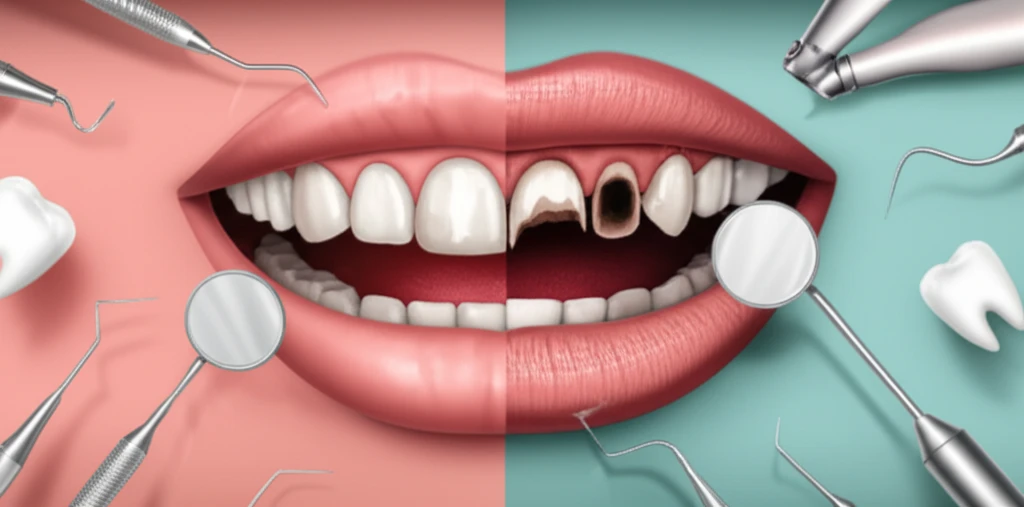
Illustration comparing a healthy and damaged mouth, highlighting different dental procedures.

Beyond the Drill: Unpacking Why Some Dental Procedures Fail (and What it Means for You)

"New research sheds light on the limitations of certain dental repair techniques compared to replacement, and how it impacts your smile's longevity."


Choosing the right dental treatment can feel like navigating a maze. With so many options, from fillings to crowns, it's hard to know which path leads to the best, longest-lasting results. Recent research published in the Journal of Dentistry has examined some of the most common procedures and compared them to each other. This article aims to break down that research, offering clear, easy-to-understand insights so you can make the best decisions for your oral health.

The study, conducted by researchers, looked at different approaches to handling dental issues, particularly focusing on the longevity of different treatments. The study compared minimally invasive techniques like fillings, sealing and repair versus complete replacement options. The goal was to determine which approach resulted in the most durable and effective outcomes. The study raises critical questions about the choices we make for our teeth and how long they last.

This article will examine the study's key findings and consider what these results might mean for you. We'll explore the advantages and disadvantages of various dental procedures, helping you understand the importance of informed decision-making in maintaining a healthy, beautiful smile. We will also consider real-world examples of these procedures and what they mean for patients.

What the Study Uncovered: Key Findings on Dental Procedures

Illustration comparing a healthy and damaged mouth, highlighting different dental procedures.

The research centered on comparing minimally invasive techniques (MITs) with complete replacement strategies when managing defective restorations. The scientists investigated the longevity of each method. They gathered data from multiple studies that involved a significant number of dental patients who had undergone a variety of treatments. In the study, the researchers found that while the minimally invasive techniques were in some cases beneficial, this information may not be sufficient enough to support them for any kind of long-term success.

The researchers looked at studies with 1,024 participants and their treatments. They compared techniques such as fillings, sealing, and repair with more extensive procedures. After analyzing the data, they observed the following points:

  • Limited Applicability: The study showed limitations to minimally invasive techniques, especially when deciding on long-term treatments.
  • Lack of Meta-Analysis: The researchers did not conduct meta-analyses, meaning the study did not comprehensively compare the results of different studies in a statistical way.
  • Incomplete Synthesis: The study did not synthesize the information in detail across all the studies, making the conclusions less comprehensive.
  • Varied Outcomes: Outcomes within each group of patients varied widely, making it hard to pinpoint the best treatment across all scenarios.
The study pointed out that, in some cases, the evidence supporting certain dental repair methods was lacking. The assessment also stated that the evidence used to determine the success or failure of each technique was inadequate. This makes it difficult to determine the best options. The limitations in these research methods make it important to consider the study's findings very carefully when considering treatment options.

Making Informed Choices for a Healthy Smile

The study underscores the importance of staying informed about the latest research and consulting with your dentist to determine the best approach. It provides a reminder that one size does not fit all, and the best treatment depends on individual needs, the specific nature of the dental issue, and the patient's overall health. By engaging in open communication with dental professionals and staying up-to-date on scientific advances, you can make informed choices that promote lasting oral health and a beautiful smile.

About this Article -

This article was crafted using a human-AI hybrid and collaborative approach. AI assisted our team with initial drafting, research insights, identifying key questions, and image generation. Our human editors guided topic selection, defined the angle, structured the content, ensured factual accuracy and relevance, refined the tone, and conducted thorough editing to deliver helpful, high-quality information.See our About page for more information.

Everything You Need To Know

1

What did recent dental research reveal about different approaches to fixing teeth?

Recent research highlights the limitations of some minimally invasive techniques like fillings, sealing, and repair when compared to complete replacement strategies in managing defective restorations. The study suggests that while minimally invasive techniques may offer some benefits, the evidence supporting their long-term success can be lacking. The findings emphasize the importance of considering individual needs and the specific nature of the dental issue when choosing a treatment.

2

What were the key limitations identified in the dental study comparing different restoration techniques?

The study comparing minimally invasive techniques with complete replacement strategies identified several key limitations. These include limited applicability of minimally invasive techniques for long-term treatments, a lack of meta-analysis to comprehensively compare the results of different studies, incomplete synthesis of information across all studies, and varied outcomes within each group of patients. These limitations suggest that more comprehensive research is needed to determine the best treatment options for different dental scenarios.

3

Why is it important to stay informed about the latest dental research when considering treatment options?

Staying informed about the latest dental research is crucial because the study comparing minimally invasive techniques versus complete replacement strategies underscores that "one size does not fit all." The best treatment depends on individual needs, the specific dental issue, and overall health. Understanding the limitations of certain methods, such as fillings, sealing, and repair, and engaging in open communication with dental professionals allows for informed decisions that promote lasting oral health.

4

How do the research findings about dental procedures impact the choices I make for my dental health?

The research findings, particularly the comparison between minimally invasive techniques and complete replacement strategies, suggest that you should engage in detailed discussions with your dentist about all available options and their potential long-term outcomes. Understanding the limitations of techniques such as fillings, sealing, and repair, as highlighted by the study, allows you to make informed decisions. The absence of meta-analysis in the research indicates that outcomes can vary widely, emphasizing the need for personalized treatment plans based on your specific condition.

5

Besides the techniques mentioned in the study (fillings, sealing, repair), what other factors influence the longevity of dental treatments, and why weren't they explored?

Beyond the techniques compared in the study—such as fillings, sealing, and repair versus complete replacement strategies—factors like a patient's oral hygiene habits, diet, the presence of bruxism (teeth grinding), and the dentist's skill and experience significantly influence the longevity of dental treatments. While the study focused on comparing the techniques themselves, it acknowledges the limitations in comprehensively synthesizing information across all studies. Future research could explore the interplay between these patient-specific factors and treatment choices to provide a more holistic understanding of dental treatment outcomes.

Newsletter Subscribe

Subscribe to get the latest articles and insights directly in your inbox.