
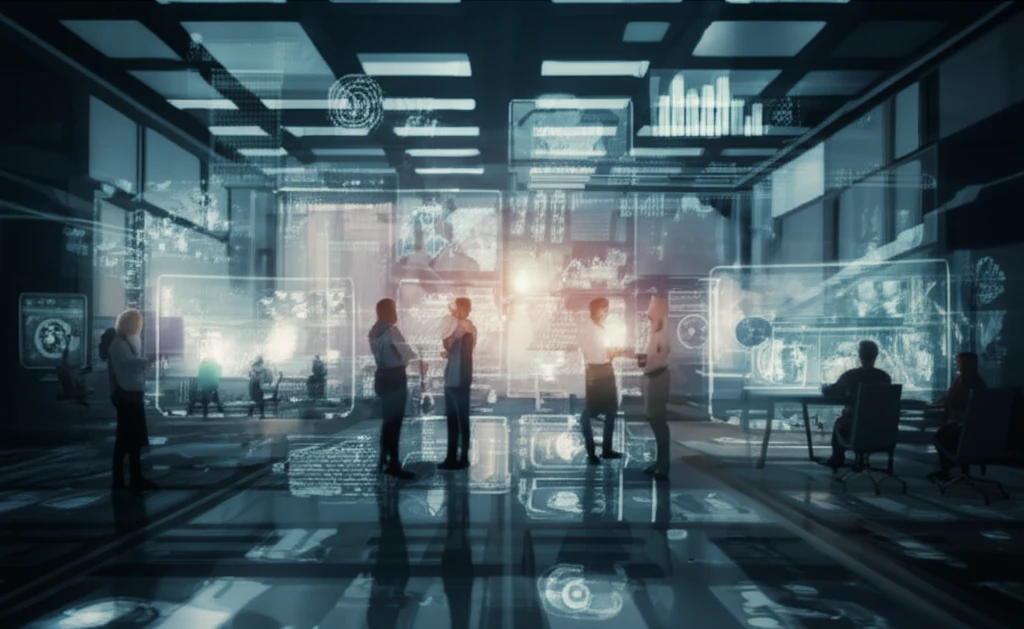
Beyond the Cockpit: How Human-Machine Cooperation is Revolutionizing Safety in Critical Systems

"Exploring the crucial role of human-machine collaboration in life-critical systems, and how it's paving the way for safer, more efficient operations."
In the ever-evolving landscape of modern technology, the synergy between humans and machines is becoming increasingly vital, particularly in sectors where safety and reliability are paramount. Think of air traffic control, complex industrial processes, and even healthcare systems—these life-critical environments demand a delicate balance of human expertise and technological precision. This article delves into the fascinating world of human-machine cooperation, exploring how this collaborative approach is not just a trend, but a necessity for creating safer, more efficient, and resilient systems.
At the heart of this evolution lies a fundamental shift in how we perceive the roles of humans and machines. Traditionally, humans were seen as the primary decision-makers, while machines were tools to aid them. However, the rise of automation and artificial intelligence has blurred these lines, creating a dynamic interplay where both human and machine bring unique strengths to the table. This requires a deep understanding of cognitive functions like monitoring, decision-making, and error prevention.
This article will explore the challenges and solutions within human-machine cooperation, highlighting the importance of shared responsibility, task allocation, and the integration of fault-tolerant systems. By understanding these concepts, we can pave the way for a future where humans and machines work together seamlessly, creating systems that are not only safer but also more adaptable and responsive to the unexpected. Join us as we uncover the secrets of this crucial collaboration and its impact on our daily lives.
The Symbiotic Relationship: Why Human-Machine Cooperation is Key
The concept of human-machine cooperation is not merely about integrating technology; it's about creating a symbiotic relationship where each component complements the other. Human operators bring unique cognitive abilities, such as the capacity to deal with unexpected situations and make nuanced judgments, which machines often lack. Machines, on the other hand, excel in processing vast amounts of data, performing repetitive tasks, and providing real-time information that supports human decision-making. This collaboration enhances overall system performance, making it more efficient and reliable.
- Enhanced Safety: Reduces human error through automation and provides real-time data for better decision-making.
- Increased Efficiency: Streamlines operations by automating repetitive tasks, allowing humans to focus on more complex challenges.
- Improved Adaptability: Creates systems that can respond effectively to unexpected events, minimizing disruptions and ensuring continuity.
- Optimized Workload: Distributes tasks, preventing overload and improving the cognitive performance of human operators.
The Future is Collaborative: Embracing the Power of Human-Machine Teams
As technology continues to advance, the importance of human-machine cooperation will only grow. By prioritizing a thoughtful and collaborative approach, we can build systems that are not only incredibly efficient but also resilient and human-centered. From aviation to healthcare, the potential for this synergy is limitless. By understanding the principles of task allocation, shared responsibility, and fault-tolerant design, we are not only improving technological systems, but also paving the way for a safer and more reliable future for everyone.