
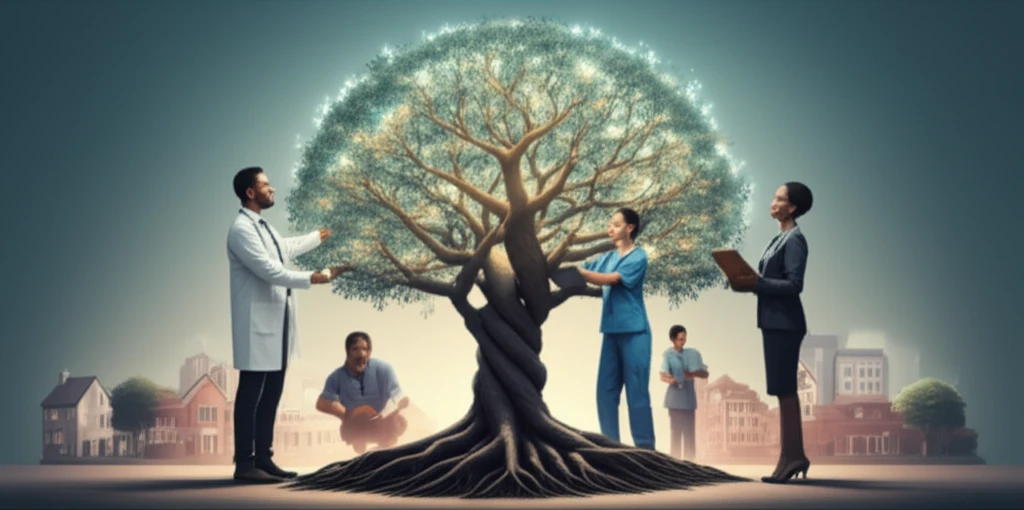
A diverse team of healthcare professionals collaboratively building a healthy family tree.

Beyond the Clinic: How Multidisciplinary Residencies are Shaping the Future of Family Healthcare

"Discover how integrating different healthcare professionals into family health units is transforming patient care and community well-being."


The healthcare landscape is constantly evolving, demanding professionals who can navigate complex challenges with agility and empathy. Traditional healthcare models often operate in silos, where doctors, nurses, and other specialists work independently. However, this fragmented approach can lead to gaps in patient care and a lack of holistic understanding of health issues.

Recognizing these limitations, there's a growing movement towards multidisciplinary healthcare, particularly within family health settings. This approach emphasizes collaboration and integrated care, ensuring that patients receive comprehensive and coordinated support. A key component of this shift is the implementation of multidisciplinary residency programs.

These programs bring together healthcare professionals from diverse fields—such as medicine, nursing, psychology, and social work—to work side-by-side in family health units. By fostering teamwork and shared learning, these residencies are transforming not only the way healthcare is delivered, but also the training of future healthcare leaders.

Why Multidisciplinary Teams are Essential for Modern Healthcare

A diverse team of healthcare professionals collaboratively building a healthy family tree.

The benefits of multidisciplinary teams in healthcare are vast and far-reaching. By bringing together professionals with different expertise, these teams can offer more comprehensive and coordinated care. This collaborative approach ensures that all aspects of a patient's health—physical, mental, and social—are addressed.

One of the key advantages of multidisciplinary care is improved communication. When healthcare professionals work closely together, they can share insights and perspectives, leading to more accurate diagnoses and effective treatment plans. This collaborative environment also fosters a sense of shared responsibility, with each team member committed to achieving the best possible outcomes for the patient.

  • Enhanced Patient Outcomes: Comprehensive care addressing diverse needs.
  • Improved Communication: Seamless information sharing among professionals.
  • Holistic Approach: Consideration of physical, mental, and social factors.
  • Shared Responsibility: Collective commitment to patient well-being.
  • Greater Innovation: Diverse perspectives driving creative solutions.
Furthermore, multidisciplinary teams are better equipped to handle complex health issues that require a range of expertise. For example, managing chronic diseases like diabetes or heart disease often involves lifestyle changes, medication management, and psychological support. A multidisciplinary team can provide all these services in a coordinated manner, improving patient adherence and overall health outcomes.

The Future of Family Healthcare: Embracing Collaboration

Multidisciplinary residency programs represent a significant step forward in the evolution of family healthcare. By fostering teamwork, promoting comprehensive care, and addressing the social determinants of health, these programs are creating a new generation of healthcare professionals who are well-equipped to meet the challenges of modern healthcare. As we move forward, embracing collaboration and integrated care will be essential for building healthier communities and improving the well-being of individuals and families.

About this Article -

This article was crafted using a human-AI hybrid and collaborative approach. AI assisted our team with initial drafting, research insights, identifying key questions, and image generation. Our human editors guided topic selection, defined the angle, structured the content, ensured factual accuracy and relevance, refined the tone, and conducted thorough editing to deliver helpful, high-quality information.See our About page for more information.

Everything You Need To Know

1

What exactly is multidisciplinary healthcare?

Multidisciplinary healthcare brings together professionals from different fields, such as medicine, nursing, psychology, and social work, to collaborate in patient care. This is significant because it breaks down traditional healthcare silos, ensuring patients receive comprehensive and coordinated support. The implications of multidisciplinary healthcare include improved patient outcomes, better communication among healthcare providers, and a more holistic approach to addressing health issues.

2

Why are multidisciplinary residency programs important for healthcare?

Multidisciplinary residency programs are essential because they train healthcare professionals to work collaboratively in family health units. This is important because it fosters teamwork, shared learning, and a comprehensive approach to patient care. These residencies are transforming the way healthcare is delivered and shaping the future of healthcare leaders by preparing them to navigate complex challenges with agility and empathy.

3

How do multidisciplinary teams improve patient outcomes?

Multidisciplinary teams enhance patient outcomes by providing comprehensive care that addresses diverse needs. This approach considers physical, mental, and social factors, ensuring a holistic approach to patient well-being. Additionally, improved communication and shared responsibility among team members lead to more accurate diagnoses, effective treatment plans, and greater innovation in healthcare solutions. This comprehensive care addresses the multifaceted nature of health, leading to more effective and sustainable improvements in patient health.

4

Why are collaboration and integrated care so important in healthcare?

Collaboration and integrated care are vital for building healthier communities and improving the well-being of individuals and families. These approaches ensure that healthcare professionals work together to address the social determinants of health, promote comprehensive care, and foster teamwork. Embracing collaboration is essential for meeting the challenges of modern healthcare and creating a new generation of healthcare professionals who are well-equipped to provide patient-centered care.

5

How do multidisciplinary teams help in managing chronic diseases?

Managing chronic diseases like diabetes or heart disease requires a range of expertise, including lifestyle changes, medication management, and psychological support. Multidisciplinary teams can provide these services in a coordinated manner, improving patient adherence and overall health outcomes. This approach ensures that all aspects of a patient's health are addressed, leading to more effective and sustainable management of chronic conditions. Furthermore, the coordinated care can lead to better patient education and self-management skills.

Newsletter Subscribe

Subscribe to get the latest articles and insights directly in your inbox.