
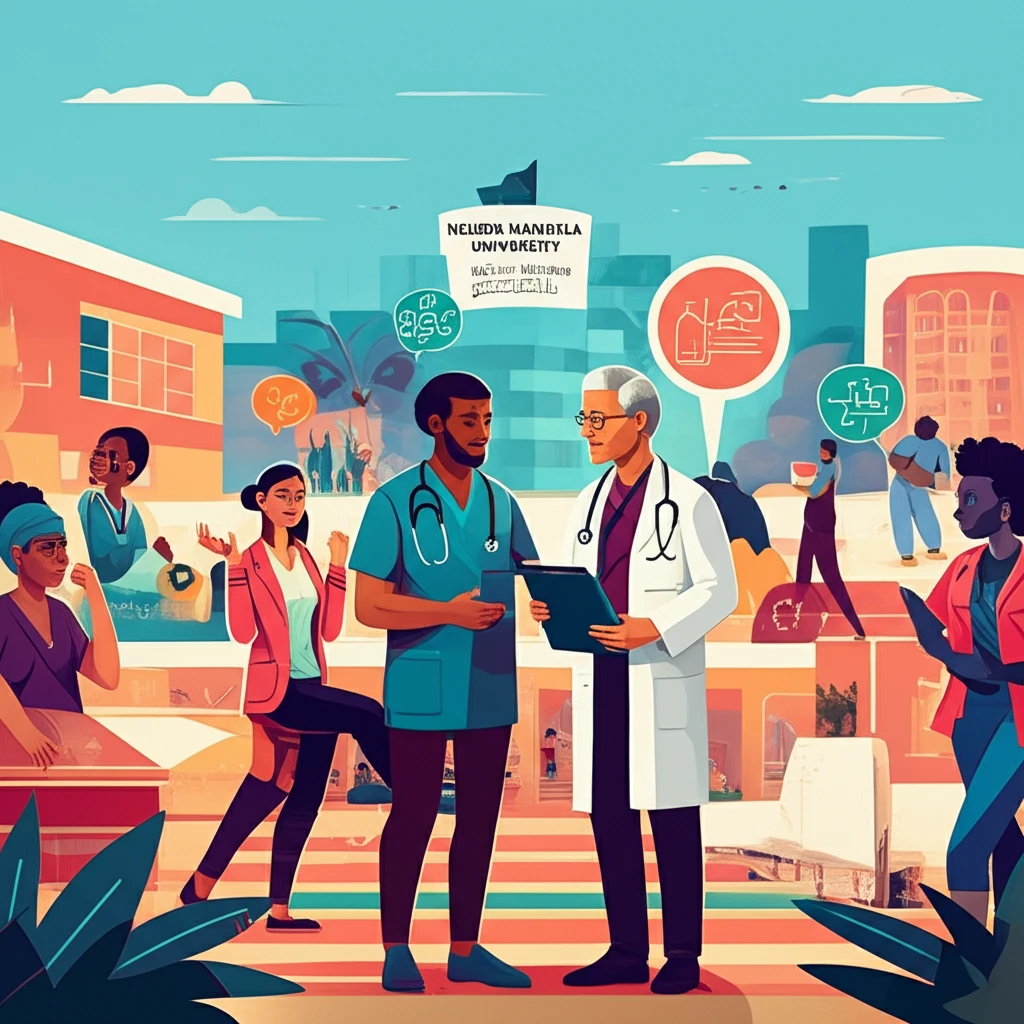
Beyond the Classroom: How Service-Learning Can Reshape Healthcare Education

"Discover how one South African university is using community engagement to cultivate socially accountable healthcare professionals ready to tackle global health challenges."
The global healthcare landscape demands professionals who are not only skilled clinicians but also socially conscious individuals committed to health equity. Traditional healthcare education often falls short in preparing graduates to address the complex social determinants of health that significantly impact patient outcomes. In response to this challenge, innovative approaches like service-learning are gaining traction, offering students immersive experiences in underserved communities.
Service-learning integrates meaningful community service with academic instruction, enriching the learning experience, fostering civic responsibility, and strengthening communities. It's a pedagogical approach that emphasizes active learning, critical reflection, and reciprocal partnerships between educational institutions and community organizations. By engaging directly with real-world health challenges, students develop a deeper understanding of the social, cultural, and economic factors that influence health outcomes.
This article delves into the journey of Nelson Mandela University in South Africa as they transform their health professions curricula through interprofessional service-learning initiatives. It focuses on the Zanempilo Mobile Health Education Platform (MHEP), a pioneering program that brings healthcare students and faculty together to deliver essential services to underserved communities. We'll explore how this initiative cultivates social accountability, interprofessional collaboration, and a commitment to health equity among future healthcare leaders.
The Zanempilo MHEP: A Model for Socially Accountable Service-Learning
The Zanempilo Mobile Health Education Platform (MHEP) is a testament to the transformative potential of service-learning. It addresses critical healthcare gaps in underserved communities while providing invaluable learning experiences for students. This initiative demonstrates how universities can actively contribute to solving pressing social problems while simultaneously shaping the next generation of healthcare professionals.
- Nursing Science
- Emergency Medical Care
- Psychology
- Dietetics
- Human Movement Science
- Social Development Professions
Fostering a New Generation of Socially Accountable Healthcare Professionals
The Zanempilo MHEP's success hinges on a carefully designed process-oriented-participatory (POP) plan. This plan emphasizes collaboration, shared decision-making, and continuous reflection. By consciously setting aside academic hierarchies, the working group fostered open discussions and encouraged the emergence of creative perspectives. This collaborative approach ensures that learning goals are aligned with community needs and that students are actively involved in shaping their own learning experiences.
The learning goals of the Zanempilo MHEP extend beyond traditional knowledge and skills. They encompass attitudes, intentions, and relationships, recognizing the importance of professionalism and interpersonal engagement in underserved settings. By focusing on these crucial dimensions, the program aims to cultivate healthcare professionals who are not only competent but also compassionate, culturally sensitive, and committed to social justice.
The journey of Nelson Mandela University offers valuable lessons for other institutions seeking to integrate service-learning and social accountability into their health professions curricula. By embracing collaborative approaches, prioritizing community needs, and fostering a commitment to social justice, universities can play a pivotal role in shaping a new generation of healthcare professionals who are equipped to address the complex health challenges of the 21st century and beyond.