
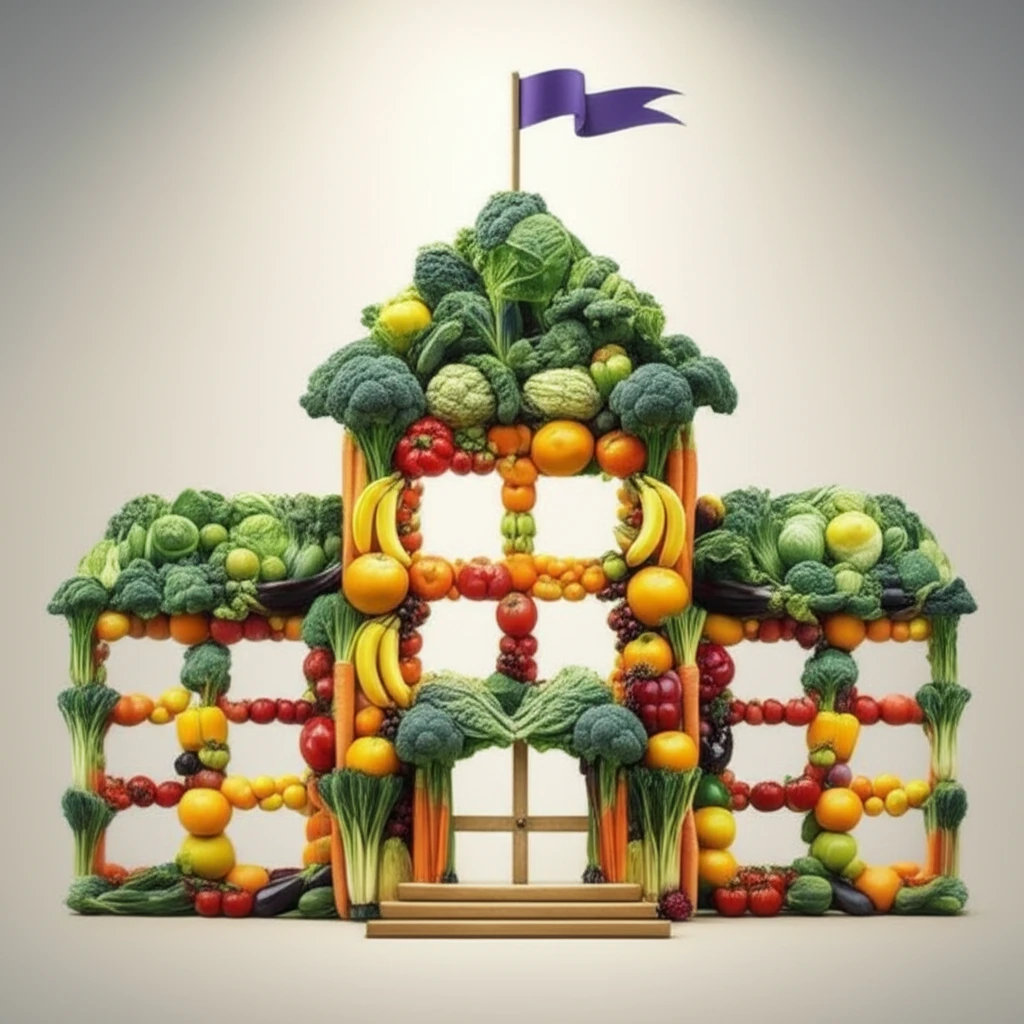
Beyond the Cafeteria: How Organic Food Can Transform School Health

"A Brazilian study reveals the untapped potential of organic school meals in fostering comprehensive health education and community engagement."
In an era where health and wellness are increasingly prioritized, schools play a crucial role in shaping young minds and bodies. The National School Food Program (PNAE) in Brazil, managed by the National Fund for Educational Development (FNDE), aims to improve students' nutritional status, enhance learning, and cultivate healthy eating habits. This initiative recognizes the strategic importance of schools in promoting dietary changes and fostering health and nutrition education, embedding these practices within a broader framework of citizenship.
Across Brazil, various initiatives are solidifying the concept of Health Promoting Schools, supported by the Pan American Health Organization (PAHO). These schools champion practices that encourage healthy human development through constructive relationships and positive health attitudes. By expanding the role of school meals, these programs significantly boost health and nutrition education.
In Santa Catarina, a partnership between the State Department of Education, Science, and Technology (SED) and the Association of Ecological Farmers of the Encosta da Serra Geral (AGRECO) has launched the Taste and Awareness Project (Projeto Sabor Saber, PSS). This project benefits elementary schools in Florianópolis and other state municipalities by providing organic school meals. The central goal of PSS is to gradually integrate the School Project for Organic Food (PEAO) into the pedagogical framework of each state public school, fostering good eating habits and improving meal quality through organic ingredients.
Unveiling the Taste and Awareness Project (PSS)
A comprehensive study was conducted in a state school in Florianópolis, Brazil, to evaluate the educational activities and the use of organic food within the Taste and Awareness Project (PSS). The research employed a qualitative approach, utilizing semi-structured interviews, document analysis, and focus groups to gather data. Participants included the school meal manager, the principal, a group of students, and teachers.
- Organic Food Integration: Organic food is a consistent part of the school's meals.
- Educational Activities: There is a noticeable gap in documented health and nutrition education activities.
- Curriculum Inclusion: While food is discussed in science classes, these topics often arise without structured planning.
- Student Perceptions: Students generally have a positive view of the food served, but they don't specifically associate it with being organic.
Moving Forward: Recommendations and Future Directions
This research underscores the importance of integrating organic food into school meal programs and emphasizes the need for comprehensive health and nutrition education. By fostering partnerships between organic producers, school administrators, and state education officials, it is possible to create a sustainable and health-promoting environment for students. Future efforts should focus on developing structured educational activities, evaluating the impact of these programs, and ensuring that the benefits of organic school meals extend to the broader school community.