
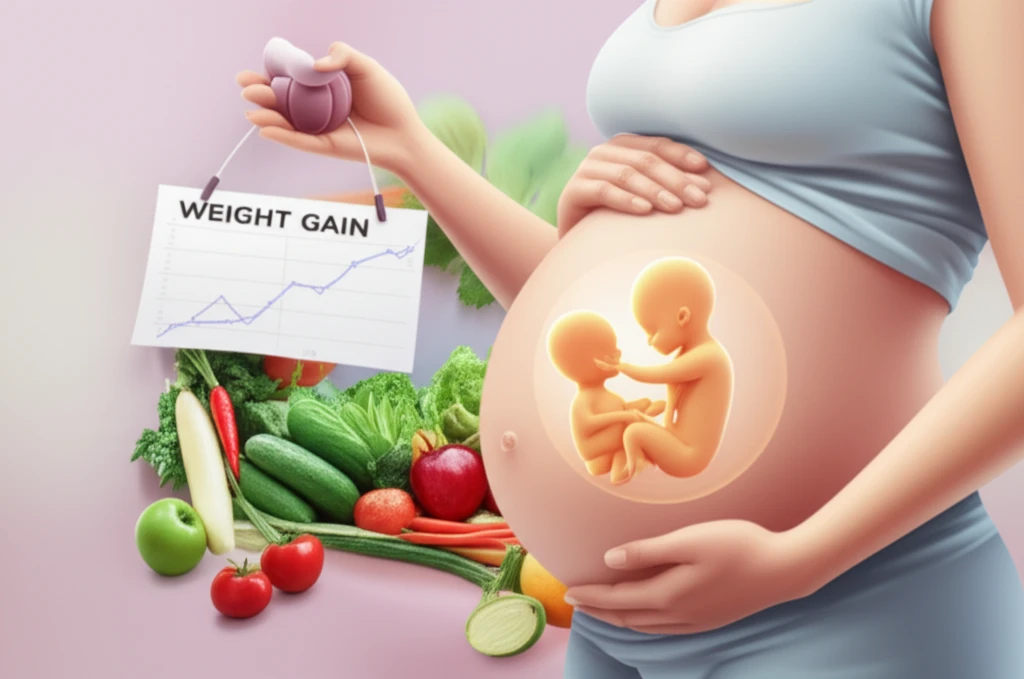
Illustration of a pregnant woman looking at a weight gain chart

Beyond the Bump: Navigating Pregnancy Weight Gain for a Healthier You and Your Baby

"Understanding the Importance of Healthy Weight Gain During Pregnancy and How It Impacts You and Your Baby's Well-being."


Pregnancy is a transformative journey, filled with anticipation, joy, and a whole lot of changes. Among these changes is weight gain, a natural and necessary part of carrying a child. However, understanding the 'how' and 'why' of pregnancy weight gain can be confusing. This article is designed to demystify this process, providing you with the knowledge and tools to approach weight gain in a healthy and informed way.

The goal is not simply to gain weight but to gain the right amount for your body and the health of your baby. Research indicates that both gaining too little and too much weight during pregnancy can lead to complications. This guide aims to provide you with clear, evidence-based information to help you make informed decisions throughout your pregnancy.

We'll explore the recommended weight gain ranges, the benefits of healthy weight management, and practical strategies to achieve your goals. This is more than just numbers on a scale; it's about nourishing both you and your growing baby for a healthy start.

The Essentials of Pregnancy Weight Gain: What You Need to Know

Illustration of a pregnant woman looking at a weight gain chart

Pregnancy weight gain is a complex topic, but understanding the basics is key. The Institute of Medicine (IOM) provides guidelines for weight gain during pregnancy, which are based on your pre-pregnancy Body Mass Index (BMI). These guidelines take into account that women start at different weights. These recommendations are a great starting point, but it is important to consider your individual needs.

Why does weight gain matter? It supports the growth and development of your baby, increases your blood volume, and provides energy reserves for labor and breastfeeding. Gaining the appropriate amount of weight can reduce the risk of complications during pregnancy and promote a smoother recovery after birth. Conversely, gaining too much or too little weight can increase risks for both mother and child. For example, excessive weight gain can increase the risk of gestational diabetes, preeclampsia, and the need for a C-section.

  • Underweight (BMI < 18.5): Gain 28-40 pounds.
  • Normal weight (BMI 18.5-24.9): Gain 25-35 pounds.
  • Overweight (BMI 25-29.9): Gain 15-25 pounds.
  • Obese (BMI 30+): Gain 11-20 pounds.
Remember, these are general guidelines. Your healthcare provider will consider your individual health, lifestyle, and the progress of your pregnancy to provide personalized advice. Regular check-ups and open communication with your doctor or midwife are vital throughout your pregnancy.

Empowering Your Pregnancy Journey: A Path to Wellness

Navigating pregnancy weight gain can be a journey of empowerment, providing you with a sense of control and well-being. By understanding the guidelines, focusing on a balanced diet, staying active, and maintaining regular communication with your healthcare provider, you're taking proactive steps to support your health and your baby's development. Embrace this time with confidence, knowing that you're prioritizing both your own and your baby's health. Remember, every choice you make now is an investment in a healthy future for both of you.

About this Article -

This article was crafted using a human-AI hybrid and collaborative approach. AI assisted our team with initial drafting, research insights, identifying key questions, and image generation. Our human editors guided topic selection, defined the angle, structured the content, ensured factual accuracy and relevance, refined the tone, and conducted thorough editing to deliver helpful, high-quality information.See our About page for more information.

Everything You Need To Know

1

What is the significance of adhering to the Institute of Medicine (IOM) guidelines for weight gain during pregnancy?

Adhering to the Institute of Medicine (IOM) guidelines for weight gain during pregnancy is significant because these guidelines offer a framework tailored to pre-pregnancy Body Mass Index (BMI). Following these recommendations helps support the baby's growth and development, increases blood volume, and provides energy reserves for labor and breastfeeding. Appropriate weight gain can reduce the risk of complications during pregnancy and promotes a smoother recovery after birth. Deviating from the IOM guidelines, by gaining too much or too little weight, can increase risks for both the mother and the child, such as gestational diabetes or preeclampsia. However, these are general guidelines, and personalized advice from a healthcare provider, considering individual health, lifestyle, and pregnancy progress, is vital.

2

How does pre-pregnancy Body Mass Index (BMI) influence the recommended weight gain during pregnancy, and why is this individualized approach important?

Pre-pregnancy Body Mass Index (BMI) is a key factor in determining recommended weight gain during pregnancy because it acknowledges that women start their pregnancies at different weights and with varying body compositions. The Institute of Medicine (IOM) guidelines provide specific weight gain ranges based on BMI categories: underweight (BMI less than 18.5), normal weight (BMI 18.5-24.9), overweight (BMI 25-29.9), and obese (BMI 30+). This individualized approach is crucial because it ensures that weight gain recommendations are appropriate for each woman's unique needs, promoting optimal health outcomes for both mother and baby. It also acknowledges that someone with higher BMI will need to gain less weight compared to someone with a lower BMI to begin with. It is important to get personalized advice from a healthcare provider.

3

What are some potential complications associated with excessive weight gain during pregnancy, and how can these risks be mitigated?

Excessive weight gain during pregnancy can lead to several complications, including an increased risk of gestational diabetes, preeclampsia, and the potential need for a C-section. These risks can be mitigated by adhering to the weight gain guidelines set by the Institute of Medicine (IOM), focusing on a balanced diet rich in nutrients, staying active with safe exercises, and maintaining open communication with a healthcare provider. Regular check-ups allow for monitoring of weight gain and early detection of any potential issues, enabling timely intervention and management to minimize risks.

4

Besides nutrition, what other lifestyle factors play a crucial role in maintaining a healthy weight gain during pregnancy, and how do they contribute to overall well-being?

Besides nutrition, physical activity plays a crucial role in maintaining healthy weight gain during pregnancy. Regular, safe exercises can help manage weight, improve cardiovascular health, reduce stress, and promote better sleep. Staying active, alongside a balanced diet, contributes to overall well-being by enhancing energy levels and fostering a positive mood. Open communication with a healthcare provider is also key, ensuring personalized advice and monitoring of progress throughout the pregnancy. These comprehensive strategies support both maternal and fetal health, promoting a healthier pregnancy journey.

5

How can understanding the Institute of Medicine (IOM) guidelines and practicing healthy weight management during pregnancy contribute to a smoother postpartum recovery and long-term health for both mother and child?

Understanding the Institute of Medicine (IOM) guidelines and practicing healthy weight management during pregnancy can significantly contribute to a smoother postpartum recovery and long-term health for both mother and child. Appropriate weight gain reduces the risk of complications such as gestational diabetes and preeclampsia, leading to an easier labor and delivery. Postpartum, it can facilitate a quicker return to pre-pregnancy weight and reduce the risk of long-term health issues for the mother. For the child, healthy weight management during pregnancy supports optimal development and reduces the risk of childhood obesity and related health problems. Prioritizing these aspects sets a foundation for a healthier future for both mother and child.

Newsletter Subscribe

Subscribe to get the latest articles and insights directly in your inbox.