
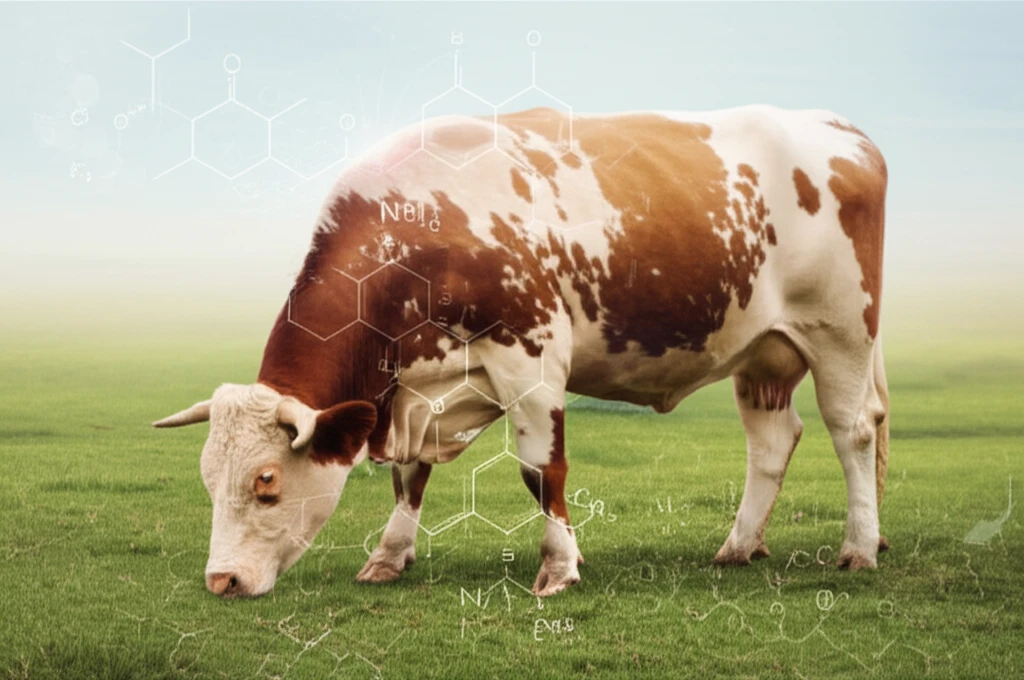
Illustration of a bull in a pasture, symbolizing humane beef production

Beyond the Bull: How Immunocastration is Changing the Game in Beef Production

"Discovering the Science Behind Reduced Aggression and Better Meat Quality"


In an era where ethical and sustainable practices are paramount, the agricultural industry is continuously seeking innovative solutions to enhance animal welfare and improve product quality. One such groundbreaking technique gaining traction is immunocastration, a method that offers a humane alternative to traditional castration. This article delves into the science and benefits of immunocastration, particularly in the context of Holstein bulls, shedding light on its impact on behavior, meat quality, and the overall efficiency of beef production.

Traditional castration methods, while effective in managing aggression and improving meat quality, often raise ethical concerns due to the pain and stress inflicted on animals. Immunocastration, however, offers a promising solution by utilizing the animal's own immune system to achieve similar results. This approach not only minimizes the negative impacts on animal welfare but also introduces several benefits for both farmers and consumers.

This article examines the research on immunocastration in Holstein bulls, specifically focusing on its effects on behavior, testosterone levels, and other physiological indicators. By understanding the science behind this innovative technique, we can appreciate its potential to transform beef production, making it more humane, sustainable, and economically viable. We'll explore the findings of recent studies, the practical applications of immunocastration, and its broader implications for the future of agriculture.

Understanding Immunocastration: A Gentle Approach to Beef Production

Illustration of a bull in a pasture, symbolizing humane beef production

Immunocastration is a process that involves stimulating an animal's immune system to produce antibodies against a specific hormone. In the case of bulls, the target is gonadotropin-releasing hormone (GnRH), which regulates the production of testosterone. By administering a vaccine that triggers an immune response, the GnRH is neutralized, leading to a significant reduction in testosterone levels. This results in a decrease in aggressive and sexual behaviors typically associated with intact bulls.

The process is far less invasive than surgical castration, which involves the physical removal of the testicles. Immunocastration is typically administered through a series of vaccinations, making it a less stressful experience for the animals. This method also reduces the risk of infections and other complications often associated with surgical procedures. Furthermore, immunocastration can be implemented at various stages of an animal's life, offering flexibility to farmers and ranchers.

  • Reduced Aggression: Lower testosterone levels lead to a decrease in fighting and other aggressive behaviors, making the animals easier to handle and reducing the risk of injuries.
  • Improved Meat Quality: Immunocastration can enhance meat quality by affecting the distribution of fat and the tenderness of the meat, leading to a more desirable product for consumers.
  • Enhanced Animal Welfare: The less invasive nature of immunocastration minimizes pain and stress, promoting a better quality of life for the animals.
  • Economic Benefits: Immunocastration can improve feed efficiency, reduce the incidence of injuries, and lead to higher-quality carcasses, ultimately boosting the profitability of beef production.
Several studies, including the one discussed in the original research, have highlighted the significant impact of immunocastration on Holstein bulls. The research demonstrated that immunocastrated bulls exhibited reduced levels of aggression and sexual behaviors compared to their intact counterparts. Additionally, the study found that immunocastration effectively lowered testosterone levels, confirming its efficacy in suppressing these behaviors. These findings provide valuable insights into the practical application and benefits of immunocastration in beef production.

Looking Ahead: The Future of Beef Production with Immunocastration

Immunocastration represents a significant step forward in the evolution of beef production. By prioritizing animal welfare while simultaneously enhancing meat quality and production efficiency, this technique offers a compelling vision for the future of agriculture. As research continues to refine and expand our understanding of immunocastration, it is poised to play an increasingly crucial role in sustainable and ethical beef farming practices. The ongoing advancements in this field underscore the industry's commitment to responsible and humane approaches, paving the way for a more sustainable and compassionate future.

About this Article -

This article was crafted using a human-AI hybrid and collaborative approach. AI assisted our team with initial drafting, research insights, identifying key questions, and image generation. Our human editors guided topic selection, defined the angle, structured the content, ensured factual accuracy and relevance, refined the tone, and conducted thorough editing to deliver helpful, high-quality information.See our About page for more information.

This article is based on research published under:

DOI-LINK: 10.4067/s0719-81322018000200077, Alternate LINK

Title: Effect Of Immunocastration On Behaviour And Blood Parameters (Cortisol And Testosterone) Of Holstein Bulls

Subject: General Veterinary

Journal: Austral journal of veterinary sciences

Publisher: SciELO Agencia Nacional de Investigacion y Desarrollo (ANID)

Authors: José L. Bolado-Sarabia, Cristina Pérez-Linares, Fernando Figueroa-Saavedra, Alma R. Tamayo-Sosa, Alberto Barreras-Serrano, Eduardo Sánchez-López, Issa C. García-Reynoso, Francisco G. Ríos-Rincón, Mabel Y. Rodríguez-Poché, Luis A. García-Vega, Esteban Gallegos, Priscila Castro-Osuna

Published: 2018-01-01

Everything You Need To Know

1

What is immunocastration, and how does it differ from traditional castration methods?

Immunocastration is a technique that uses an animal's immune system to reduce testosterone levels by stimulating the production of antibodies against gonadotropin-releasing hormone (GnRH). This hormone regulates testosterone production. Unlike traditional castration, which involves the physical removal of the testicles, immunocastration is administered through a series of vaccinations. This makes it less invasive, reduces stress on the animals, and lowers the risk of infections. The reduced aggression and improved meat quality achieved through traditional methods are also seen using immunocastration.

2

How does immunocastration affect the behavior of bulls, and what are the benefits of these behavioral changes?

Immunocastration significantly reduces aggression and sexual behaviors in bulls by lowering testosterone levels. This is achieved by neutralizing gonadotropin-releasing hormone (GnRH). The benefits include making the animals easier to handle, reducing the risk of injuries from fighting, and creating a safer environment for both the animals and farm personnel. Reduced aggression also contributes to better animal welfare and can improve overall farm efficiency.

3

What impact does immunocastration have on meat quality, and how does it enhance the final product for consumers?

Immunocastration can enhance meat quality by influencing fat distribution and tenderness. Lowered testosterone levels, achieved through the neutralization of gonadotropin-releasing hormone (GnRH), contribute to a more desirable product for consumers. While specific details on the exact mechanisms of fat distribution and tenderness improvements require further exploration, the general outcome is a higher-quality carcass that can lead to greater consumer satisfaction and potentially higher market value.

4

From an economic perspective, what are the advantages of using immunocastration in beef production?

Immunocastration offers several economic benefits. It can improve feed efficiency, reduce the incidence of injuries among animals (leading to lower veterinary costs), and result in higher-quality carcasses. The reduction in aggression, achieved through the modulation of gonadotropin-releasing hormone (GnRH) and subsequent testosterone levels, contributes to a more efficient and safer production environment. These factors collectively boost the profitability of beef production, making immunocastration an attractive option for farmers and ranchers.

5

What are the broader implications of immunocastration for the future of agriculture and sustainable farming practices, and what advancements are still needed?

Immunocastration represents a move towards more sustainable and ethical beef farming practices by prioritizing animal welfare, enhancing meat quality, and improving production efficiency. As research continues to refine our understanding of immunocastration, its role in sustainable agriculture is poised to grow. Ongoing advancements should focus on optimizing the timing and dosage of vaccinations targeting gonadotropin-releasing hormone (GnRH), exploring long-term effects on animal health, and further quantifying the economic and environmental benefits. This will ensure that immunocastration remains a crucial component of responsible and humane approaches to beef production.

Newsletter Subscribe

Subscribe to get the latest articles and insights directly in your inbox.