
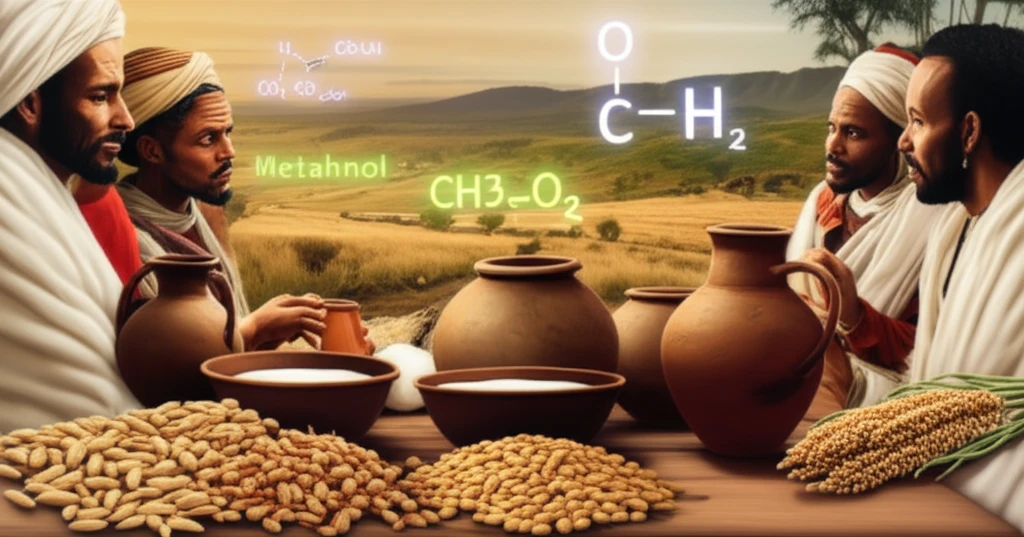
Beyond the Brew: Unpacking the Nutritional Secrets and Alcoholic Insights of Cheka, Ethiopia's Ancient Beverage

"Delving into the age-old traditions of fermented drinks, we explore the unique composition, health implications, and cultural significance of Cheka, a staple in Southwestern Ethiopian communities."
Fermented beverages have graced tables around the world for millennia, playing integral roles in cultural practices and dietary habits. Among these, Cheka, a cereal and vegetable-based drink originating from the southwestern regions of Ethiopia, holds a special place. Consumed primarily in the Dirashe and Konso areas, Cheka is more than just a drink; it's a cultural emblem, a source of sustenance, and a reflection of age-old traditions.
This article embarks on a journey to unravel the complexities of Cheka. We explore its nutritional makeup, from protein and fats to essential minerals, and delve into its alcoholic content. By examining these elements, we aim to provide a comprehensive understanding of Cheka's place within the diet, its potential health impacts, and the significance it holds for the communities that cherish it.
Through this exploration, we'll shed light on the intricate relationship between food, culture, and health, offering valuable insights for consumers, nutritionists, and anyone intrigued by the world's diverse culinary practices. So, let's raise a glass to Cheka and uncover the secrets held within this traditional Ethiopian beverage.
Unveiling Cheka: A Nutritional and Alcoholic Profile
To understand the essence of Cheka, we must first examine its nutritional components. Research reveals that Cheka is a blend of total solids, crude protein, crude fat, crude fiber, total ash, carbohydrates, and gross energy. The samples showed a range of 21.05% to 26.87% for total solids, and the protein content varied between 3.12 and 4.44 grams per 100 grams. These values offer a glimpse into the drink's potential to contribute to the daily nutritional requirements of those who consume it regularly.
- Total Solids: Ranging from 21.05% to 26.87%, indicating the concentration of all substances in the beverage.
- Crude Protein: Between 3.12 and 4.44 g/100g, offering insights into its potential contribution to daily protein intake.
- Crude Fat: Ranging from 1.17 to 1.81 g/100g, which is a measure of the fat content in the beverage.
- Crude Fiber: Between 0.94 and 1.27 g/100g, indicating the amount of indigestible plant matter.
- Total Ash: Ranging from 0.65 to 0.93 g/100g, representing the mineral content.
- Carbohydrates: Ranging from 14.16 to 19.03 g/100g, which are a primary source of energy.
- Gross Energy: Varying from 82.04 to 107.17 Kcal, reflecting the energy content of the beverage.
Cheka in Perspective: Tradition, Nutrition, and Future Considerations
In conclusion, Cheka, the traditional fermented beverage of Southwestern Ethiopia, presents a complex interplay of cultural significance, nutritional value, and potential health implications. While it offers some essential minerals and can be a source of energy, its relatively low nutrient density, coupled with varying levels of alcohol, calls for mindful consumption. The study highlights the importance of balancing Cheka consumption with a diet rich in solid foods to meet nutritional needs. Furthermore, the presence of methanol emphasizes the need for ongoing monitoring and potential interventions to ensure the safety and well-being of consumers. As we move forward, a deeper understanding of Cheka's production processes, nutritional composition, and cultural significance will enable us to appreciate and promote this traditional beverage in a way that supports both health and cultural preservation.