
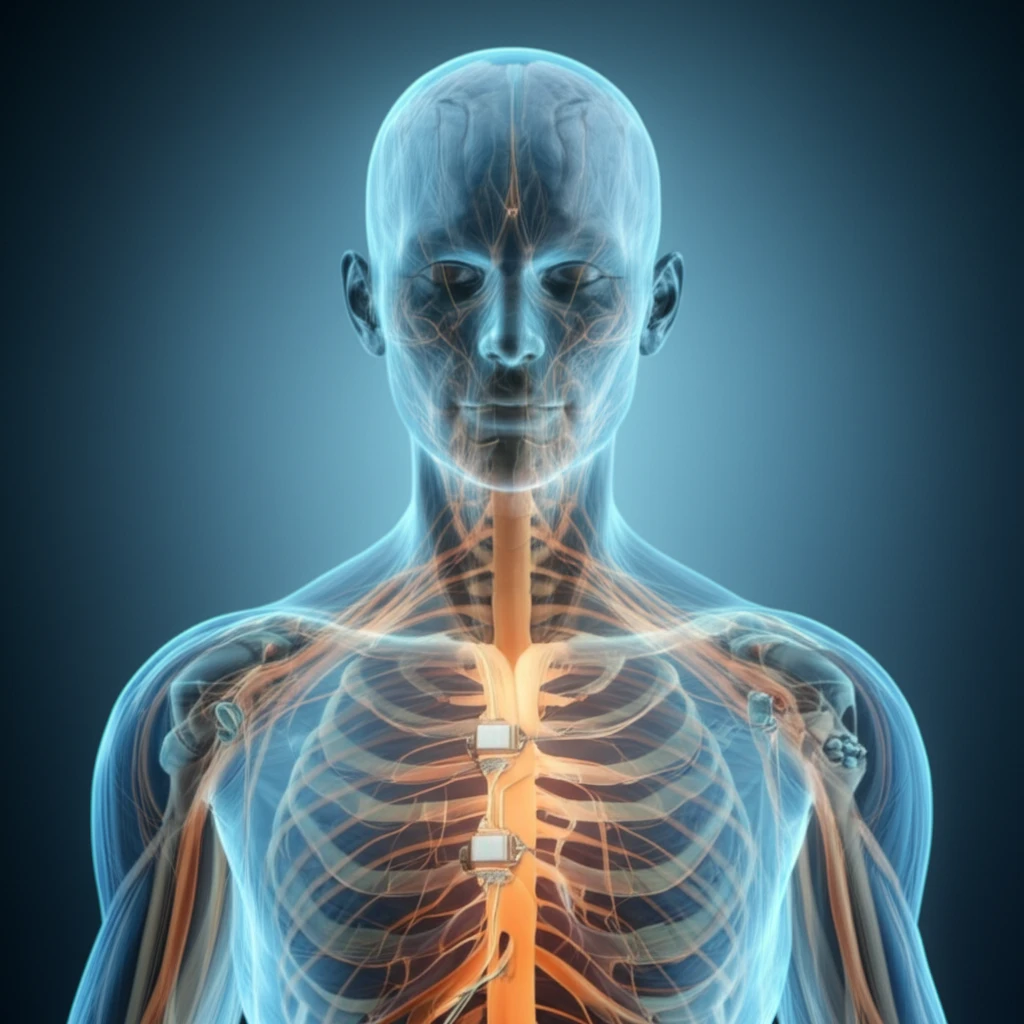
A vibrant illustration of bioelectric technologies, demonstrating how they enhance the human body.

Beyond the Brain: How Bioelectric Technologies Are Rewiring Our Bodies

"From easing pain to restoring movement, bioelectric medicine is emerging as a powerful tool in the fight against neurological disorders."


In the realm of medicine, a silent revolution is underway. It's a revolution not of scalpels and sutures alone, but of electricity, tiny implants, and the body's own intricate wiring. Bioelectric technologies, once the stuff of science fiction, are fast becoming powerful tools in the fight against neurological disorders, promising new hope for those suffering from chronic pain, paralysis, and other debilitating conditions.

Imagine a world where chronic pain is alleviated with the gentle pulse of electricity, where paralyzed limbs regain movement through direct neural interfaces, and where the ravages of neurological diseases are met with innovative solutions. This future is rapidly becoming a reality, fueled by the groundbreaking advancements in bioelectric medicine.

This article delves into the exciting world of bioelectric technologies, exploring how they are transforming the landscape of neurology. We'll examine the latest innovations in nerve stimulation, neural interfaces, and other cutting-edge techniques that are rewiring our bodies and offering new possibilities for healing and recovery.

Unlocking the Nervous System: A Journey Through Bioelectric Frontiers

A vibrant illustration of bioelectric technologies, demonstrating how they enhance the human body.

The human nervous system, a complex network of billions of neurons, is the body's communication superhighway. Bioelectric technologies tap into this network, using electrical impulses to stimulate, modulate, or record neural activity. These technologies are being applied at various points: the end organs, the peripheral nervous system, and the central nervous system. Each approach offers unique advantages and addresses different neurological challenges.

One area of rapid advancement involves interfacing with the end organs. By stimulating or augmenting the function of muscles or other organs, bioelectric devices can restore or improve function. For example, electrical stimulation of muscles can help patients with paralysis regain movement, while stimulation of the auditory nerve in the inner ear allows individuals with hearing loss to perceive sound.

  • End-organ stimulation: Targets muscles and organs to improve function, such as muscle stimulation for movement or inner ear implants for hearing.
  • Peripheral nerve interfaces: Involves stimulating nerves outside the brain and spinal cord to treat pain or restore function.
  • Central nervous system interfaces: Focuses on the brain and spinal cord, using techniques like deep brain stimulation to treat movement disorders or spinal cord stimulation for pain.
These technological strides represent just a glimpse of the immense potential of bioelectric medicine. Innovations in electrode design, materials science, and signal processing are continuously improving the precision, stability, and effectiveness of these devices. As research continues and technologies become more refined, we can expect even more groundbreaking applications of bioelectric therapies in the years to come.

A Promising Future

Bioelectric technologies represent a paradigm shift in the treatment of neurological disorders. With ongoing research and development, these innovative approaches hold great promise for transforming the lives of individuals affected by conditions that once seemed insurmountable. As we continue to explore the intricate connections within our bodies, the future of bioelectric medicine appears brighter than ever before, paving the way for a world where the power of electricity and the brilliance of the human nervous system converge to heal and empower.

About this Article -

This article was crafted using a human-AI hybrid and collaborative approach. AI assisted our team with initial drafting, research insights, identifying key questions, and image generation. Our human editors guided topic selection, defined the angle, structured the content, ensured factual accuracy and relevance, refined the tone, and conducted thorough editing to deliver helpful, high-quality information.See our About page for more information.

This article is based on research published under:

DOI-LINK: 10.1007/s10143-017-0920-2, Alternate LINK

Title: Interfacing With The Nervous System: A Review Of Current Bioelectric Technologies

Subject: Neurology (clinical)

Journal: Neurosurgical Review

Publisher: Springer Science and Business Media LLC

Authors: Ronald Sahyouni, Amin Mahmoodi, Jefferson W. Chen, David T. Chang, Omid Moshtaghi, Hamid R. Djalilian, Harrison W. Lin

Published: 2017-10-23

Everything You Need To Know

1

What exactly are bioelectric technologies and how are they used in medicine?

Bioelectric technologies involve using electrical impulses to interact with the body's nervous system. These technologies stimulate, modulate, or record neural activity to treat neurological disorders. They are applied at various points, including end organs, the peripheral nervous system, and the central nervous system, aiming to alleviate conditions like chronic pain and paralysis by improving or restoring function.

2

Can you elaborate on the different types of bioelectric interfaces used to interact with the nervous system?

Certainly. Bioelectric technologies interface with the nervous system in several ways. End-organ stimulation targets muscles and organs directly, like using electrical stimulation for muscle movement or inner ear implants to restore hearing. Peripheral nerve interfaces involve stimulating nerves outside the brain and spinal cord to manage pain or restore specific functions. Central nervous system interfaces, focus on the brain and spinal cord, employing techniques such as deep brain stimulation for movement disorders or spinal cord stimulation for pain management.

3

How do neural interfaces help individuals suffering from paralysis?

Neural interfaces provide a direct connection to the nervous system, bypassing damaged pathways that cause paralysis. For example, electrical stimulation of muscles via end-organ stimulation can help patients regain movement. By stimulating specific nerves or regions of the brain or spinal cord, these interfaces can restore function that has been lost due to neurological damage. Advancements in electrode design and signal processing further enhance the precision and effectiveness of these interventions.

4

What advancements are making bioelectric medicine a more viable treatment option for neurological disorders?

Several technological advancements are enhancing bioelectric medicine. Innovations in electrode design allow for more precise and stable neural stimulation. Advances in materials science contribute to the longevity and biocompatibility of implanted devices. Furthermore, improvements in signal processing enable more effective modulation of neural activity. These developments collectively improve the precision, stability, and overall effectiveness of bioelectric therapies.

5

What are the broader implications of using bioelectric technologies to treat neurological disorders, and what future developments can we anticipate?

Bioelectric technologies represent a significant paradigm shift by offering targeted treatments for neurological disorders that were previously difficult to manage. The implications extend to potentially restoring lost functions, alleviating chronic pain, and improving the overall quality of life for affected individuals. Future developments may include more sophisticated neural interfaces, personalized bioelectric therapies tailored to individual patient needs, and expanded applications to address a wider range of neurological and possibly psychiatric conditions. Continued research will likely lead to more refined and effective bioelectric interventions.

Newsletter Subscribe

Subscribe to get the latest articles and insights directly in your inbox.