
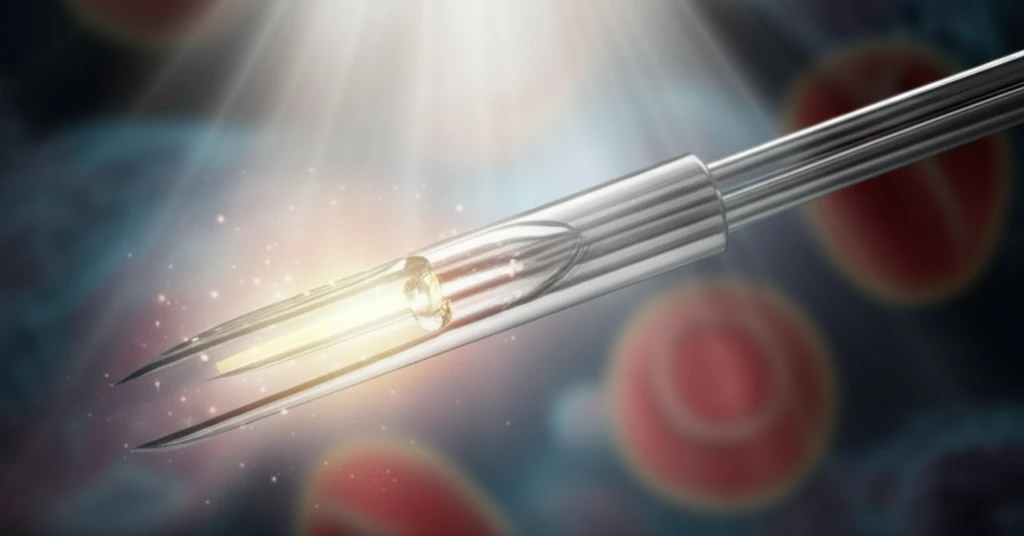
Illustration of medical device sterilization using irradiation, highlighting antioxidants' protective role and patient safety.

Beyond the Band-Aid: Revolutionizing Healthcare with Sterilized Materials

"How Innovative Sterilization Techniques Are Changing the Game for Medical Devices and Patient Safety"


In the ever-evolving landscape of healthcare, the demand for safer, more effective medical devices is paramount. From sophisticated surgical tools to everyday diagnostic equipment, the materials used must meet stringent standards of sterility to protect patients from infection. Traditional sterilization methods, however, can sometimes compromise the integrity and functionality of these materials, particularly when it comes to photocurable substances. Now, a new wave of innovation is emerging, promising to revolutionize how we approach sterilization, and ultimately, enhance patient care.

This article explores a groundbreaking approach to sterilizing photocurable materials using irradiation techniques, such as E-beam, gamma, and X-ray exposure. The challenge lies in preserving the crucial UV-curing properties of these materials while eliminating harmful microorganisms. By incorporating antioxidants and modifying the material composition, researchers have developed innovative methods to ensure that medical devices remain sterile, functional, and ready for immediate use.

Join us as we delve into the science behind these advancements, examining how they work, their potential impact on healthcare, and the future possibilities they unlock. We will explore how these innovations are not only improving patient safety but also expanding the applications of photocurable materials in medicine, leading to better diagnostic tools and more effective treatments.

The Science of Sterilization: How Irradiation Works and Why It Matters

Illustration of medical device sterilization using irradiation, highlighting antioxidants' protective role and patient safety.

Sterilization is a critical process in healthcare, ensuring that medical devices are free from microorganisms that could cause infections. Traditional methods include heat (steam), ethylene oxide, and irradiation. Irradiation, in particular, uses high-energy beams like X-rays, gamma rays, or electron beams to disrupt the DNA of microorganisms, rendering them unable to reproduce. However, this process can inadvertently affect the materials themselves, particularly photocurable materials used in many modern medical devices.

Photocurable materials, which are cured or hardened by exposure to light (usually UV), are increasingly common in medical devices. These materials are often used in applications where in-situ curing is required, such as in certain diagnostic tools or implantable devices. The challenge with irradiation is that it can cause premature curing of these materials, rendering them unusable before they are even put to use. This is where the innovation of incorporating antioxidants comes into play.

  • Direct effect: Irradiation directly impacts microorganisms by damaging their DNA, preventing reproduction.
  • Material impact: The same irradiation can cause unintended reactions within the material, leading to premature curing.
  • Photocurable Materials: Widely used in medical devices and need to be sterilized without losing UV-curing properties.
  • Antioxidants: Incorporated to prevent premature curing during sterilization by scavenging free radicals.
By introducing antioxidants, such as a-tocopherol (Vitamin E) and nitroxides (TEMPO and TEMPOL), researchers have found a way to protect photocurable materials during the sterilization process. These antioxidants act as free-radical scavengers, effectively neutralizing the reactive molecules generated by irradiation and preventing the premature curing of the material. This ensures that the medical device remains sterile and maintains its UV-curing capabilities, ready for its intended use.

Looking Ahead: The Future of Sterilization and Medical Innovation

The innovations in sterilizing photocurable materials represent a significant step forward in healthcare technology. By preserving the functionality of these materials while ensuring sterility, researchers are paving the way for new medical devices and treatments. As research continues, we can expect to see even more sophisticated sterilization techniques, leading to enhanced patient safety and expanding the possibilities of medical innovation. The ability to sterilize materials without compromising their intended function is not just a technological advancement; it's a commitment to a healthier, safer future for all.

About this Article -

This article was crafted using a human-AI hybrid and collaborative approach. AI assisted our team with initial drafting, research insights, identifying key questions, and image generation. Our human editors guided topic selection, defined the angle, structured the content, ensured factual accuracy and relevance, refined the tone, and conducted thorough editing to deliver helpful, high-quality information.See our About page for more information.

This article is based on research published under:

DOI-LINK: 10.1007/s10856-017-5965-9, Alternate LINK

Title: Sterilizing Photocurable Materials By Irradiation: Preserving Uv-Curing Properties Of Photopolymers Following E-Beam, Gamma, Or X-Ray Exposure

Subject: Biomedical Engineering

Journal: Journal of Materials Science: Materials in Medicine

Publisher: Springer Science and Business Media LLC

Authors: Jane F. Emerson, Yasamin Abbaszadeh, Jonathan N. Lo, Zois Tsinas, Jonas Pettersson, Pamela Ward, Mohamad I. Al-Sheikhly

Published: 2017-10-17

Everything You Need To Know

1

What are some traditional sterilization methods, and why is there a need for innovative approaches?

Traditional sterilization methods include using heat (steam), ethylene oxide, and irradiation. However, these methods can sometimes compromise the integrity and functionality of certain materials, particularly photocurable materials. Innovative approaches are needed to ensure medical devices are sterile without losing their essential properties, such as UV-curing capabilities.

2

How does irradiation work to sterilize medical devices, and what are its potential drawbacks?

Irradiation sterilizes medical devices by using high-energy beams like X-rays, gamma rays, or electron beams to disrupt the DNA of microorganisms, preventing them from reproducing. A significant drawback is that irradiation can cause unintended reactions within the materials themselves, such as premature curing in photocurable materials, rendering them unusable before their intended application.

3

What are photocurable materials, and why are they significant in modern medical devices?

Photocurable materials are substances that harden when exposed to light, typically UV light. They are increasingly common in modern medical devices, especially in applications requiring in-situ curing, such as certain diagnostic tools or implantable devices. Their significance lies in their ability to be molded and solidified directly within the body or a specific device, offering precision and versatility.

4

How does the incorporation of antioxidants improve the sterilization of photocurable materials?

Incorporating antioxidants, like a-tocopherol (Vitamin E) and nitroxides (TEMPO and TEMPOL), protects photocurable materials during irradiation. These antioxidants act as free-radical scavengers, neutralizing reactive molecules generated by irradiation. This prevents the premature curing of the material, ensuring the medical device remains sterile while maintaining its UV-curing capabilities. The use of antioxidants enables the use of irradiation sterilization without compromising the functionality of the photocurable material.

5

What future advancements can we anticipate in sterilization techniques, and how might these impact healthcare and medical innovation?

Future advancements in sterilization techniques will likely focus on more sophisticated methods to preserve the functionality of medical materials while ensuring sterility. This could lead to new medical devices and treatments that were previously impossible due to sterilization limitations. Enhanced patient safety, more effective diagnostic tools, and expanded applications of materials like photocurable substances in medicine are all potential outcomes. Further research could explore combinations of sterilization methods with tailored antioxidant formulations to optimize both sterilization efficacy and material preservation.

Newsletter Subscribe

Subscribe to get the latest articles and insights directly in your inbox.