
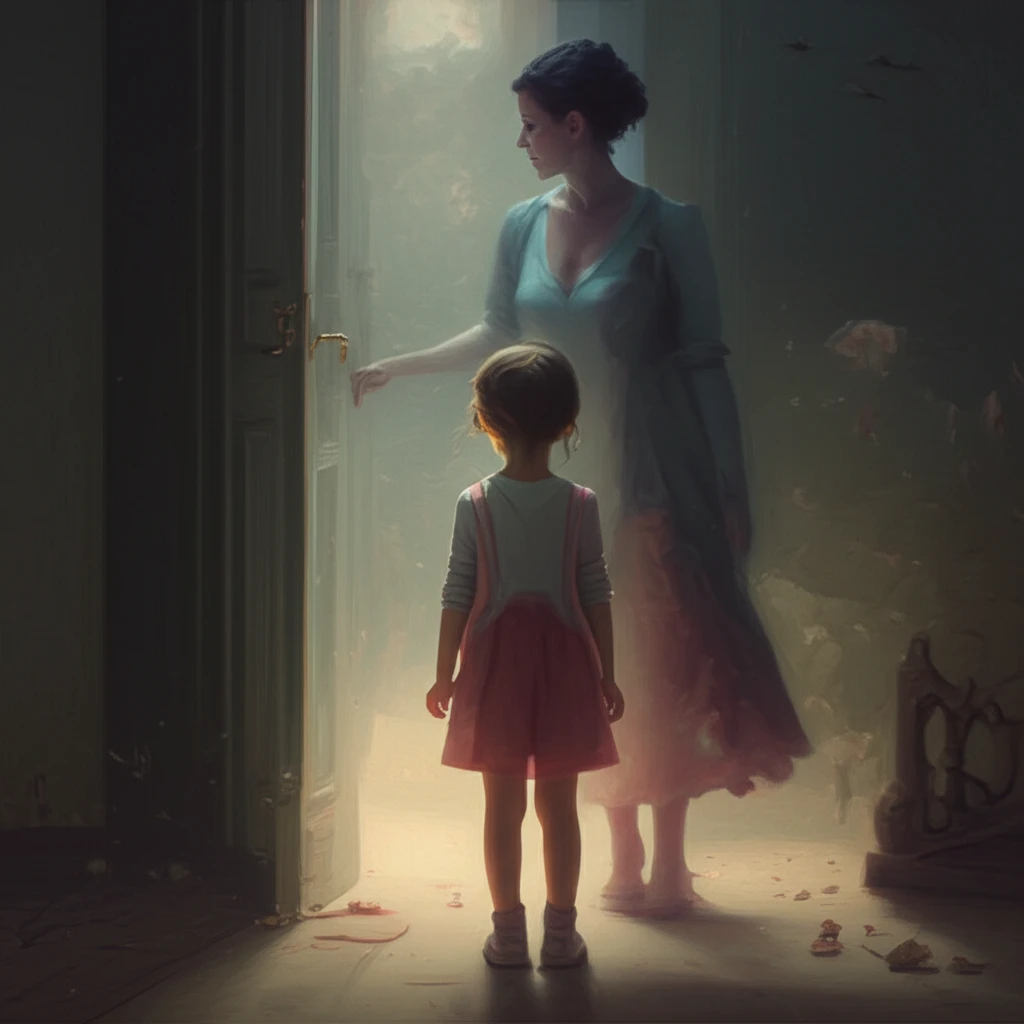
A child stands in a doorway with a faint figure behind them, symbolizing past life memories and gender identity.

Beyond Pink and Blue: Unveiling the Link Between Past-Life Memories and Gender Identity

"Do childhood stories of past lives offer clues to understanding gender nonconformity? A new study explores this fascinating connection."


From an early age, societal norms often dictate how boys and girls should behave, what toys they should play with, and who their friends should be. However, individual children often express different preferences that fall outside traditional gender roles. This is known as gender nonconformity (GNC), which isn't a pathological condition but rather a natural variation in human expression.

But what influences GNC? While genetics and environmental factors play a role, a recent study explores a fascinating and previously unexplored factor: past-life memories. This research investigates the connection between children who report memories of a previous life and their gender expression, potentially opening up new avenues for understanding gender identity.

This article will delve into the study's findings, exploring how children who remember past lives as a different gender are more likely to exhibit GNC. We'll examine the potential explanations and implications of this research, providing a fresh perspective on the complex interplay between memory, identity, and self-expression.

The Study: Bridging Past Lives and Gender Expression

A child stands in a doorway with a faint figure behind them, symbolizing past life memories and gender identity.

Researchers at the University of Virginia Division of Perceptual Studies conducted a case-control study involving 469 children who reported memories of past lives. They examined the relationship between these memories and GNC, measured by documented gender-nonconforming behaviors. The study participants came from diverse cultural backgrounds, primarily countries with cultural beliefs of reincarnation such as Sri Lanka, Turkey, India, and Myanmar.

The study identified "sex-change cases," where the child subject and the individual from the recalled past life (referred to as the previous personality, or PP) were of different sexes. These were compared against "same-sex cases." Information about GNC was gathered from investigator field notes and family member narratives, noting behaviors like wearing clothes/hairstyles or engaging in play more typical of the nonnatal sex, reluctance to engage in sex-typical play or have same-sex playmates, and expressions of gender dysphoria or transgender identification.

  • Key Findings: The study found a statistically significant correlation between reporting past-life memories of a different gender and exhibiting GNC. Children who remembered a life involving a different natal sex were much more likely to exhibit GNC than children who remembered a same-sex life.
  • Specific Behaviors: Gender nonconforming behaviors included choices in clothing, hairstyles, and play activities that aligned more with the opposite sex.
  • Cultural Context: The researchers took into account the cultural context of each case, recognizing that gender norms and expressions vary across different societies.
To ensure that this link wasn't simply due to fantasy or suggestibility, the researchers conducted additional analyses focusing on "solved" cases, where the details provided by the child closely matched the life of a deceased person. The strong association between past-life memories and GNC persisted even in these verifiable cases, strengthening the study's findings.

Implications and Future Directions: A New Lens on Gender Identity

This study offers a novel perspective on the development of gender identity, suggesting that past-life memories may represent a previously unrecognized factor influencing GNC. It challenges conventional understandings and opens up new avenues for exploration.

While the study reveals a strong correlation, it's important to acknowledge that the nature of the relationship is still unclear. Does remembering a past life as a different gender influence a child's gender expression, or do these two phenomena simply coexist? Further research is needed to unravel the complexities of this connection.

Ultimately, this research underscores the intricate and multifaceted nature of gender identity. By considering unconventional factors like past-life memories, we can broaden our understanding of human experience and create a more inclusive and accepting society for individuals of all gender identities and expressions. In clinical settings, when past-life memories are present in conjunction with GNC, it may be beneficial to address this connection in focused psychotherapy. It is possible that currently unidentified hormonal or neurochemical factors could predispose affected children to both phenomena, or as Stevenson and Keil (2005) suggested, perhaps a previously unrecognized factor of consciousness may be involved.

About this Article -

This article was crafted using a human-AI hybrid and collaborative approach. AI assisted our team with initial drafting, research insights, identifying key questions, and image generation. Our human editors guided topic selection, defined the angle, structured the content, ensured factual accuracy and relevance, refined the tone, and conducted thorough editing to deliver helpful, high-quality information.See our About page for more information.

This article is based on research published under:

DOI-LINK: 10.1080/19317611.2018.1523266, Alternate LINK

Title: Childhood Gender Nonconformity And Children’S Past-Life Memories

Subject: Public Health, Environmental and Occupational Health

Journal: International Journal of Sexual Health

Publisher: Informa UK Limited

Authors: Marieta Pehlivanova, Monica J. Janke, Jack Lee, Jim B. Tucker

Published: 2018-10-02

Everything You Need To Know

1

What exactly does gender nonconformity mean in the context of this research, and what factors might contribute to it?

Gender nonconformity (GNC) refers to instances where children express preferences and behaviors that deviate from traditional societal expectations associated with their assigned gender at birth. It's not considered a disorder but a natural variation in self-expression. Genetics and environment play a role, and, according to a recent study, recollections of past lives could also be a contributing factor. This perspective suggests that gender identity may be influenced by more than just biological and environmental factors, including a possible connection to memories of previous lives.

2

What was the specific methodology used in the University of Virginia study to explore the relationship between past-life memories and gender nonconformity?

The study focused on children who reported memories of past lives, specifically examining the connection between these memories and gender nonconformity (GNC). Researchers compared 'sex-change cases,' where the child and the individual from the recalled past life (previous personality, or PP) were of different sexes, with 'same-sex cases.' They gathered information on GNC from field notes and family narratives, looking at behaviors such as clothing choices, play activities, and expressions of gender dysphoria.

3

What were the primary findings of the study regarding the correlation between past-life memories and gender nonconformity in children?

The study found a statistically significant correlation between children reporting past-life memories of a different gender and exhibiting gender nonconformity (GNC). This means children who recalled living as a different natal sex were more likely to display behaviors and preferences typically associated with the opposite gender, such as choosing different clothing and toys. The study supports the assertion that memories of past lives might have an association with gender expression in individuals.

4

How did the researchers address potential biases and confounding factors, such as cultural influences, in the study's design and analysis?

The research considered the cultural context in which the children lived because gender norms vary significantly across different societies. Researchers made sure that the link between past-life memories and gender nonconformity (GNC) wasn't due to fantasy or suggestibility. They analyzed solved cases, where details matched the life of a deceased person. Even in these verifiable cases, the strong association between past-life memories and GNC persisted, strengthening the study's findings. The researchers took into account the influence of cultural gender norms to ensure the validity of their results.

5

What are the broader implications of this study for understanding the development of gender identity, and what future research directions might be pursued?

This study opens up new avenues for understanding gender identity development by suggesting that past-life memories may play a role in influencing gender nonconformity (GNC). It challenges conventional understandings of gender identity, which often focus solely on genetics and environmental factors. It also encourages further exploration into the relationship between memory, identity, and self-expression. Further research in this field could potentially broaden acceptance and understanding of diverse gender identities and expressions.

Newsletter Subscribe

Subscribe to get the latest articles and insights directly in your inbox.