
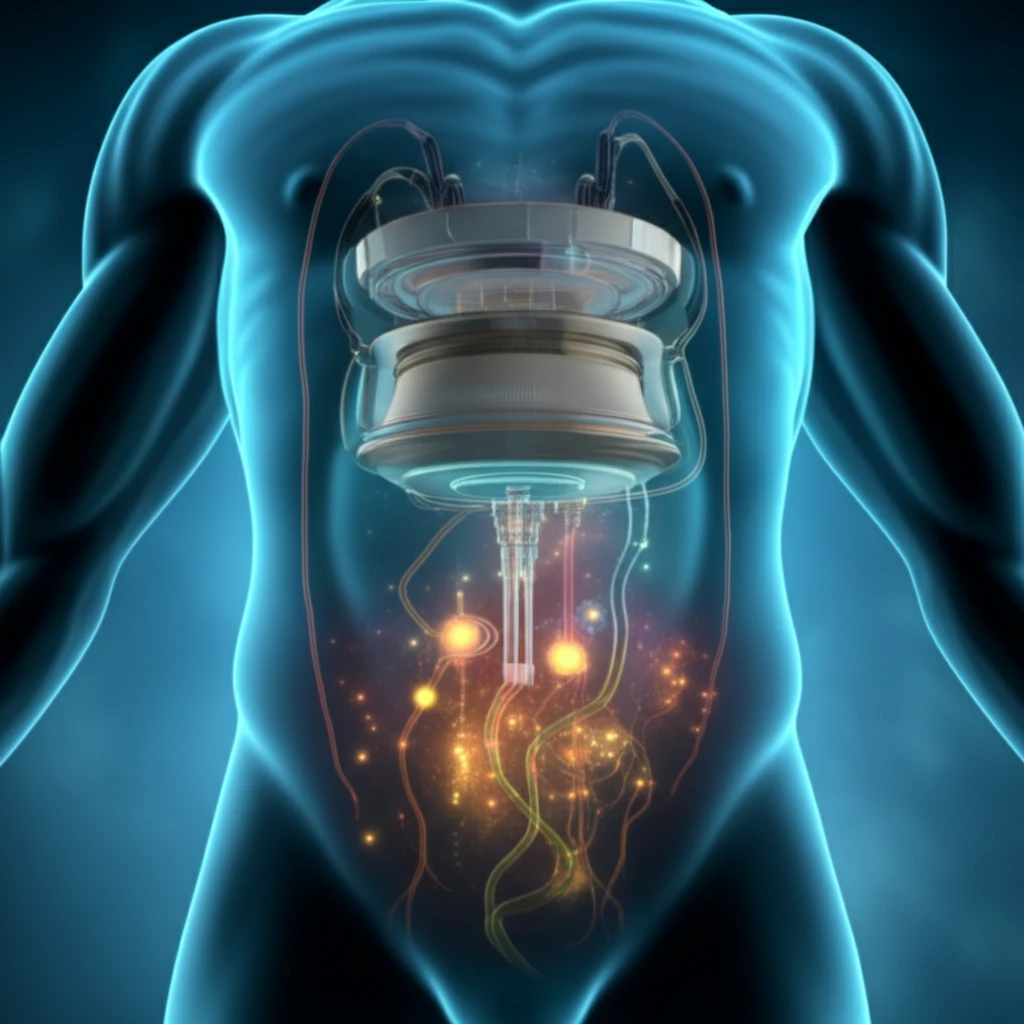
Beyond Pills: The Future of Testosterone Replacement is Here

"Could a novel double-layer Silastic testicular prosthesis offer a more stable and effective solution for men's hormone health?"
For nearly 80 years, men facing the absence of testes (anorchia) have relied on testicular prostheses, primarily to address psychological distress. But what if these devices could do more than just imitate appearance? New research explores the potential of a novel Silastic testicular prosthesis designed to controllably release testosterone, maintaining physiological levels in vivo over extended periods.
Traditional testosterone replacement therapies, including oral medications, injections, and patches, often struggle with inconsistent hormone levels, short durations, and potential side effects. This study investigates a double-layer Silastic testicular prosthesis with controlled testosterone release (STPT) as a promising alternative for stable and effective hormone maintenance.
The research detailed the development and evaluation of STPTs with varying dosages of testosterone undecanoate (TU). These prostheses were implanted in castrated rats, and the study meticulously measured testosterone levels, monitored physiological responses, and assessed tissue health. The results offer intriguing insights into the future of testosterone replacement therapy and its potential to enhance men's health.
How Does This Novel Prosthesis Work?
The innovative STPT features a double-layer Silastic membrane designed for controlled testosterone release. Researchers prepared Silastic testicular prostheses with different dosages of testosterone undecanoate (TU) and implanted them into castrated Sprague-Dawley rats. For comparison, a separate group received TU oil via oral administration, while control groups included castrated untreated and sham-operated rats.
- Double-Layer Design: Ensures gradual and consistent release of testosterone.
- Silastic Material: Known for biocompatibility and safety.
- Variable Dosages: Allows for tailored hormone replacement.
- In Vivo Testing: Provides insights into real-world effectiveness.
The Takeaway: A Promising Step Forward
This research suggests that the novel STPT design effectively releases TU through its double semi-permeable membranes with excellent biocompatibility. This innovative approach offers a potential solution for maintaining stable testosterone levels and improving the overall well-being of men experiencing hormone deficiency.
While further studies are needed, this research paves the way for new testosterone replacement therapies that could overcome the limitations of current methods. The controlled-release prosthesis offers hope for a more consistent, convenient, and effective approach to hormone management.
This study provides a new approach for testosterone replacement therapy. Next steps involve addressing drug withdrawal issues and replicating the natural circadian rhythm of testosterone release. Future research aims to develop even more advanced STPTs that regulate TU dosage for a more natural and effective hormone replacement experience.