
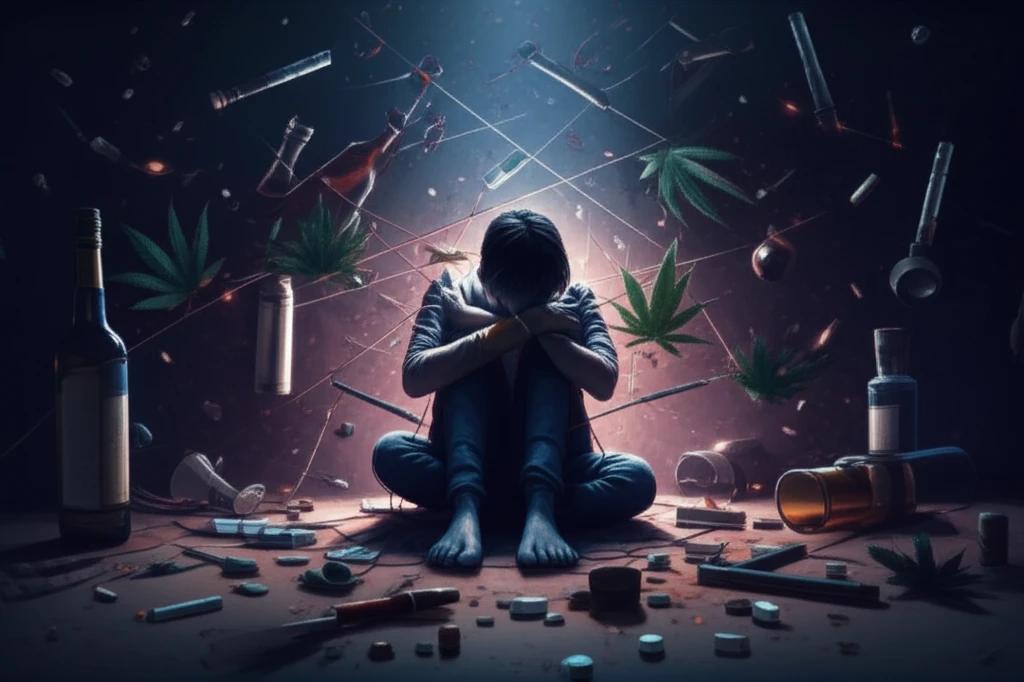
Tangled web of drug symbols representing the challenges of addiction during opioid substitution treatment.

Beyond Heroin: Understanding the Complexities of Long-Term Recovery from Opioid Addiction

"New research reveals how continued addiction to other substances can derail opioid substitution treatment and highlights the need for comprehensive recovery strategies."


Opioid substitution treatment (OST), using medications like methadone and buprenorphine, is a cornerstone of managing opioid use disorder (OUD). OST helps to reduce illicit opioid use, prevent overdoses, and lower crime rates. However, the path to recovery isn't always straightforward, and many individuals grapple with multiple substance dependencies.

It's common for people entering treatment for OUD to have a history of using several substances. Research shows that the majority of heroin users have also used other drugs, averaging over five different substances in the months before seeking help. This creates complex challenges for long-term recovery.

A recent study published in "Drug and Alcohol Dependence" sheds light on how substance use patterns change over five years of continuous OST. By identifying different trajectories of heroin use and examining their relationship to other substances, the study offers valuable insights for improving treatment strategies and supporting sustained recovery.

Decoding the Trajectories: How Other Drugs Impact Opioid Addiction Treatment

Tangled web of drug symbols representing the challenges of addiction during opioid substitution treatment.

The study, a prospective observational cohort involving over 7,700 adults in England, tracked patients receiving OST with either methadone or buprenorphine for five years. Researchers analyzed data from clinical reviews conducted every six months to identify patterns (trajectories) of heroin and other drug use.

The analysis revealed distinct groups of patients based on their heroin use patterns: rapid decrease, continued low-level use, decreasing then increasing use, gradual decreasing use, and continued high-level use. These trajectories were then examined in relation to the use of other substances, including alcohol, crack cocaine, cannabis, and unspecified drugs (likely benzodiazepines).

  • Continued High-Level Heroin Use: Patients who continued to use heroin at high levels were more likely to also use crack cocaine and alcohol at high levels. They were also more prone to increasing use of unspecified drugs and less likely to reduce their cannabis use.
  • Increasing Crack Cocaine Use: For those in groups with decreasing or gradually decreasing heroin use, an increase in crack cocaine use significantly lowered their chances of successfully completing OST.
These findings highlight a critical connection: long-term heroin use non-response during OST is strongly associated with high-level use of crack cocaine and alcohol. Furthermore, increasing crack cocaine use can actively sabotage the likelihood of completing long-term OST successfully.

The Bigger Picture: Implications for Treatment and Recovery

This research underscores the complex nature of opioid use disorder and highlights the importance of addressing co-occurring substance use during treatment. Simply suppressing opioid use isn't enough; a comprehensive approach is needed to tackle other dependencies that can undermine recovery efforts.

The study points to the necessity of integrated treatment strategies. These strategies should concurrently target opioid use, alcohol use, crack cocaine use, and other substance dependencies. Such comprehensive care can significantly improve the chances of successful long-term recovery.

Ultimately, recognizing OUD as a multifaceted, chronic condition is crucial. Future research should explore the interplay between substance use, employment, and housing to develop even more effective and holistic interventions that support individuals in achieving sustained recovery and improved quality of life.

About this Article -

This article was crafted using a human-AI hybrid and collaborative approach. AI assisted our team with initial drafting, research insights, identifying key questions, and image generation. Our human editors guided topic selection, defined the angle, structured the content, ensured factual accuracy and relevance, refined the tone, and conducted thorough editing to deliver helpful, high-quality information.See our About page for more information.

This article is based on research published under:

DOI-LINK: 10.1016/j.drugalcdep.2018.11.008, Alternate LINK

Title: Change In Alcohol And Other Drug Use During Five Years Of Continuous Opioid Substitution Treatment

Subject: Pharmacology (medical)

Journal: Drug and Alcohol Dependence

Publisher: Elsevier BV

Authors: Brian Eastwood, John Strang, John Marsden

Published: 2019-01-01

Everything You Need To Know

1

What is Opioid substitution treatment (OST) and what is its purpose?

Opioid substitution treatment (OST) utilizes medications like methadone and buprenorphine to manage Opioid Use Disorder (OUD). This treatment aims to reduce illicit opioid use, prevent overdoses, and decrease crime rates, serving as a foundation for recovery. However, its effectiveness can be undermined by concurrent substance use.

2

What other substances are commonly used by individuals seeking help for Opioid Use Disorder, and why is this relevant?

Individuals often enter Opioid substitution treatment (OST) with a history of using multiple substances. Research shows that the majority of heroin users have also used other drugs, averaging over five different substances before seeking help. The concurrent use of other substances creates challenges for long-term recovery. The study examined the trajectories of heroin use and its relationship to other substances such as alcohol, crack cocaine, cannabis, and unspecified drugs, offering insights for improved treatment strategies.

3

What were the different patterns of heroin use identified in the study?

The study identified different patterns of heroin use over five years of continuous Opioid substitution treatment (OST). These included rapid decrease, continued low-level use, decreasing then increasing use, gradual decreasing use, and continued high-level use. These heroin use patterns are examined with relation to other substances such as alcohol, crack cocaine, cannabis, and unspecified drugs to determine their impact.

4

What substances were found to negatively impact Opioid substitution treatment (OST) success, and what are the implications?

The research revealed a strong link between continued high-level heroin use during Opioid substitution treatment (OST) and high-level use of crack cocaine and alcohol. This co-occurrence undermines the effectiveness of OST. Furthermore, the increase in crack cocaine use can significantly decrease the chances of successfully completing the treatment, underscoring the need to address all substance dependencies for effective recovery.

5

What does this research ultimately mean for the treatment of opioid addiction and long-term recovery?

This research underscores the complex nature of Opioid Use Disorder and emphasizes the need for comprehensive treatment approaches. Addressing co-occurring substance use alongside opioid dependency is crucial. Success in Opioid substitution treatment (OST) requires strategies that tackle all dependencies, not just the use of opioids. This comprehensive approach supports sustained recovery and helps prevent relapse.

Newsletter Subscribe

Subscribe to get the latest articles and insights directly in your inbox.