
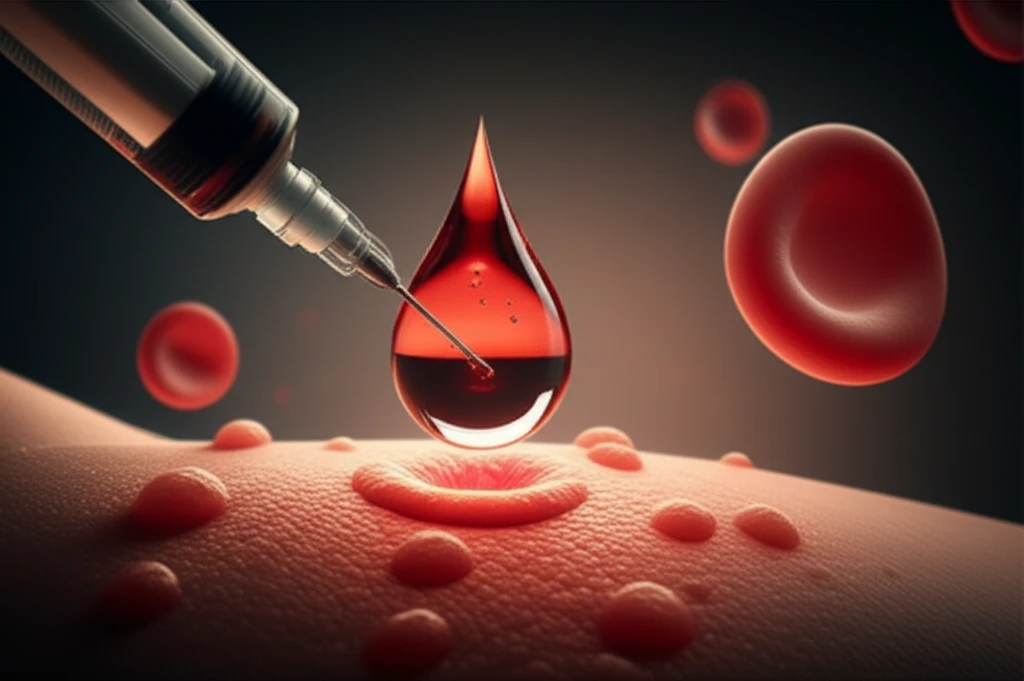
Illustration of a blood injection healing a skin condition.

Beyond Antihistamines: Could Autologous Blood Injections Be the Answer to Stubborn Hives?

"Exploring an Alternative Treatment for Chronic Spontaneous Urticaria: A Deep Dive into Autologous Whole Blood Injections."


Dealing with chronic hives, medically termed chronic spontaneous urticaria (CSU), can be a relentless challenge. Characterized by unpredictable outbreaks of itchy welts, CSU can significantly impact daily life, often leaving individuals searching for effective solutions. Traditional treatments, such as antihistamines, may not always provide adequate relief, leading many to explore alternative options. One such alternative is autologous whole blood injection, a treatment that has gained attention for its potential to address this persistent condition.

This article delves into the use of autologous whole blood injections for treating CSU, offering a comprehensive overview of the treatment, its effectiveness, and how it compares to conventional methods. We will explore the science behind this approach, analyze relevant research, and discuss the potential benefits for those struggling with antihistamine-resistant hives. Understanding the options available is the first step toward managing and potentially overcoming the challenges of CSU.

The aim of this discussion is to demystify autologous blood injections for CSU, providing a balanced view of the treatment, its benefits, and its limitations. Our goal is to offer an informative resource that empowers readers with knowledge, enabling them to make informed decisions about their health and well-being. This will be a resource that guides readers through the complexities of CSU treatment, providing clarity and insights into a less commonly discussed therapeutic option.

Unpacking Autologous Whole Blood Injections: How Does It Work?

Illustration of a blood injection healing a skin condition.

Autologous whole blood injection, in the context of treating CSU, involves extracting a small amount of a patient's own blood and then injecting it back into the patient. This practice, though seemingly simple, is thought to work by modulating the immune system. The underlying principle is that introducing the patient's own blood can help to desensitize the body against the factors that trigger hives. It's a form of immunotherapy where the patient's own immune system is encouraged to regulate the abnormal reactions that cause CSU.

While the exact mechanisms are still under investigation, several theories explain how autologous whole blood injections might work. The injection may interact with the immune system to reduce the production of autoantibodies. Autoantibodies are frequently associated with CSU, as they target specific proteins and other structures that cause hives. The injection could also help calm the inflammatory response that is characteristic of CSU, reducing the activity of immune cells and chemicals that contribute to the development of hives.

  • Immune Modulation: The injections might help balance the immune system, reducing its overactivity.
  • Reduced Inflammation: This process could lower inflammation, which is a critical factor in the formation of hives.
  • Autoantibody Control: AWB injections could potentially decrease the presence or impact of autoantibodies, which trigger hives in many CSU cases.
The application of autologous whole blood injections in treating CSU, is often administered intramuscularly. The volume of blood injected and the frequency of injections can vary. The treatment typically involves a series of injections over several weeks. During this treatment, individuals are often advised to continue taking antihistamines. The goal is to reduce the reliance on antihistamines over time as the body's response to the injections improves. The duration of treatment varies. Treatment is adjusted based on the individual's response and the guidance of their healthcare provider.

The Future of CSU Treatment

Autologous blood injection shows potential as a viable treatment option for those with antihistamine-resistant CSU, especially for individuals with severe disease activity. Further research is needed to explore its effectiveness, optimal protocols, and long-term outcomes. If you are dealing with chronic hives and are seeking alternative solutions, consult with your healthcare provider to discuss your specific situation and possible treatment options. Understanding your options is key in finding a path towards managing and improving the quality of life for individuals battling chronic spontaneous urticaria.

About this Article -

This article was crafted using a human-AI hybrid and collaborative approach. AI assisted our team with initial drafting, research insights, identifying key questions, and image generation. Our human editors guided topic selection, defined the angle, structured the content, ensured factual accuracy and relevance, refined the tone, and conducted thorough editing to deliver helpful, high-quality information.See our About page for more information.

This article is based on research published under:

DOI-LINK: 10.5021/ad.2015.27.6.784, Alternate LINK

Title: Autologous Whole Blood Injection For The Treatment Of Antihistamine-Resistant Chronic Spontaneous Urticaria

Subject: Dermatology

Journal: Annals of Dermatology

Publisher: Korean Dermatological Association and The Korean Society for Investigative Dermatology

Authors: Hyang-Suk You, Hyun-Ho Cho, Won-Jeong Kim, Je-Ho Mun, Margaret Song, Hoon-Soo Kim, Hyun-Chang Ko, Moon-Bum Kim, Byung-Soo Kim

Published: 2015-01-01

Everything You Need To Know

1

What exactly are autologous whole blood injections, and how are they used to treat chronic spontaneous urticaria (CSU)?

Autologous whole blood injections involve extracting a small amount of a patient's own blood and injecting it back into the patient. For chronic spontaneous urticaria (CSU) the idea is that reintroducing the blood helps to modulate the immune system, potentially desensitizing the body to the triggers of hives. This approach is considered a form of immunotherapy, encouraging the immune system to regulate abnormal reactions that cause CSU. The exact mechanisms are still being researched, focusing on how the treatment may reduce autoantibodies production or calm the inflammatory response characteristic of CSU.

2

If I'm currently taking antihistamines for my chronic hives, can I still consider autologous whole blood injections as a treatment option?

Yes, autologous whole blood injections can be considered even if you are currently taking antihistamines. During autologous whole blood injection treatment, individuals are often advised to continue taking antihistamines. The goal is to gradually reduce reliance on antihistamines as the body's response to the autologous whole blood injections improves. It's important to consult with your healthcare provider to determine the best course of action for your specific situation.

3

How do autologous whole blood injections differ from traditional treatments like antihistamines in managing chronic spontaneous urticaria (CSU)?

Traditional treatments for chronic spontaneous urticaria (CSU), like antihistamines, primarily focus on alleviating symptoms by blocking histamine, a key mediator of allergic reactions. Autologous whole blood injections, on the other hand, aim to modulate the immune system to address the underlying cause of CSU. Instead of just managing symptoms, autologous whole blood injections seek to desensitize the body, potentially reducing the frequency and severity of hive outbreaks. This approach may offer a more long-term solution compared to the symptomatic relief provided by antihistamines.

4

What are autoantibodies, and how do autologous whole blood injections affect them in the context of chronic spontaneous urticaria (CSU)?

Autoantibodies are antibodies that mistakenly target and react with the body's own tissues or proteins. In chronic spontaneous urticaria (CSU), autoantibodies are frequently associated with triggering hives by targeting specific proteins and structures in the skin. Autologous whole blood injections are thought to potentially reduce the presence or impact of these autoantibodies, helping to regulate the abnormal immune responses that lead to hive outbreaks. By modulating the immune system, autologous whole blood injections aim to decrease the activity of these autoantibodies and calm the inflammatory response characteristic of CSU.

5

What is the typical procedure and timeline for autologous whole blood injections, and how is the treatment's effectiveness monitored over time?

The procedure for autologous whole blood injections involves extracting a small amount of the patient's blood and injecting it back into the patient, often intramuscularly. The treatment typically involves a series of injections administered over several weeks, with the volume of blood injected and the frequency of injections varying based on individual needs and healthcare provider guidance. The duration of treatment is adjusted based on the individual's response. During treatment, individuals are often advised to continue taking antihistamines, with the goal of reducing reliance on them over time as the body's response improves. Monitoring effectiveness involves assessing the reduction in hive outbreaks, severity of symptoms, and reliance on antihistamines. Regular consultations with a healthcare provider are crucial to track progress and adjust the treatment plan accordingly. Further research is needed to establish optimal protocols and long-term outcomes.

Newsletter Subscribe

Subscribe to get the latest articles and insights directly in your inbox.