
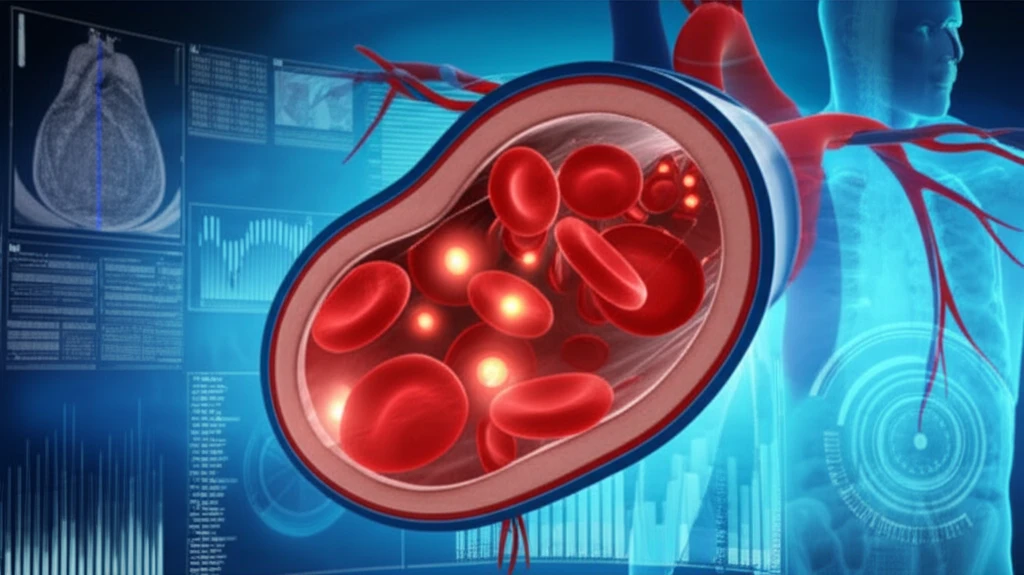
Futuristic illustration of CT scan showing blood flow in stented artery.

Beyond Angioplasty: How CT Scans Are Revolutionizing Stent Monitoring

"Discover how CT perfusion imaging enhances accuracy in detecting in-stent restenosis, offering hope for improved cardiac care and reduced radiation exposure."


Coronary artery disease (CAD) remains a leading cause of morbidity and mortality worldwide. Percutaneous coronary intervention (PCI), involving the placement of stents to open blocked arteries, has become a standard treatment. However, a significant challenge arises with in-stent restenosis (ISR), where the stented artery narrows again, leading to recurrent symptoms and the need for further intervention.

Traditional methods for detecting ISR, such as coronary angiography, are invasive and carry risks. Coronary CT angiography (CCTA) has emerged as a non-invasive alternative, but its accuracy in stented vessels can be limited. This is where CT perfusion (CTP) imaging steps in, offering a functional assessment of blood flow to the heart muscle.

The ADVANTAGE study, a groundbreaking investigation, explores the combined power of CCTA and CTP in diagnosing ISR. This article delves into the study's findings, highlighting how CTP enhances diagnostic accuracy, improves patient outcomes, and minimizes radiation exposure, marking a significant leap forward in cardiac care.

The ADVANTAGE Study: Unveiling the Power of Combined Imaging

Futuristic illustration of CT scan showing blood flow in stented artery.

The ADVANTAGE study aimed to evaluate the diagnostic performance of CCTA alone, CTP alone, and the combination of CCTA and CTP in patients suspected of having ISR or progression of native CAD. Conducted with the latest scanner generation, which provides whole-heart coverage with high spatial and temporal resolution, the study used invasive coronary angiography (ICA) as the gold standard for comparison.

Researchers enrolled consecutive patients referred for clinically indicated ICA. They calculated the feasibility and accuracy of CCTA, CTP, and the combined evaluation of CCTA plus CTP in stent-based, territory-based, and patient-based analyses. Sensitivity, specificity, positive predictive value, negative predictive value, and diagnostic accuracy were assessed for each imaging modality. Radiation exposure for CCTA, CTP, and ICA was also meticulously recorded.

  • Feasibility Boost: CTP proved significantly more feasible than CCTA in stent-based, territory-based, and patient-based analyses.
  • Enhanced Accuracy: CTP alone demonstrated higher diagnostic accuracy than CCTA alone in detecting ISR.
  • Synergistic Effect: The combined CCTA-CTP evaluation further improved diagnostic accuracy, especially when CCTA and CTP findings were concordant.
  • Radiation Conscious: The mean effective dose for the entire CT assessment (CCTA-CTP) was a relatively low 2.76 ± 2.32 mSv.
The study's results revealed that CTP feasibility was significantly higher than CCTA feasibility in stent-based, territory-based, and patient-based analysis. The feasibility of the combined evaluation CCTA-CTP was also significantly higher than CCTA feasibility in similar analyses. CTP's diagnostic accuracy surpassed that of CCTA in stent-based and territory-based analyses. Concordant CCTA-CTP evaluation showed higher diagnostic accuracy than CCTA and CTP alone in patient-based analysis. Moreover, the mean effective radiation dose for the entire CT assessment (CCTA-CTP) was 2.76 ± 2.32 mSv.

A New Era in Stent Monitoring

The ADVANTAGE study underscores the potential of CTP as a valuable tool in assessing patients with suspected ISR. Its enhanced feasibility, accuracy, and ability to provide functional information about myocardial perfusion make it a promising addition to the diagnostic armamentarium. The study's findings suggest that CTP, particularly when combined with CCTA, can lead to more accurate diagnoses, improved patient management, and reduced radiation exposure. As technology advances, we can expect even more refined imaging techniques to further optimize the care of patients with coronary artery disease.

About this Article -

This article was crafted using a human-AI hybrid and collaborative approach. AI assisted our team with initial drafting, research insights, identifying key questions, and image generation. Our human editors guided topic selection, defined the angle, structured the content, ensured factual accuracy and relevance, refined the tone, and conducted thorough editing to deliver helpful, high-quality information.See our About page for more information.

Everything You Need To Know

1

What is Coronary Artery Disease, Percutaneous Coronary Intervention and In-stent Restenosis?

Coronary artery disease (CAD) is a major global health concern marked by the narrowing of arteries, often leading to heart attacks and other cardiovascular issues. Percutaneous coronary intervention (PCI), a common treatment, involves inserting stents to open blocked arteries. However, In-stent restenosis (ISR) occurs when the stented artery narrows again, making it a critical area of focus for improved diagnostic methods.

2

What are CCTA and CTP and how do they relate?

Coronary CT angiography (CCTA) uses X-rays to create detailed images of the coronary arteries. While it's non-invasive, its accuracy in assessing stented vessels can be limited. CT perfusion (CTP) imaging adds functional information by evaluating blood flow to the heart muscle. The ADVANTAGE study used CCTA and CTP together to diagnose In-stent restenosis (ISR).

3

How does CT perfusion (CTP) imaging work and why is it significant?

CT perfusion (CTP) imaging assesses blood flow to the heart muscle, providing insights into the functionality of the heart. The ADVANTAGE study highlights how CTP enhances diagnostic accuracy for In-stent restenosis (ISR). CTP’s ability to provide functional information is crucial because it helps doctors understand not just the structure of the arteries (assessed by CCTA) but also how well the heart muscle is being supplied with blood. This functional information allows for more informed decisions on patient care.

4

What methods did the ADVANTAGE study use, and what did it find?

The ADVANTAGE study compared the diagnostic performance of CCTA alone, CTP alone, and the combination of CCTA and CTP. The study used invasive coronary angiography (ICA) as the gold standard for comparison. The combined evaluation of CCTA and CTP showed enhanced diagnostic accuracy for In-stent restenosis (ISR). The study also showed CTP was significantly more feasible than CCTA.

5

What are the benefits of combining CCTA and CTP?

The combined CCTA-CTP evaluation offers increased accuracy, especially when both methods agree. Patients benefit from more precise diagnoses, which can lead to better management and outcomes. Additionally, the mean effective radiation dose for the entire CT assessment (CCTA-CTP) was 2.76 ± 2.32 mSv. This underscores the benefits of the combination of imaging techniques for In-stent restenosis (ISR) detection.

Newsletter Subscribe

Subscribe to get the latest articles and insights directly in your inbox.