
Beating Cancer's Resistance: How a Novel VHH Pool Could Revolutionize MET-Targeted Therapies

"A groundbreaking approach using a unique antibody pool shows promise in overcoming cancer's resistance to traditional treatments, offering new hope for patients."
Cancer remains one of the most formidable health challenges, often marked by its ability to develop resistance to treatment. Among the key players in many human malignancies is the receptor tyrosine kinase MET, along with its ligand HGF. These molecules are crucial for cancer cell growth and spread, making them prime targets for therapeutic intervention. Traditional approaches, however, which focus on inhibiting the kinase center of MET or blocking HGF-mediated activation, have shown limited success. Cancer's complex nature often allows it to bypass these single points of attack, leading to drug resistance.
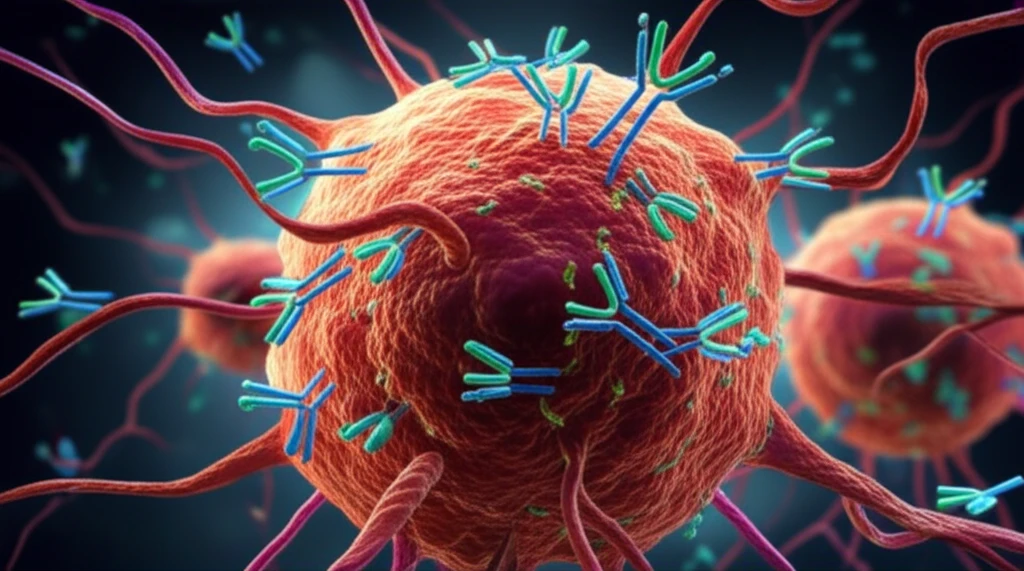
Scientists are now exploring innovative strategies to outsmart cancer's defense mechanisms. One promising avenue involves VHHs, the recombinant variable regions of Camelid heavy-chain antibodies. These nanoscale antigen-binding units have emerged as appealing drug candidates due to their small size, stability, and ability to bind to unique epitopes. Unlike traditional antibodies, VHHs can access hidden or difficult-to-reach sites on target proteins, potentially offering a more comprehensive approach to cancer therapy.
A recent study has introduced a novel approach: an anti-MET VHH pool designed to target the entire ecto-domain of MET. This strategy aims to overcome the limitations of single-target therapies by creating a diverse antibody mixture that can simultaneously attack multiple sites on the MET protein. The results have been remarkable, demonstrating that this VHH pool not only inhibits MET kinase activity but also promotes the degradation of MET protein, leading to significant anti-cancer effects.
How Does the Anti-MET VHH Pool Work?
The anti-MET VHH pool works through a multifaceted approach that leverages the combined strengths of its diverse antibody components. Unlike single-agent therapies that focus on a single point of intervention, the VHH pool targets multiple epitopes on the MET protein, disrupting its function through several mechanisms. This approach is designed to overcome cancer's ability to develop resistance by blocking multiple pathways simultaneously.
- Promoting MET Degradation: The VHH pool triggers the degradation of MET protein through the clathrin-dependent endo-lysosomal pathway. This reduces the overall levels of MET, effectively dismantling the cancer cells' signaling machinery.
- Blocking Kinase Activity: The VHH pool inhibits the kinase activity of MET, preventing the activation of downstream signaling pathways that drive cancer cell growth and survival.
- Suppressing Cancer Cell Proliferation: By disrupting MET function, the VHH pool significantly reduces cancer cell proliferation, viability, and colony formation in vitro.
- Inhibiting Tumorigenesis: The VHH pool has demonstrated the ability to prevent tumorigenesis and block tumor progression in mouse models, showcasing its potential as a therapeutic agent.
A Promising Future for Cancer Therapy
The development of the anti-MET VHH pool represents a significant step forward in the fight against cancer. By addressing the complex mechanisms of drug resistance and providing a more comprehensive therapeutic approach, this innovation offers new hope for patients. As research continues and clinical trials progress, the potential of VHH pools to revolutionize cancer therapy becomes increasingly apparent. This approach not only enhances treatment efficacy but also opens doors to new strategies for targeting other key proteins involved in cancer development and progression.