
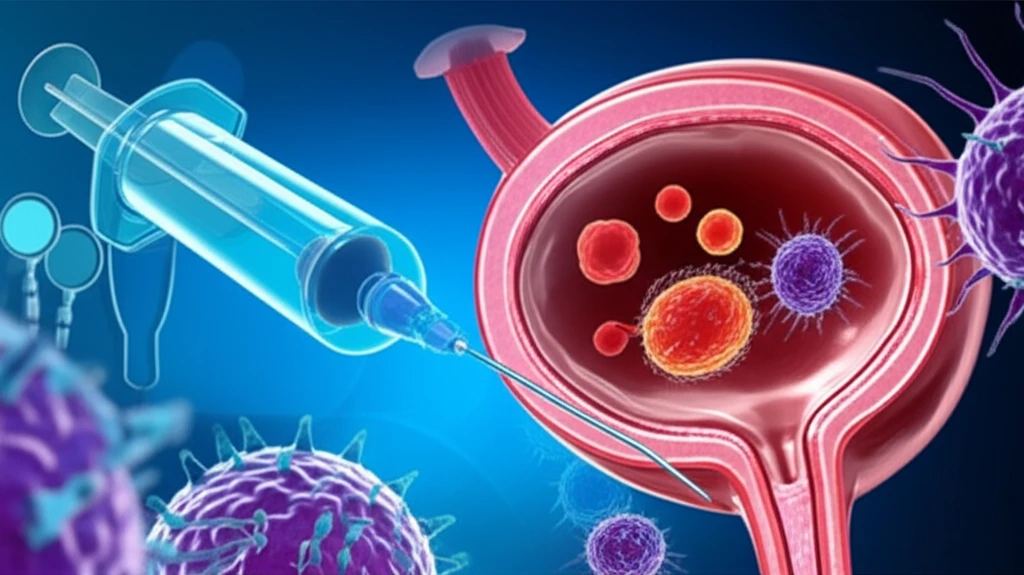
Illustration depicting bladder cancer treatment options: BCG instillation and chemohyperthermia

BCG vs. Chemohyperthermia: A Deep Dive into Bladder Cancer Treatment

"Understanding the Battle: Comparing BCG Instillation and Chemohyperthermia for High-Risk Non-Muscle-Invasive Bladder Cancer"


Bladder cancer is a significant health concern, affecting thousands of people worldwide. While the disease is often treatable, the recurrence rate can be high, especially for those with high-risk, non-muscle-invasive bladder cancer (NMIBC). This article delves into two primary treatment options for this type of cancer: bacillus Calmette-Guérin (BCG) instillation and chemohyperthermia (C-HT).

BCG instillation, a form of immunotherapy, has long been a standard treatment for NMIBC. However, chemohyperthermia, which combines chemotherapy with heat, is an emerging alternative. This article will compare these two treatments, examining their effectiveness, benefits, and potential drawbacks, to provide a comprehensive understanding of the latest approaches in bladder cancer care.

The information presented is based on a detailed analysis of research comparing BCG and chemohyperthermia, using a propensity score-matched study to evaluate their efficacy. By understanding these treatment options, patients and their families can make informed decisions and work with their healthcare providers to achieve the best possible outcomes.

BCG vs. Chemohyperthermia: Unveiling the Key Differences

Illustration depicting bladder cancer treatment options: BCG instillation and chemohyperthermia

The study, which included a large cohort of patients, provides a detailed comparison of BCG instillation and chemohyperthermia. BCG instillation involves introducing a weakened form of the bacterium Mycobacterium bovis into the bladder, stimulating the immune system to attack cancer cells. Chemohyperthermia, on the other hand, combines chemotherapy drugs, such as mitomycin-C, with heat. The heat is designed to enhance the chemotherapy's effectiveness by making cancer cells more susceptible to the drugs.

The study compared recurrence-free intervals, the time until the cancer returns, and progression-free intervals, the time until the cancer progresses to a more serious stage. The results revealed that while both treatments have their place, BCG instillation demonstrated a significantly improved recurrence-free interval compared to chemohyperthermia. However, there was no significant difference in the progression-free intervals between the two treatments. This means both treatments are effective at preventing the cancer from worsening, but BCG is more effective in preventing the cancer from returning.

  • BCG Instillation: Generally considered a first-line treatment for high-risk NMIBC.
  • Chemohyperthermia: An alternative that uses chemotherapy with heat to enhance effectiveness.
  • Recurrence-Free Interval: BCG showed a significantly better recurrence-free interval compared to chemohyperthermia.
  • Progression-Free Interval: Both treatments showed similar results in preventing the cancer from progressing.
The study's findings highlight the importance of personalized treatment approaches in bladder cancer care. While BCG may be more effective in preventing recurrence, chemohyperthermia remains a viable option, especially for those who may not respond well to BCG or experience significant side effects. The decision on which treatment is best should always be made in consultation with a healthcare provider, considering individual patient factors and the specific characteristics of the cancer.

Making Informed Decisions About Bladder Cancer Treatment

The choice between BCG instillation and chemohyperthermia for bladder cancer treatment is complex. The study provides crucial insights for patients, their families, and healthcare providers, emphasizing the need for a tailored approach. As research continues, advancements in bladder cancer treatment will likely lead to even better outcomes. Always consult with a healthcare professional to discuss the best treatment plan based on your individual needs and the specifics of your condition.

About this Article -

This article was crafted using a human-AI hybrid and collaborative approach. AI assisted our team with initial drafting, research insights, identifying key questions, and image generation. Our human editors guided topic selection, defined the angle, structured the content, ensured factual accuracy and relevance, refined the tone, and conducted thorough editing to deliver helpful, high-quality information.See our About page for more information.

This article is based on research published under:

DOI-LINK: 10.5489/cuaj.2708, Alternate LINK

Title: Intravesical Bacillus Calmette-Guérin Versus Chemohyperthermia For High-Risk Non-Muscle-Invasive Bladder Cancer

Subject: Urology

Journal: Canadian Urological Association Journal

Publisher: Canadian Urological Association Journal

Authors: Rahmi Gokhan Ekin, Ilker Akarken, Ferruh Zorlu, Huseyin Tarhan, Ulku Kucuk, Zubeyde Yildirim Ekin, Rauf Taner Divrik

Published: 2015-05-13

Everything You Need To Know

1

What are the main treatment options when dealing with high-risk non-muscle-invasive bladder cancer (NMIBC)?

The two primary treatment options for high-risk non-muscle-invasive bladder cancer are bacillus Calmette-Guérin (BCG) instillation and chemohyperthermia. BCG instillation is a form of immunotherapy that stimulates the immune system to attack cancer cells. Chemohyperthermia combines chemotherapy drugs with heat to enhance their effectiveness. While both aim to treat the cancer, they operate through different mechanisms.

2

How does BCG instillation work to combat bladder cancer?

BCG instillation involves introducing a weakened form of the bacterium Mycobacterium bovis directly into the bladder. This stimulates the immune system to recognize and attack cancer cells within the bladder. The body's immune response is activated, targeting the cancerous cells for destruction. The process aims to reduce recurrence and prevent progression of the cancer.

3

What advantages does BCG instillation have over chemohyperthermia, according to recent research?

Recent research indicates that BCG instillation demonstrates a significantly improved recurrence-free interval compared to chemohyperthermia in treating high-risk NMIBC. This means that BCG is more effective at preventing the cancer from returning after treatment. However, both treatments showed similar results in preventing the cancer from progressing to a more serious stage. While BCG has shown improved recurrence-free intervals, chemohyperthermia remains a viable option, especially for those who may not respond well to BCG or experience significant side effects. The choice of treatment should be made in consultation with a healthcare provider, considering individual patient factors and the specifics of the cancer.

4

In what situations might chemohyperthermia be considered a more suitable treatment option than BCG instillation for bladder cancer?

Chemohyperthermia may be more suitable than BCG instillation, particularly for individuals who do not respond well to BCG or experience significant side effects from it. The approach combines chemotherapy drugs, such as mitomycin-C, with heat. The heat is designed to enhance the chemotherapy's effectiveness by making cancer cells more susceptible to the drugs. Chemohyperthermia offers an alternative approach for those unable to tolerate or benefit from BCG treatment. While BCG instillation is generally considered a first-line treatment for high-risk NMIBC, chemohyperthermia can be a valuable second option.

5

What is the importance of understanding recurrence-free and progression-free intervals when comparing bladder cancer treatments like BCG and chemohyperthermia?

Understanding recurrence-free and progression-free intervals is crucial because they provide different insights into the effectiveness of bladder cancer treatments. Recurrence-free interval indicates the length of time after treatment during which the cancer does not return, while progression-free interval measures the time until the cancer progresses to a more advanced stage. In comparing BCG instillation and chemohyperthermia, a better recurrence-free interval for BCG suggests it's more effective in preventing the cancer from coming back. However, similar progression-free intervals mean both treatments are equally effective at preventing the cancer from worsening. These metrics help healthcare providers and patients make informed decisions about treatment options, weighing the benefits of preventing recurrence versus preventing progression based on individual circumstances.

Newsletter Subscribe

Subscribe to get the latest articles and insights directly in your inbox.