
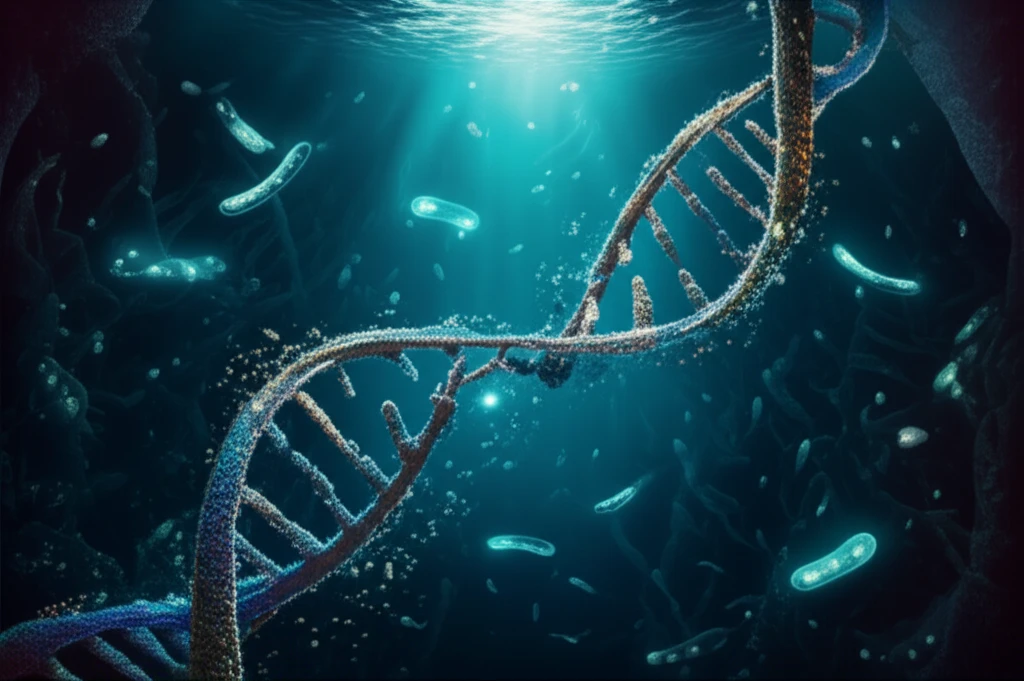
Bioluminescent bacteria in Lake Baikal, symbolizing potential for medical discoveries.

Baikal Bacteria: Unlocking Nature's Secrets for New Medicines?

"Dive into the hidden world of Lake Baikal's bacteria and their potential to revolutionize medicine. Could these unique microorganisms hold the key to fighting disease?"


The world is in a constant race against evolving diseases and the rise of antibiotic-resistant superbugs. This has scientists and researchers constantly searching for novel sources of medicines and therapeutic compounds. Often, the most promising leads come from unexpected places, like the depths of Lake Baikal in Russia. This ancient lake, the largest freshwater reserve on Earth, is home to a unique ecosystem teeming with microbial life.

Among these microorganisms, bacteria stand out for their ability to produce a diverse array of biologically active substances (BAS). These substances, synthesized by complex enzyme systems known as polyketide synthases (PKS), have the potential to be developed into life-saving drugs. Imagine, medicines from the bottom of a lake!

Researchers at the Limnological Institute in Russia have been studying heterotrophic bacteria isolated from epilithic biofilms—the slimy layers that cling to rocks—in Lake Baikal's littoral zone. Their work focuses on understanding the genetic diversity of PKS genes within these bacteria, with the ultimate goal of identifying new compounds with pharmaceutical potential.

Baikal's Bacterial Diversity: A Treasure Trove of PKS Genes?

Bioluminescent bacteria in Lake Baikal, symbolizing potential for medical discoveries.

The research team isolated six strains of heterotrophic bacteria from Lake Baikal's epilithic biofilms. These bacteria were identified as Serratia fonticola (strains 1A and 10A), Pseudomonas umsongensis (strains K10-2 and K10-3), Rheinheimera tilapiae (strain K18), and Flavobacterium sp. (strain 43-09).

To understand the bacteria's potential, the researchers delved into their genetic makeup, specifically looking at the genes responsible for producing polyketides—the PKS genes. They sequenced and analyzed these genes, comparing them to known sequences in genetic databases. This allowed them to identify the types of compounds the bacteria might be capable of producing.

  • Serratia fonticola: This bacterium showed similarity to genes involved in synthesizing antibiotics like erythromycin and difficidin, as well as anti-tumor agents like romidepsin and spiruchostatin.
  • Pseudomonas umsongensis: This bacterium was found to have PKS genes similar to those involved in erythromycin biosynthesis.
  • Rheinheimera tilapiae: This bacterium contained PKS genes related to the production of erythromycin, myxalamid, curacin, and myxothiazol—all antibiotics.
  • Flavobacterium sp.: This bacterium had genes that could potentially synthesize corallopyronin and disorazol, compounds with antibiotic and anti-tumor properties.
The researchers noted a crucial finding: the PKS amino acid sequences from the Baikal bacteria showed relatively low homology (50-83%) compared to sequences already cataloged in GenBank. This suggests that these bacteria have the capability to produce novel bioactive compounds that have not yet been discovered. It’s like finding a new recipe in an old cookbook!

The Future of Baikal Bacteria in Medicine

The study emphasizes the potential of Lake Baikal's bacterial strains as sources of new and unique bioactive substances. While further research is needed to isolate and characterize these compounds, the initial findings suggest that these microorganisms could hold the key to developing new drugs and therapies. As antibiotic resistance continues to threaten global health, exploring novel sources like Lake Baikal's bacteria becomes increasingly important. The depths of this ancient lake may offer hope for the future of medicine.

About this Article -

This article was crafted using a human-AI hybrid and collaborative approach. AI assisted our team with initial drafting, research insights, identifying key questions, and image generation. Our human editors guided topic selection, defined the angle, structured the content, ensured factual accuracy and relevance, refined the tone, and conducted thorough editing to deliver helpful, high-quality information.See our About page for more information.

This article is based on research published under:

DOI-LINK: 10.3103/s0096392517040113, Alternate LINK

Title: Diversity Of Polyketide Synthase Genes In The Genomes Of Heterotrophic Microorganisms Isolated From Epilithic Biofilms Of Lake Baikal

Subject: General Agricultural and Biological Sciences

Journal: Moscow University Biological Sciences Bulletin

Publisher: Allerton Press

Authors: E. V. Sukhanova, E. A. Zimens, V. V. Parfenova, O. I. Belykh

Published: 2017-10-01

Everything You Need To Know

1

What are scientists hoping to find from the bacteria in Lake Baikal?

Scientists are investigating bacteria from Lake Baikal to find new antibiotics and cancer-fighting compounds. They are focusing on the potential of these microorganisms to create life-saving drugs, addressing the global challenge of evolving diseases and antibiotic resistance. The study involves identifying new bioactive substances from the bacteria.

2

Where exactly are the scientists looking in Lake Baikal to study the bacteria?

Scientists are studying the epilithic biofilms in the littoral zone of Lake Baikal. These biofilms are the slimy layers on rocks that contain heterotrophic bacteria. They analyze the bacteria to understand their genetic makeup, specifically focusing on polyketide synthase (PKS) genes. By studying these genes, researchers can identify the potential compounds the bacteria can produce, opening the door to discovering new drugs.

3

What is the importance of Polyketide Synthases (PKS) in this research?

Polyketide synthases (PKS) are complex enzyme systems within bacteria that produce biologically active substances (BAS). These BAS have the potential to become life-saving drugs. Researchers are investigating the PKS genes in Lake Baikal's bacteria to identify these potentially useful compounds. The study of PKS genes is crucial because it helps scientists understand what types of compounds the bacteria can produce.

4

What specific types of bacteria are the scientists studying?

The bacteria strains that the researchers identified from Lake Baikal include Serratia fonticola, Pseudomonas umsongensis, Rheinheimera tilapiae, and Flavobacterium sp. Each of these strains showed the presence of PKS genes which are responsible for producing a variety of potentially useful compounds, like antibiotics and anti-tumor agents. The researchers study these strains to explore their capacity to produce new bioactive substances.

5

Why is it significant that the Baikal bacteria have low homology in their PKS sequences?

The PKS amino acid sequences from the Baikal bacteria show relatively low homology (50-83%) compared to sequences already cataloged in GenBank. This suggests that these bacteria may produce novel bioactive compounds not yet discovered. This finding is significant because it indicates that Lake Baikal's bacteria could hold the key to discovering new drugs and therapies, especially in the fight against antibiotic resistance. This also underscores the importance of exploring unique environments like Lake Baikal for new medicines.

Newsletter Subscribe

Subscribe to get the latest articles and insights directly in your inbox.