
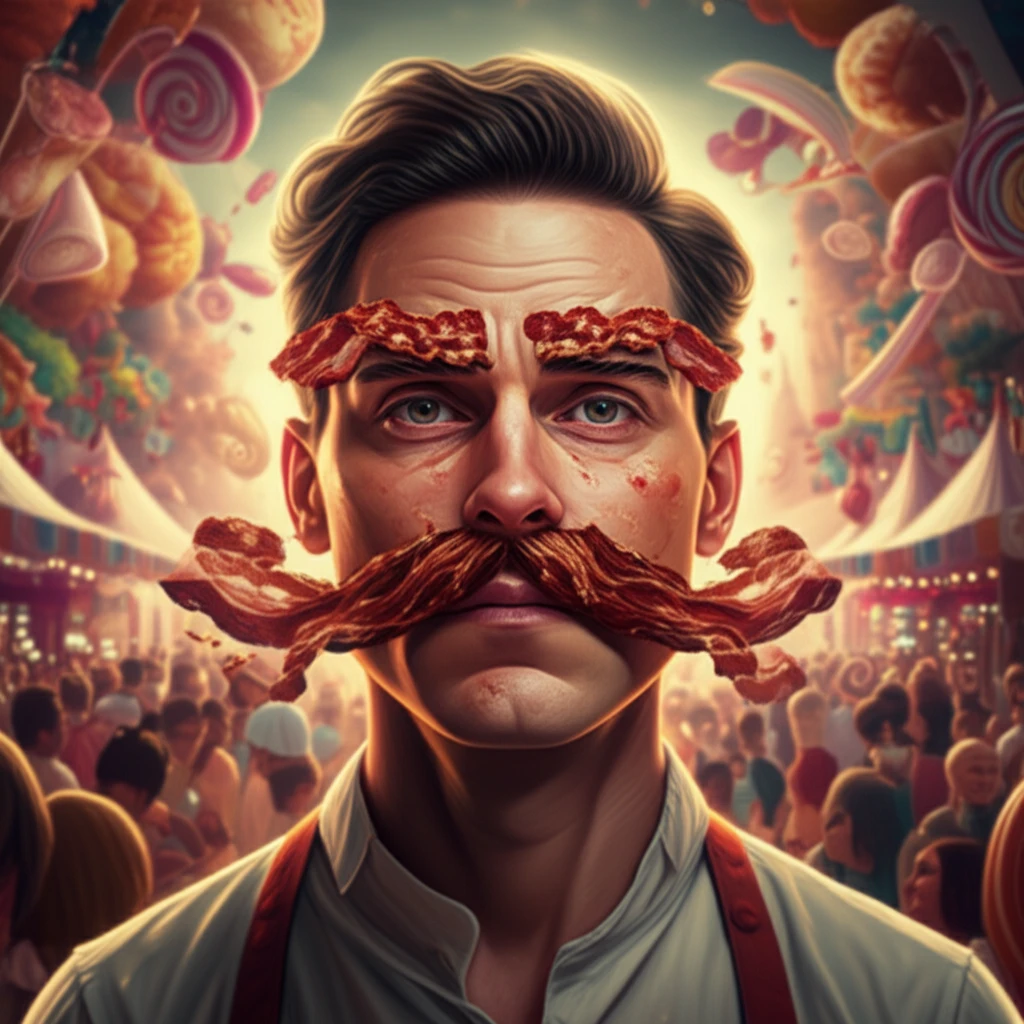
Person with bacon mustache and eyebrows at a food festival

Bacon Mania: When Science Meets Savory Obsession

"Exploring the quirky side of food science, from bacon festivals to the chemistry of flavor, and why our love for bacon endures despite the health warnings."


Bacon. The crispy, smoky, salty treat that has captured hearts and taste buds around the globe. But beyond its undeniable deliciousness, bacon represents a fascinating intersection of food science, cultural trends, and health debates. From bacon-themed festivals to innovative culinary creations, the love for bacon knows no bounds.

However, this beloved food isn't without its controversies. Health experts often caution against excessive consumption due to its high fat and sodium content. Yet, despite these warnings, bacon consumption remains at an all-time high, suggesting a deeper connection than mere taste.

In this article, we'll explore the quirky science behind bacon mania, delving into the reasons for its enduring appeal and the ways it has infiltrated our culture. We'll also examine the health concerns and the ongoing efforts to create healthier alternatives, all while celebrating the undeniable allure of this savory indulgence.

The Allure of Bacon: Why We Can't Resist

Person with bacon mustache and eyebrows at a food festival

Bacon's appeal is multi-faceted, combining sensory experiences with emotional connections. The Maillard reaction, a chemical process that occurs when bacon is cooked, creates hundreds of flavor compounds, resulting in its distinctive taste and aroma. This complexity is further enhanced by the crispy texture, which provides a satisfying crunch that few foods can match.

Moreover, bacon often evokes nostalgic feelings. For many, it's associated with childhood breakfasts, family gatherings, and comfort food. This emotional connection can override rational health concerns, making bacon a treat we indulge in despite knowing better.

  • Sensory Experience: The combination of taste, smell, and texture creates a unique and irresistible experience.
  • Emotional Connection: Bacon is often linked to positive memories and feelings of comfort.
  • Cultural Phenomenon: Bacon has transcended mere food to become a symbol of indulgence and enjoyment.
The rise of bacon-themed events like Camp Bacon further demonstrates its cultural significance. These festivals offer a space for bacon lovers to celebrate their passion, sample innovative creations, and connect with like-minded individuals. From bacon-filled meals to bacon-themed merchandise, these events showcase the boundless creativity inspired by this singular ingredient.

The Future of Bacon: Indulgence with a Conscience?

As health concerns surrounding bacon persist, the food industry is exploring ways to create healthier alternatives. From lower-sodium options to plant-based bacon substitutes, the goal is to offer a guilt-free indulgence that satisfies our cravings without compromising our well-being. Whether these innovations will fully replicate the unique appeal of traditional bacon remains to be seen, but the pursuit of a healthier, equally delicious alternative is a testament to our enduring love for this iconic food.

About this Article -

This article was crafted using a human-AI hybrid and collaborative approach. AI assisted our team with initial drafting, research insights, identifying key questions, and image generation. Our human editors guided topic selection, defined the angle, structured the content, ensured factual accuracy and relevance, refined the tone, and conducted thorough editing to deliver helpful, high-quality information.See our About page for more information.

Everything You Need To Know

1

Why do people love Bacon so much?

Bacon's popularity stems from a blend of factors. The Maillard reaction during cooking creates a complex array of flavor compounds, producing a unique taste and aroma. Its texture provides a satisfying crunch, and it often evokes positive memories linked to comfort and family. This combination makes Bacon more than just food, it is a cultural phenomenon.

2

What is the Maillard reaction, and why is it important when cooking Bacon?

The Maillard reaction is a crucial chemical process that occurs when Bacon is cooked. It involves the interaction between amino acids and reducing sugars at high temperatures, resulting in the creation of hundreds of flavor compounds. These compounds contribute to the distinct taste and aroma that make Bacon so appealing. This complexity is a key part of what makes the sensory experience of eating Bacon so rich.

3

How do events and festivals contribute to the cultural significance of Bacon?

Bacon festivals and related events highlight the cultural significance of Bacon. These gatherings provide spaces for Bacon enthusiasts to celebrate, sample new creations, and share their passion. They demonstrate how Bacon has become a symbol of indulgence and enjoyment, extending beyond a simple food item to become a cultural icon.

4

What are the health concerns associated with Bacon?

Health experts often express concern about the high fat and sodium content in Bacon. Excessive consumption is linked to potential health issues. Despite these warnings, the enduring appeal of Bacon and its emotional connections continue to drive its popularity, leading to ongoing efforts to develop healthier alternatives that provide the same satisfaction.

5

What is the future of Bacon, considering health concerns?

The food industry is actively working on healthier Bacon options, including lower-sodium versions and plant-based substitutes. The aim is to provide a guilt-free way to enjoy Bacon while addressing health concerns. These innovations reflect the goal to maintain the unique appeal of Bacon while catering to consumer demand for healthier choices.

Newsletter Subscribe

Subscribe to get the latest articles and insights directly in your inbox.