
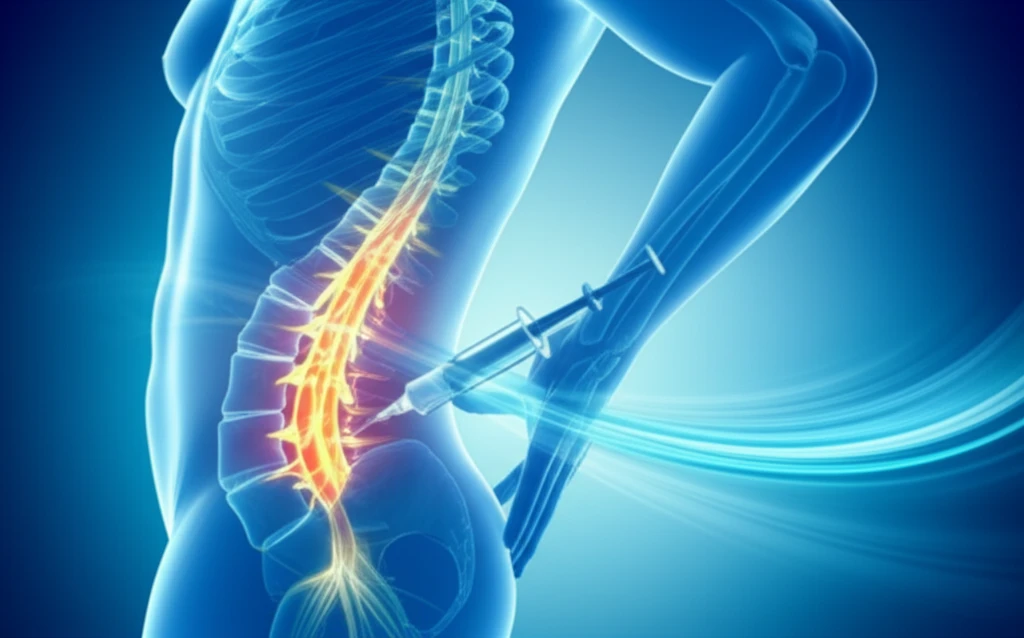
Back Pain Breakthrough: Can Epidural Injections Offer Lasting Relief?

"A new study explores the potential of combined epidural morphine and bupivacaine for long-term management of lumbosacral radicular neuropathic pain."
Chronic lower back pain, especially when it radiates down the leg (radicular pain), is a widespread issue that significantly impacts quality of life. Neuropathic pain, a type of chronic pain resulting from nerve damage or dysfunction, presents unique challenges. Traditional treatments often fall short, leaving many individuals searching for effective, long-lasting solutions.
While medications, physical therapy, and even surgery are common approaches, interventional techniques like epidural injections are gaining attention. Epidural injections deliver medication directly into the space surrounding the spinal cord, aiming to reduce inflammation and alleviate pain. Researchers are continuously exploring new combinations and methods to optimize these treatments.
A recent study published in the 'Journal of Pain Research' investigated the effectiveness of combining morphine and bupivacaine in epidural injections for individuals with chronic lumbosacral radicular neuropathic pain. The study's findings suggest a promising avenue for managing this debilitating condition, offering hope for extended pain relief even after the treatment is discontinued.
Use and Evidence Gaps
A 2026 report estimates that about 9 million epidural steroid injections are performed yearly in the United States. Research on their long-term effectiveness remains limited in older adults, despite the high prevalence of back and leg pain in this age group. The available material therefore points to widespread use alongside important unanswered questions about lasting benefit.
Established Treatment, Limited Certainty
Lumbar epidural steroid injections are used for radicular pain and spinal stenosis, with the clinical aim of reducing inflammation, relieving compressed nerve roots, and alleviating symptoms in order to avoid surgery. However, an international expert panel reported in The BMJ that spine injections provide little or no pain relief compared with sham injections for adults with chronic back pain. A separate review found that epidural injections have shown significant but variable success in avoiding surgery.
Origins Around 1900
The history of the epidural block began in the first years of the 20th century, roughly 50 years after the discovery of inhalation anaesthesia. The first epidural injections for sciatica are described as occurring around 1900 in Paris, where Jean Sicard and Fernand Cathelin worked independently. Early procedures were performed without fluoroscopic localization, while later practice developed toward more precise targeting.
How Does Combined Epidural Treatment Work?
The study enrolled 22 patients experiencing chronic lumbosacral pain with neuropathic characteristics. Each participant received epidural injections of morphine and bupivacaine up to three times daily for four weeks. A catheter was placed in the epidural space to facilitate medication delivery. The study tracked pain intensity using a 0-10 Numeric Rating Scale (NRS) and the Total Pain Rating Index (PRIr-T) before treatment and one month after the catheter was removed.
- Morphine: An opioid analgesic that reduces pain signals by binding to receptors in the brain and spinal cord.
- Bupivacaine: A local anesthetic that blocks nerve conduction, providing pain relief by numbing the affected area.
- Synergistic Effect: The combination of morphine and bupivacaine may produce a synergistic effect, enhancing pain relief compared to using either medication alone.
Short-Term Benefit Under Review
Epidural steroid injections have long been used as a first-line treatment for lumbar radiculopathy, aiming to reduce inflammation at the affected nerve root and improve pain and function. A 2025 review focused on their use for radiculopathy and spinal stenosis, with radiculopathy described as pain caused by a pinched spinal nerve. The American Academy of Neurology review reported limited efficacy, with only modest reductions in chronic back pain for some patients with radiculopathy or spinal stenosis.
Technique and Diagnosis Matter
A systematic review and meta-analysis reported that parasagittal interlaminar and transforaminal approaches produced similar clinically significant improvements in pain and disability in a 2017 prospective, randomized, blinded study from Korea. The evidence base is incomplete for some conditions, including cervical radiculopathy, where the number of randomized controlled trials is small, and cervical spinal stenosis, where such trials were absent. One clinical explanation for treatment failure is that the pain may come from a structure the injection was not designed to treat, making diagnostic accuracy central to the outcome.
The Immediate Response
MedlinePlus Medical Encyclopedia reports that pain may become worse for two to three days after an epidural injection before it begins to improve. This means an early increase in pain does not necessarily indicate that the treatment has failed. The source presents this short-term pattern as part of the expected course patients may experience after injection.
The Future of Pain Management
The study's findings suggest that combined epidural morphine and bupivacaine can be an effective treatment for chronic neuropathic pain. This approach offers a valuable option for individuals who haven't found relief from traditional methods. Further research is needed to assess the long-term safety and efficacy of this treatment and to identify which patients are most likely to benefit. As we continue to explore innovative pain management strategies, hope grows for those seeking lasting relief from chronic pain.
A Mixed Evidence Base
A comparative systematic review and meta-analysis of Cochrane randomized controlled trials reported different results after reanalyzing evidence on epidural injections for chronic low back and lower-extremity pain with sciatica or lumbar radiculopathy. Another systematic review set out to determine the efficacy, effectiveness, and safety of fluoroscopically or ultrasound-guided caudal epidural steroid injections, with or without catheter placement. Together, these sources show that conclusions depend on the population, technique, and outcomes examined.
Durability Remains Uncertain
A 2025 systematic review from the American Academy of Neurology concluded that epidural steroid injections probably reduce short-term pain and disability in cervical and lumbar radiculopathy. The same review found that evidence remains insufficient to establish durable long-term pain relief. This distinction between short-term improvement and lasting relief is central to evaluating whether injections deliver a true long-term breakthrough.
Severe, Refractory Pain
Chronic low back pain is described as common and is often treated with epidural steroid injections. A 2023 case report described epidural administration of micronized amniotic membrane for a patient with chronic pain lasting more than seven years, rated as severe at 10, and unresponsive to other treatments. The report presented preliminary evidence of safety and effectiveness rather than established proof for broader patient populations.