
Back Pain After Fusion Surgery? Uncover the Link Between Sagittal Alignment and ASD

"New research spotlights how your spine's natural curves could predict post-surgery complications. Are you at risk?"
Lower back pain and spinal stenosis can significantly diminish your quality of life, particularly as you age. When conservative treatments fail, spinal fusion surgery becomes a common solution to stabilize the spine and alleviate pain. Posterior lumbar interbody fusion (PLIF) is frequently performed to address degenerative lumbar disorders. It aims to decompress neural foramina and provide solid fixation, but it's not without potential drawbacks.
One notable complication is adjacent segment degeneration (ASD), where the segments above or below the fused area begin to deteriorate. This can lead to new or recurring pain and may necessitate further interventions. Understanding the factors that contribute to early-onset ASD is vital for improving surgical outcomes and patient satisfaction.
Recent research investigates the connection between total spinal sagittal alignment and early ASD after single-level L4-L5 PLIF. The study focuses on patients without severe preoperative sagittal imbalance, aiming to identify specific spinal characteristics that may increase the risk of developing ASD post-surgery. By exploring these factors, medical professionals hope to refine patient selection and surgical planning to minimize the likelihood of this complication.
Decoding Sagittal Alignment: What the Numbers Mean for Your Spine
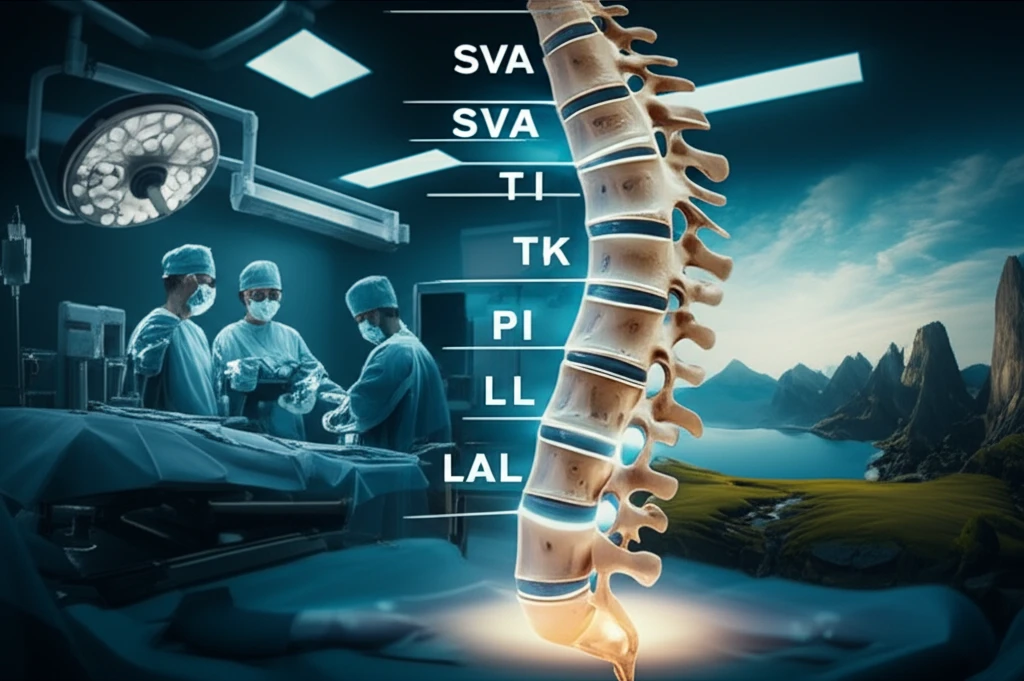
The spine's sagittal alignment refers to its natural curves when viewed from the side. Key parameters include:
- Sagittal Vertebral Axis (SVA): Horizontal distance between a vertical line from the C7 vertebra and the posterior superior corner of the S1 vertebra.
- Thoracic Kyphosis (TK): The angle of the thoracic spine's curvature.
- Lumbar Lordosis (LL): The angle of the lumbar spine's inward curve.
- Pelvic Tilt (PT): The position of the pelvis relative to the sacrum.
- Pelvic Incidence (PI): A fixed anatomical parameter representing the relationship between the sacrum and the hip axis.
What This Means for You: Taking Control of Your Spinal Health
While this study sheds light on potential risk factors, it’s essential to remember that ASD is a complex issue influenced by numerous factors. Discuss your individual risk profile with your orthopedic surgeon. A comprehensive evaluation of your spinal alignment, along with other considerations, will help determine the most appropriate surgical approach and post-operative care plan.