
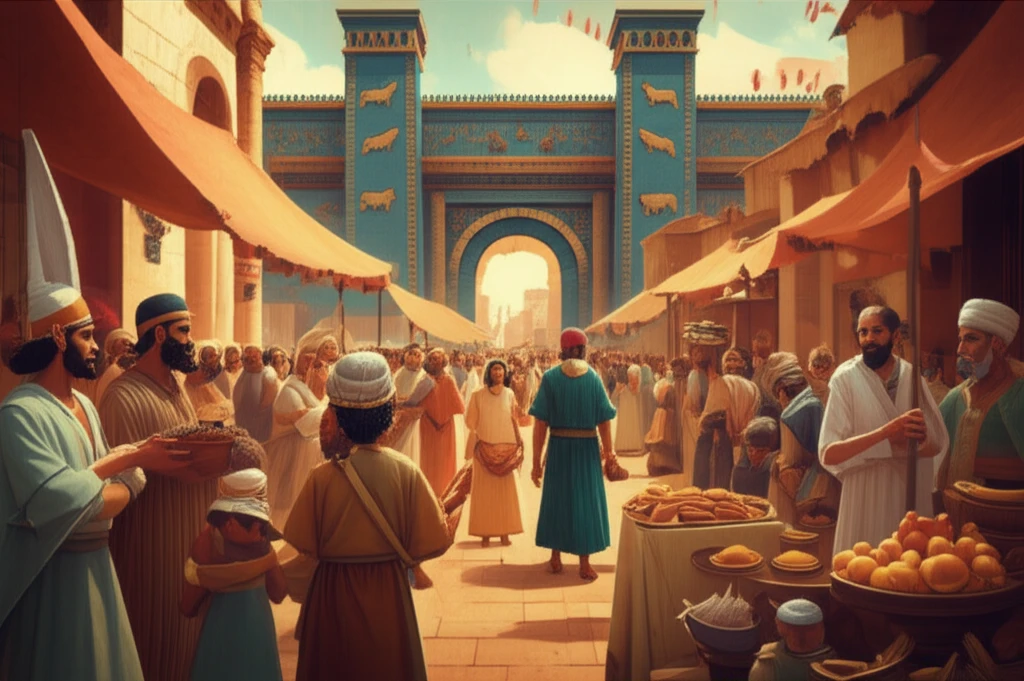
A diverse crowd of people in a Babylonian marketplace.

Babylon's Melting Pot: Uncovering the Stories of Ancient Migrants and Captives

"Explore how Nebuchadnezzar II's Babylon became a hub for diverse populations, from war prisoners to skilled artisans, and what their lives reveal about this ancient empire."


The reign of Nebuchadnezzar II transformed Babylon into a vibrant, cosmopolitan center. Beyond its impressive architecture and military might, Babylon was home to a diverse mix of people from conquered lands and neighboring regions. These individuals, ranging from war prisoners to diplomats, profoundly influenced the city's culture and economy.

Historical records, particularly royal archives, offer valuable insights into the lives of these 'foreigners.' These documents meticulously catalog rations, professions, and origins, painting a vivid picture of Babylon as a melting pot of cultures. Understanding these diverse populations is crucial to grasping the full complexity of Babylonian society.

This article delves into the experiences of these migrants and captives in Babylon. By examining their roles, interactions, and impacts, we can better understand the social and economic dynamics of one of history's most influential empires. It explores the roles and experiences of these groups, shedding light on their assimilation, resistance, and contributions to Babylonian society.

What Role Did War Prisoners Play in Babylon's Growth?

A diverse crowd of people in a Babylonian marketplace.

Nebuchadnezzar II's military campaigns brought a large influx of war prisoners to Babylon. These individuals, captured from various regions, became a significant labor source for the empire. Royal archives reveal that they were often employed in large-scale construction projects and agricultural activities.

The treatment of war prisoners varied, but many were integrated into the royal-palatial sector. This meant they worked on projects directly benefiting the crown, receiving rations and, in some cases, achieving a degree of social mobility. The scale of their contribution underscores the empire's reliance on forced labor.

  • Construction and Infrastructure: War prisoners were instrumental in building Babylon’s iconic structures, including temples, palaces, and defensive fortifications.
  • Agriculture: They worked the land, cultivating crops to feed the growing population and support the empire’s economy.
  • Craftsmanship: Some prisoners possessed valuable skills, contributing to Babylonian arts and crafts.
Records identify prisoners from the Levant, Anatolia, and other regions, each bringing unique skills and cultural influences. Their presence enriched Babylonian society, fostering a diverse environment that spurred innovation and cultural exchange. The scale of this migration reshaped Babylon's demographics, leaving a lasting imprint on its cultural identity.

What Can We Learn From Babylon's Migrant Communities?

The story of Babylon's diverse population offers a compelling lesson in the complexities of ancient empires. By examining the lives of migrants and captives, we gain a deeper understanding of the economic, social, and cultural forces that shaped this civilization. Their presence serves as a reminder that empires are built not just on military might but also on the contributions of diverse groups of people.

About this Article -

This article was crafted using a human-AI hybrid and collaborative approach. AI assisted our team with initial drafting, research insights, identifying key questions, and image generation. Our human editors guided topic selection, defined the angle, structured the content, ensured factual accuracy and relevance, refined the tone, and conducted thorough editing to deliver helpful, high-quality information.See our About page for more information.

Everything You Need To Know

1

Who were the primary contributors to the construction projects in Nebuchadnezzar II's Babylon?

War prisoners were instrumental in building Babylon’s iconic structures, including temples, palaces, and defensive fortifications. These individuals, captured from various regions, became a significant labor source for the empire. They were often employed in large-scale construction projects. Historical records reveal their contribution, underscoring the empire's reliance on forced labor. Records identify prisoners from the Levant, Anatolia, and other regions, each bringing unique skills and cultural influences.

2

How did Nebuchadnezzar II transform Babylon into a multicultural center?

Nebuchadnezzar II's military campaigns brought a large influx of war prisoners to Babylon. Beyond its impressive architecture and military might, Babylon was home to a diverse mix of people from conquered lands and neighboring regions, transforming it into a vibrant, cosmopolitan center. These individuals, ranging from war prisoners to diplomats, profoundly influenced the city's culture and economy. Royal archives offer insights into the lives of these 'foreigners,' cataloging rations, professions, and origins, painting a vivid picture of Babylon as a melting pot of cultures.

3

What types of work did migrants and captives undertake in Babylonian society?

War prisoners and migrants engaged in various activities. They were primarily involved in construction and infrastructure, building temples, palaces, and fortifications. Additionally, they worked in agriculture, cultivating crops to feed the growing population. Some also contributed to Babylonian arts and crafts, bringing unique skills and cultural influences from regions like the Levant and Anatolia. The treatment varied, and some even achieved social mobility, indicating a complex labor system within the royal-palatial sector.

4

What kind of impact did the diverse population have on Babylon's culture and economy during Nebuchadnezzar II's reign?

The diverse population significantly impacted Babylon's culture and economy. The presence of migrants and captives enriched Babylonian society, fostering a diverse environment that spurred innovation and cultural exchange. Their contributions to construction, agriculture, and craftsmanship fueled economic growth. The influx of people from different regions, including the Levant and Anatolia, reshaped Babylon's demographics and left a lasting imprint on its cultural identity, making it a vibrant and cosmopolitan center.

5

What insights do royal archives offer regarding the lives of foreigners in Nebuchadnezzar II's Babylon?

Royal archives provide valuable insights into the lives of 'foreigners' in Babylon. These documents meticulously catalog rations, professions, and origins. They illustrate the integration of war prisoners into the royal-palatial sector, indicating their employment in projects benefiting the crown and even allowing for some degree of social mobility. By examining these records, we gain a deeper understanding of the economic, social, and cultural forces that shaped the civilization, revealing a complex picture of Babylon as a melting pot of cultures.

Newsletter Subscribe

Subscribe to get the latest articles and insights directly in your inbox.