
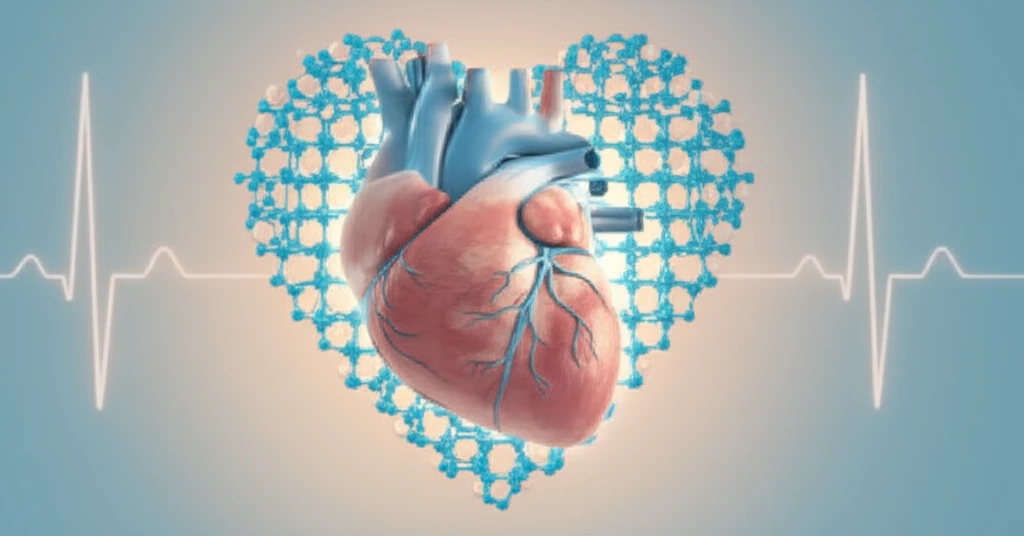
Atorvastatin protects the heart.

Atorvastatin: A Heart-Healthy Hero?

"Can this common drug prevent atrial fibrillation and protect your heart? Explore the surprising science."


Heart disease remains a leading cause of concern worldwide, prompting continuous research into preventive and therapeutic strategies. While statins are commonly prescribed to lower cholesterol, emerging studies suggest they might offer additional benefits, particularly in preventing atrial fibrillation (AF), a common heart rhythm disorder.

Atrial fibrillation increases the risk of stroke, heart failure, and other complications, significantly impacting quality of life. Traditional treatments include medications and procedures to control heart rate and rhythm, but preventing AF in the first place is a crucial goal.

This article delves into a study investigating the effects of atorvastatin, a well-known statin, on the expression of Myocardium Heat Shock Protein 70 (HSP70) mRNA and the inducement of atrial fibrillation in rabbits. By understanding the potential mechanisms behind atorvastatin's protective effects, we can gain valuable insights into novel approaches for preventing and managing AF.

Atorvastatin's Impact on Atrial Fibrillation: What the Study Reveals

Atorvastatin protects the heart.

A study published in "Heart" journal investigated the effects of atorvastatin on atrial fibrillation (AF) in rabbits. The researchers aimed to determine if atorvastatin could prevent electrical remodeling in the heart and influence the expression of Heat Shock Protein 70 mRNA (HSP70mRNA), which is believed to play a protective role in cardiac cells.

The study involved dividing twenty-four healthy adult New Zealand rabbits into three groups:

  • Pacing group (n=8): Received rapid atrial pacing to induce AF.
  • Heat shock+pacing group: Received heat shock treatment before pacing.
  • Atorvastatin+pacing group (n=8): Received atorvastatin one week before pacing.
The hearts were paced at 600 bpm (beats per minute) for 6 hours, and atorvastatin was administered at a dose of 2.0 mg/kg/d by gavage (oral administration) one week before pacing. The inducibility of AF, atrial effective refractory period (AERP), and adaptation of AERP were measured at 0h, 2h, 4h, and 6h after pacing. Additionally, the levels of HSP70mRNA, Cav1.2, α1c, and KCa3.1 mRNA in atrial tissues were detected using RT-PCR (real-time polymerase chain reaction).

What Does This Mean for You?

The study suggests that atorvastatin may have a protective effect against atrial fibrillation by increasing the level of HSP70 mRNA and preventing atrial electrical remodeling. While this research was conducted on rabbits, it opens avenues for further investigation into the potential benefits of statins in preventing AF in humans. If you have concerns about atrial fibrillation or heart disease, consult with your healthcare provider to discuss the best course of action for your individual needs.

About this Article -

This article was crafted using a human-AI hybrid and collaborative approach. AI assisted our team with initial drafting, research insights, identifying key questions, and image generation. Our human editors guided topic selection, defined the angle, structured the content, ensured factual accuracy and relevance, refined the tone, and conducted thorough editing to deliver helpful, high-quality information.See our About page for more information.

This article is based on research published under:

DOI-LINK: 10.1136/heartjnl-2011-300867.214, Alternate LINK

Title: Effects Of Atorvastatin On Expression Of Myocardium Heat Shock Protein 70Mrna And Inducement Of Atrial Fibrillation Induced By Rapid Atrial Pacing In Rabbit

Subject: Cardiology and Cardiovascular Medicine

Journal: Heart

Publisher: BMJ

Authors: H. Yuemei, Q. Zengyong, S. Wei, Z. Ling, Z. Qina

Published: 2011-10-01

Everything You Need To Know

1

What is Atorvastatin and what is it used for?

Atorvastatin is a statin medication primarily used to lower cholesterol levels in the blood. It works by inhibiting an enzyme called HMG-CoA reductase, which is involved in the production of cholesterol in the liver. Beyond its cholesterol-lowering effects, research suggests Atorvastatin may have other benefits, such as potentially preventing atrial fibrillation and protecting heart health. The impact of Atorvastatin on Heat Shock Protein 70 mRNA (HSP70mRNA) suggests a protective role in cardiac cells.

2

What is atrial fibrillation (AF), and why is preventing it important?

Atrial fibrillation (AF) is a common heart rhythm disorder characterized by rapid and irregular heartbeats. This irregular rhythm can lead to various complications, including an increased risk of stroke, heart failure, and other cardiovascular issues. Preventing AF is crucial because it significantly impacts a person's quality of life and overall health. Strategies like Atorvastatin treatment, which may influence factors such as Heat Shock Protein 70 mRNA (HSP70mRNA) expression and atrial electrical remodeling, are being explored to reduce the occurrence of AF.

3

What is Heat Shock Protein 70 mRNA (HSP70 mRNA) and what role does it play in the heart?

Heat Shock Protein 70 mRNA, or HSP70 mRNA, is a molecule that plays a protective role in cells, including cardiac cells. It is produced in response to stress, such as heat or other cellular stressors. In the context of heart health and atrial fibrillation (AF), HSP70 mRNA is believed to help protect the heart cells from damage and maintain their normal function. The study suggests that Atorvastatin may increase the level of HSP70 mRNA, potentially contributing to the prevention of atrial fibrillation.

4

How were the groups in the Atorvastatin study designed and what measurements were taken?

The study mentioned uses a pacing group, heat shock+pacing group and an Atorvastatin+pacing group. The Pacing group was used to induce AF. The heat shock group received heat shock treatment. The Atorvastatin group received Atorvastatin one week before pacing. All hearts were paced at 600 bpm (beats per minute) for 6 hours. The inducibility of AF, atrial effective refractory period (AERP), and adaptation of AERP were measured at 0h, 2h, 4h, and 6h after pacing to determine the impact of Atorvastatin on atrial fibrillation. Additionally, the levels of HSP70mRNA, Cav1.2, α1c, and KCa3.1 mRNA in atrial tissues were detected using RT-PCR (real-time polymerase chain reaction).

5

What is electrical remodeling in the context of the heart, and how does Atorvastatin relate to it?

Electrical remodeling refers to changes in the electrical properties of the heart. These changes can promote the development and maintenance of atrial fibrillation (AF). These electrical changes can affect how the heart conducts electrical impulses, making it more susceptible to AF. The study suggests Atorvastatin may prevent atrial electrical remodeling, helping to maintain normal heart rhythm. The study suggests that Atorvastatin may have a protective effect against atrial fibrillation by increasing the level of HSP70 mRNA and preventing atrial electrical remodeling.

Newsletter Subscribe

Subscribe to get the latest articles and insights directly in your inbox.