
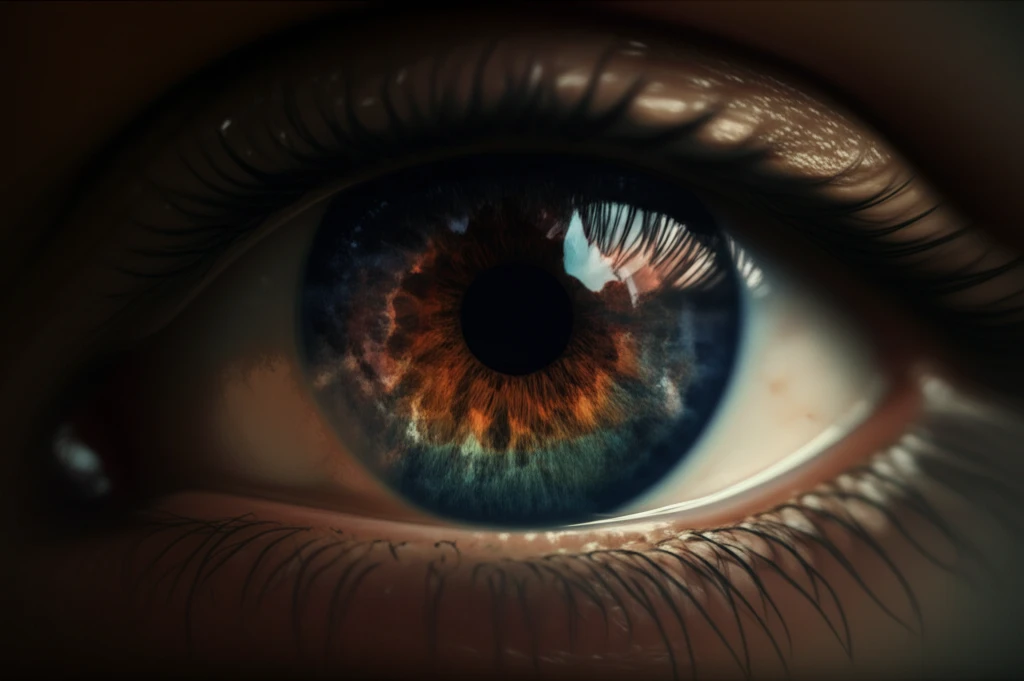
Astronaut's eye reflecting a nebula, symbolizing the connection between vision and space travel.

Astronaut Vision: Can We Predict Who's at Risk?

"New research explores how measuring optic nerve response could help identify astronauts prone to vision problems during space missions."


Imagine spending months in space, only to find your vision is deteriorating. This isn't science fiction; it's a real risk for astronauts on long-duration missions. A significant number experience ophthalmic abnormalities, a condition known as visual impairment and intracranial pressure (VIIP) syndrome. NASA is highly invested in understanding and mitigating VIIP, especially with future Mars missions on the horizon.

The challenge? Identifying which astronauts are most likely to develop VIIP. Current research focuses on finding biomarkers – measurable indicators – that can predict an individual's risk. One promising area is the optic nerve sheath response to changes in intracranial pressure.

This article explores how the optic nerve reacts to pressure changes within the skull, and how this response might serve as an early warning system for potential vision problems in astronauts. By understanding this connection, we can potentially protect the vision and health of those who venture beyond Earth.

The Pressure Cooker: How Spaceflight Affects Vision

Astronaut's eye reflecting a nebula, symbolizing the connection between vision and space travel.

So, what exactly causes these vision problems in space? The leading theory points to elevated intracranial pressure (ICP). In microgravity, fluids shift towards the head, potentially causing venous stasis (slowed blood flow) and impairing the drainage of cerebrospinal fluid (CSF). Both of these can lead to increased pressure inside the skull.

Another possible mechanism involves the unique structure surrounding the optic nerve. The subarachnoid space (SAS), which contains CSF, is a septated, somewhat isolated area. Microgravity might hinder CSF absorption in this space, leading to localized pressure build-up and potential nerve damage, even without overall elevated ICP.

  • Fluid Shifts: Microgravity causes fluids to move towards the head.
  • Venous Stasis: Slowed blood flow can increase pressure.
  • CSF Drainage: Impaired drainage contributes to pressure build-up.
  • Optic Nerve Compartment: The unique structure around the optic nerve may trap CSF.
While it's assumed that most astronauts experience some degree of ICP elevation, not everyone develops VIIP. This suggests that individual susceptibility plays a key role, influenced by factors like genetics, anatomical features, and even physical fitness. Identifying biomarkers becomes crucial to pinpoint those at higher risk.

Looking Ahead: Protecting Astronauts' Sight

The key takeaway? The way the optic nerve sheath responds to CSF pressure changes might be a predictive biomarker for VIIP-associated optic disc edema. Research suggests that astronauts with lower relative CSF pressures at the point where the optic nerve sheath reaches its maximum capacity to expand may be at greater risk.

While measuring optic nerve sheath diameter during intrathecal infusion tests could provide valuable information, it's a relatively invasive procedure. Future research should explore less invasive alternatives to assess individual risk. The development of such methods would greatly benefit astronaut selection and pre-flight preparation.

Ultimately, understanding and mitigating the risks of VIIP is essential for ensuring the success and safety of long-duration space missions. By identifying susceptible individuals and developing preventative strategies, we can protect the vision of those who explore the cosmos.

About this Article -

This article was crafted using a human-AI hybrid and collaborative approach. AI assisted our team with initial drafting, research insights, identifying key questions, and image generation. Our human editors guided topic selection, defined the angle, structured the content, ensured factual accuracy and relevance, refined the tone, and conducted thorough editing to deliver helpful, high-quality information.See our About page for more information.

This article is based on research published under:

DOI-LINK: 10.2217/bmm-2017-0218, Alternate LINK

Title: Intracranial Pressure-Induced Optic Nerve Sheath Response As A Predictive Biomarker For Optic Disc Edema In Astronauts

Subject: Biochemistry (medical)

Journal: Biomarkers in Medicine

Publisher: Future Medicine Ltd

Authors: Peter Wostyn, Peter Paul De Deyn

Published: 2017-11-01

Everything You Need To Know

1

What is Visual Impairment and Intracranial Pressure (VIIP) syndrome, and why is it a concern?

Visual Impairment and Intracranial Pressure (VIIP) syndrome is a condition where astronauts experience vision problems during long-duration space missions. It's a significant concern because it can lead to the deterioration of eyesight. NASA is actively researching VIIP due to its implications for the health and safety of astronauts, particularly those on missions to Mars. The causes are complex, but likely related to increased intracranial pressure (ICP) within the skull.

2

What is intracranial pressure (ICP), and why is it relevant to space travel?

Intracranial pressure (ICP) is the pressure inside the skull. In space, microgravity causes fluids to shift towards the head, potentially increasing this pressure. The article suggests that elevated ICP is a key factor contributing to the vision problems seen in astronauts. This pressure can affect the optic nerve, leading to visual impairment. Understanding and monitoring ICP is crucial to assessing and mitigating the risks associated with space travel.

3

What is the optic nerve sheath response, and why is it being studied?

The optic nerve sheath response refers to how the protective covering around the optic nerve reacts to changes in pressure, particularly cerebrospinal fluid (CSF) pressure. Researchers are investigating this response as a potential biomarker for predicting which astronauts are at higher risk of developing VIIP. The optic nerve sheath's ability to expand in response to CSF pressure changes can be a critical factor in predicting VIIP. Astronauts whose optic nerve sheath reaches its maximum expansion capacity at lower CSF pressures might be at greater risk.

4

What are the main factors that contribute to vision problems in space?

Fluid shifts in microgravity cause fluids to move towards the head, contributing to increased intracranial pressure. Venous stasis, or slowed blood flow, can increase pressure within the skull. Impaired drainage of cerebrospinal fluid (CSF) can also lead to pressure buildup. The unique structure surrounding the optic nerve may trap CSF, potentially causing damage. These factors may lead to pressure on the optic nerve, causing vision problems.

5

What is a biomarker, and why are biomarkers important in this context?

A biomarker is a measurable indicator that can signal a biological condition or risk. In the context, biomarkers are crucial because not all astronauts develop VIIP. Research focuses on the optic nerve sheath response to identify those most susceptible, and this could prevent or mitigate vision problems. Finding reliable biomarkers helps assess individual risk factors like genetic predisposition, anatomical features, or physical fitness, which could improve the safety and health of astronauts on long-duration spaceflights.

Newsletter Subscribe

Subscribe to get the latest articles and insights directly in your inbox.