
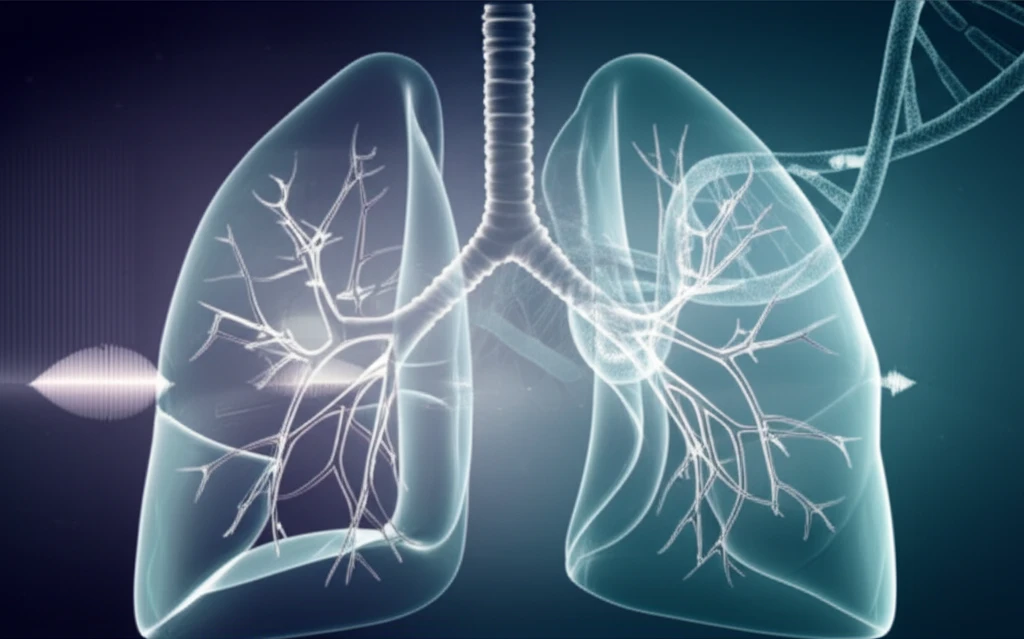
DNA strands interwoven with lungs, symbolizing the genetic influence on asthma.

Asthma Alert: Are Your Genes Making You Wheeze?

"New Research Links Specific Gene Variations to Increased Asthma Risk"


Asthma, a chronic inflammatory disease affecting millions worldwide, is characterized by airway obstruction and hyperresponsiveness. While environmental factors play a significant role, genetics are increasingly recognized as a key contributor, with heritability estimates as high as 79%. Understanding the genetic components of asthma can pave the way for more targeted and effective treatments.

Vascular endothelial growth factor (VEGF) is a potent angiogenic factor known for its role in endothelial cell proliferation and influencing the behavior of epithelial cells and fibroblasts. VEGF is crucial in Th2-mediated inflammation and airway remodeling, processes that contribute to the development of asthma. Studies have shown elevated VEGF levels in the bronchoalveolar lavage fluid and sputum of asthmatic individuals, suggesting a strong link between VEGF and asthma.

Recent research has focused on identifying specific polymorphisms—variations in DNA sequences—within the VEGF gene that might influence asthma susceptibility. A study exploring the relevance of VEGF gene polymorphisms in a Chinese Han population identified significant associations between specific SNPs (single nucleotide polymorphisms) and the occurrence of asthma, shedding light on potential genetic risk factors.

Decoding VEGF: How Gene Variations Impact Asthma Risk

DNA strands interwoven with lungs, symbolizing the genetic influence on asthma.

A study published in Genetics and Molecular Research investigated the association between single nucleotide polymorphisms (SNPs) in the VEGF gene and asthma in a Chinese Han population. The researchers extracted DNA from 471 participants, including 226 asthma patients and 245 healthy controls, and analyzed seven specific SNPs within the VEGF gene using the MassARRAY system. The goal was to determine if certain genetic variations were more prevalent in individuals with asthma compared to those without.

The research team found that the genotype frequencies of two specific SNPs, rs3025020 and rs3025039, were significantly different between the asthma and control groups. Moreover, the T alleles in both rs3025020 and rs3025039 were significantly more prevalent in the asthma group, suggesting that these genetic variations may increase susceptibility to the condition. These findings highlight the potential role of VEGF gene polymorphisms in the development of asthma.

  • rs3025020 and rs3025039: Showed significant differences in genotype frequencies between asthma patients and healthy controls.
  • T Alleles: The T alleles of rs3025020 and rs3025039 were more common in individuals with asthma.
  • VEGF Gene: These SNPs are located within the vascular endothelial growth factor gene, which plays a crucial role in airway inflammation and remodeling.
Linkage disequilibrium analysis revealed three distinct blocks, with the asthma group exhibiting a significantly lower C-C haplotype frequency of haplotype 1 in block 3, as well as a higher T-C haplotype frequency of haplotype 2 and a higher C-T haplotype frequency of haplotype 3. These haplotype variations further underscore the complex genetic landscape associated with asthma.

What Does This Mean for Asthma Management?

The identification of specific VEGF gene polymorphisms associated with asthma opens new avenues for understanding the pathogenesis of this complex condition. While further research is needed to fully elucidate the functional implications of these genetic variations, these findings suggest that genetic screening and personalized medicine approaches may play a future role in asthma management. Individuals with a family history of asthma may benefit from genetic testing to assess their risk and tailor preventive strategies accordingly. As our understanding of the genetic basis of asthma expands, we can move towards more targeted and effective interventions, improving outcomes for individuals affected by this chronic respiratory disease.

About this Article -

This article was crafted using a human-AI hybrid and collaborative approach. AI assisted our team with initial drafting, research insights, identifying key questions, and image generation. Our human editors guided topic selection, defined the angle, structured the content, ensured factual accuracy and relevance, refined the tone, and conducted thorough editing to deliver helpful, high-quality information.See our About page for more information.

Everything You Need To Know

1

What exactly is asthma, and how much do genes contribute to it?

Asthma is a chronic inflammatory disease affecting the airways, leading to obstruction and hyperresponsiveness. While environmental factors contribute, genetics play a significant role, with heritability estimated to be as high as 79%. This means that a substantial portion of the risk of developing asthma can be attributed to inherited genetic factors. Understanding the genetic components can lead to the development of more targeted and effective treatments that address the root causes of the disease.

2

What is vascular endothelial growth factor (VEGF), and why is it important in asthma?

Vascular endothelial growth factor, or VEGF, is a protein that promotes the growth of new blood vessels, a process known as angiogenesis. It also influences the behavior of epithelial cells and fibroblasts. In the context of asthma, VEGF is significant because it plays a crucial role in Th2-mediated inflammation and airway remodeling, processes that contribute to the development and progression of asthma. Elevated levels of VEGF have been found in the lungs of asthmatic individuals, suggesting its involvement in the disease.

3

What are single nucleotide polymorphisms (SNPs), and why are they relevant to understanding asthma?

SNPs, or single nucleotide polymorphisms, are variations in DNA sequences at a single point. They are important in the study because variations within the VEGF gene can influence asthma susceptibility. Identifying specific SNPs associated with asthma can help understand the genetic risk factors involved in the disease. The study highlights that specific SNPs, like rs3025020 and rs3025039, within the VEGF gene are associated with an increased risk of asthma.

4

What are alleles, and what role do they play in asthma susceptibility?

Alleles are different forms of a gene at a particular location (locus) on a chromosome. In the context, the T alleles of the SNPs rs3025020 and rs3025039 were found to be more prevalent in individuals with asthma compared to healthy controls. This suggests that having these specific T alleles may increase susceptibility to asthma. Understanding the role of different alleles in asthma susceptibility can aid in risk assessment and the development of targeted interventions.

5

What are haplotypes, and how do they relate to the genetic risk of asthma?

Haplotypes are sets of DNA variations, or polymorphisms, that tend to be inherited together. Linkage disequilibrium analysis revealed distinct blocks with different haplotype frequencies between asthma patients and healthy individuals. These haplotype variations further underscore the complex genetic landscape associated with asthma. The identification of specific haplotypes associated with asthma risk can provide insights into the combined effects of multiple genetic variants and their contribution to disease susceptibility.

Newsletter Subscribe

Subscribe to get the latest articles and insights directly in your inbox.