
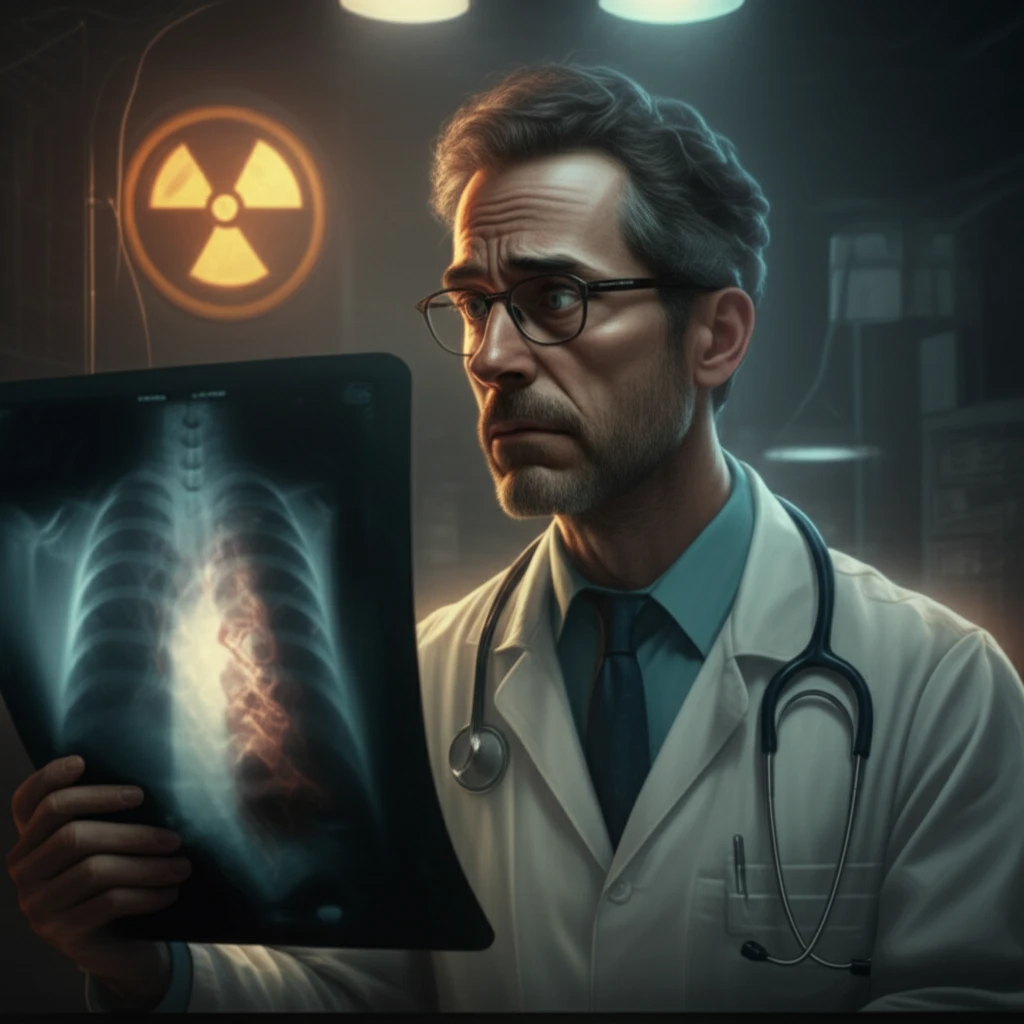
Doctor reviewing x-ray with radiation symbol in background.

Are You Aware? Ionizing Radiation Risks in Medical Imaging: What Doctors Need to Know

"A New Survey Reveals Gaps in Clinician Understanding of Radiation Exposure from CT Scans and X-Rays."


Medical imaging, particularly computed tomography (CT) scans and X-rays, is a cornerstone of modern healthcare, providing invaluable insights for diagnosis and treatment. However, these technologies utilize ionizing radiation, which carries inherent risks, including an increased lifetime risk of cancer. Ensuring that healthcare professionals, especially doctors, are well-informed about these risks is paramount for patient safety and responsible utilization of imaging resources.

A recent study delved into the knowledge and awareness of doctors regarding the risks associated with ionizing radiation exposure from imaging investigations. The research highlights a critical need for improved education and awareness among clinicians to minimize unnecessary radiation exposure and promote informed decision-making.

This article will explore the findings of this survey, shedding light on the gaps in doctors' understanding of radiation risks and discussing the implications for patient care. We'll examine the specific areas where knowledge is lacking and discuss potential strategies for enhancing education and promoting safer imaging practices.

The Knowledge Gap: What Doctors Don't Know About Radiation Risks

Doctor reviewing x-ray with radiation symbol in background.

The survey, conducted at a Royal Derby Hospital in England, involved an online questionnaire completed by doctors regarding their education and knowledge of the risks associated with ionizing radiation. Out of 647 doctors contacted, 170 (26%) responded, revealing some concerning gaps in understanding:

While most respondents (65%) reported receiving formal education on radiation risks, a significant minority had not. This lack of formal training contributes to the knowledge gaps identified in the survey. Here are more specifics about the responses:

  • CT Scans and X-Rays: Almost all respondents correctly identified CT scans (98%) and chest X-rays (97%) as sources of ionizing radiation.
  • Isotope Bone Scans and PET Scans: A substantial proportion also recognized isotope bone scans (84%) and positron emission tomography (PET) scans (81%) as involving radiation.
  • MRI and Ultrasound: Worryingly, very few identified magnetic resonance imaging (MRI) scans (8%) and ultrasound scans (4%) as utilizing radiation, despite MRI using non-ionizing radiation and ultrasound using sound waves, indicating a basic misunderstanding of imaging modalities.
  • Lifetime Cancer Risk: When asked about the lifetime cancer risk associated with a chest, abdomen, and pelvis CT scan for a 20-year-old female, only 22% identified the optimal response (one in 300). A significant 27% underestimated the risk as one in 30,000 or negligible.
The findings indicate a clear discrepancy between the perception and reality of radiation risks associated with medical imaging. The underestimation of lifetime cancer risk, coupled with the lack of awareness regarding MRI and ultrasound, highlights a crucial need for targeted education and training.

The Path Forward: Improving Awareness and Protecting Patients

The survey underscores the urgent need for comprehensive and ongoing education on the risks of ionizing radiation for all healthcare professionals. Addressing the identified knowledge gaps is crucial for promoting responsible imaging practices and ensuring patient safety.

Several strategies can be implemented to improve awareness and education:

<ul> <li><b>Mandatory Education:</b> Hospital doctors should receive regular mandatory education on the long-term risks of patient exposure to CT scans and other imaging procedures involving ionizing radiation.</li> <li><b>Alternative Strategies:</b> Promote the consideration of alternative diagnostic strategies that avoid exposure to ionizing radiation when possible, such as ultrasound or MRI (when appropriate).</li> <li><b>Risk Communication:</b> Enhance communication with patients about the potential risks and benefits of imaging procedures involving radiation, empowering them to make informed decisions about their healthcare.</li> </ul> By implementing these strategies, healthcare institutions can foster a culture of radiation safety and minimize unnecessary exposure, ultimately protecting patients and promoting responsible utilization of medical imaging resources.

About this Article -

This article was crafted using a human-AI hybrid and collaborative approach. AI assisted our team with initial drafting, research insights, identifying key questions, and image generation. Our human editors guided topic selection, defined the angle, structured the content, ensured factual accuracy and relevance, refined the tone, and conducted thorough editing to deliver helpful, high-quality information.See our About page for more information.

Everything You Need To Know

1

What is ionizing radiation, and why is it a concern in medical imaging?

Ionizing radiation is a type of energy that can remove electrons from atoms, potentially damaging DNA and increasing the risk of cancer over a lifetime. Medical imaging techniques, such as CT scans and X-rays, utilize ionizing radiation to create images of the inside of the body. This is significant because, unlike non-ionizing radiation used in modalities like MRI and ultrasound, exposure to ionizing radiation carries inherent risks, including an increased lifetime risk of cancer.

2

What are CT scans and X-rays, and how do they relate to radiation?

In medical imaging, a CT scan and an X-ray are both types of imaging that utilize ionizing radiation. CT scans use X-rays to create detailed cross-sectional images of the body, while X-rays produce a single image. It is important to know that almost all doctors in the survey correctly identified CT scans (98%) and chest X-rays (97%) as sources of ionizing radiation. The underestimation of lifetime cancer risk associated with medical imaging highlights a crucial need for targeted education and training.

3

What did the survey reveal about doctors' understanding of radiation risk?

The survey revealed that many doctors underestimated the lifetime cancer risk from medical imaging. For example, only 22% of respondents correctly identified the lifetime cancer risk associated with a chest, abdomen, and pelvis CT scan for a 20-year-old female. A concerning 27% underestimated the risk significantly. This means many doctors don't fully grasp the potential long-term health implications of procedures that use ionizing radiation. This highlights a crucial need for targeted education and training.

4

Do MRI and ultrasound use ionizing radiation?

MRI (magnetic resonance imaging) and ultrasound are imaging techniques that do not use ionizing radiation. MRI uses strong magnetic fields and radio waves, while ultrasound uses sound waves to generate images. The survey showed that very few doctors identified MRI (8%) and ultrasound (4%) as not utilizing ionizing radiation. This misunderstanding indicates a lack of awareness regarding the different imaging modalities and the types of radiation they use.

5

What steps are being taken to improve patient safety related to medical imaging?

Improving awareness and protecting patients requires comprehensive and ongoing education for all healthcare professionals. This includes addressing knowledge gaps about the risks of ionizing radiation, the relative risks of different imaging procedures like CT scans and X-rays, and the importance of informed decision-making. By promoting responsible imaging practices, we can minimize unnecessary radiation exposure and ensure the safety of patients.

Newsletter Subscribe

Subscribe to get the latest articles and insights directly in your inbox.