
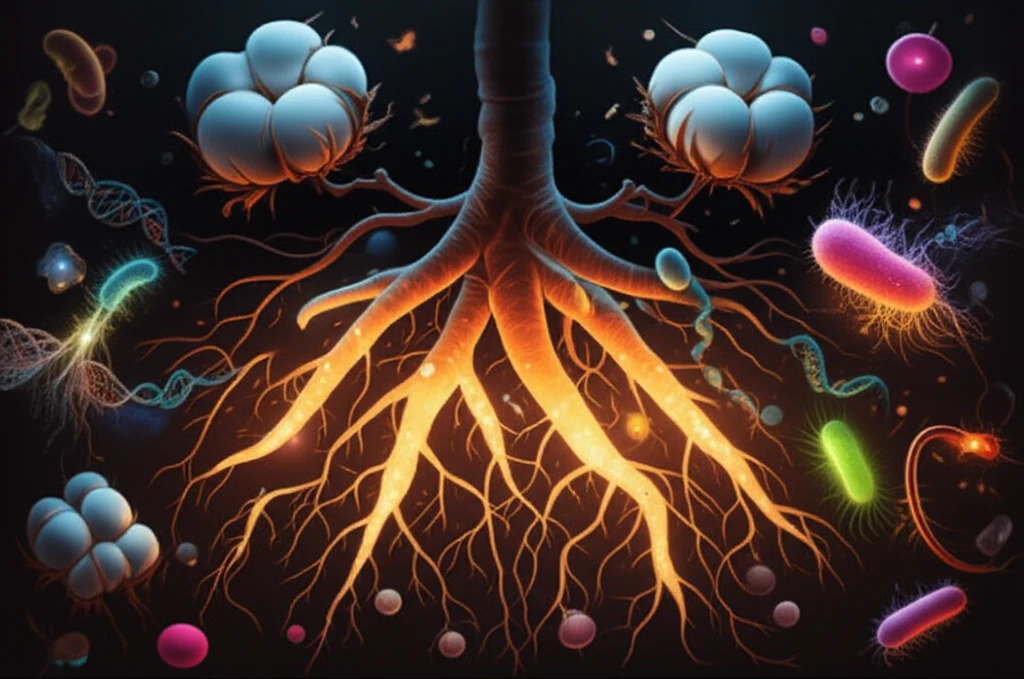
Are GMOs in Your Future? The Impact of Transgenic Cotton on Soil Health

"Uncover how genetically modified cotton affects soil bacteria and fungi, and what it means for sustainable agriculture."
The debate surrounding genetically modified organisms (GMOs) continues to intensify, especially regarding their impact on the environment and food security. Transgenic crops, engineered to resist pests, offer a promising way to reduce reliance on chemical pesticides, but concerns persist about their effects on soil ecosystems.
One key concern centers on Bacillus thuringiensis (Bt) cotton, a widely planted transgenic crop. Bt cotton produces proteins toxic to certain insects, reducing the need for insecticide sprays. However, these proteins inevitably enter the soil through plant degradation, root exudates, and other means, raising questions about their potential impact on soil microorganisms.
This article delves into a study conducted in central Kenya that investigated the impact of transgenic Bt cotton on soil bacterial and fungal populations. The research provides valuable insights into the ecological effects of Bt cotton, offering a clearer picture for farmers, environmentalists, and policymakers alike.
Decoding the Impact: What the Study Revealed About Bt Cotton and Soil
The Kenyan study focused on comparing the rhizosphere (the soil area around plant roots) of three cotton lines: a transgenic Bt cotton line (06Z604M), an isoline (99M03), and a non-Bt cotton line (HART 89M). Researchers monitored bacterial, actinomycetes, and fungal populations throughout a nine-month cultivation period, measuring colony forming units (CFU) and population levels.
- Population Trends: The culturable microbial population and colony counts were arranged in decreasing order were 06Z604D>99M03>HART89M. Also bacteria and fungi counts were higher at 110 days after sowing in 06Z604D than in 99M03 and HART89M plot soils.
- No Significant Differences: The data showed no consistent statistically significant differences (p<0.005) in the numbers of different groups of culturable bacteria, actinomycetes and fungi between rhizosphere soil of Bt, isoline and Hart 89M cotton lines in the same field.
- Positive Correlations: The culturable bacterial and fungal groups were positively correlated (p>0.001) with soil respiration and microbial biomass, which exhibited uneven trend with the treatments.
The Bigger Picture: Implications for Sustainable Agriculture
This Kenyan study contributes valuable data to the ongoing discussion about the environmental impacts of GMOs. While it suggests that transgenic Bt cotton may not drastically alter soil microbial communities in the short term, it also highlights the need for long-term monitoring and a more nuanced understanding of the complex interactions within the soil ecosystem.
The research underscores the importance of considering factors like root exudates and soil composition when assessing the ecological effects of transgenic crops. Further studies are needed to investigate the long-term consequences of Bt protein accumulation in soil and to explore the potential for more subtle shifts in microbial species composition.
Ultimately, this study reinforces the call for a balanced approach to agricultural innovation, one that embraces the potential benefits of GMOs while remaining vigilant about their environmental effects. By continuing to investigate the intricate relationships between crops, soil, and microorganisms, we can pave the way for more sustainable and resilient agricultural practices.