
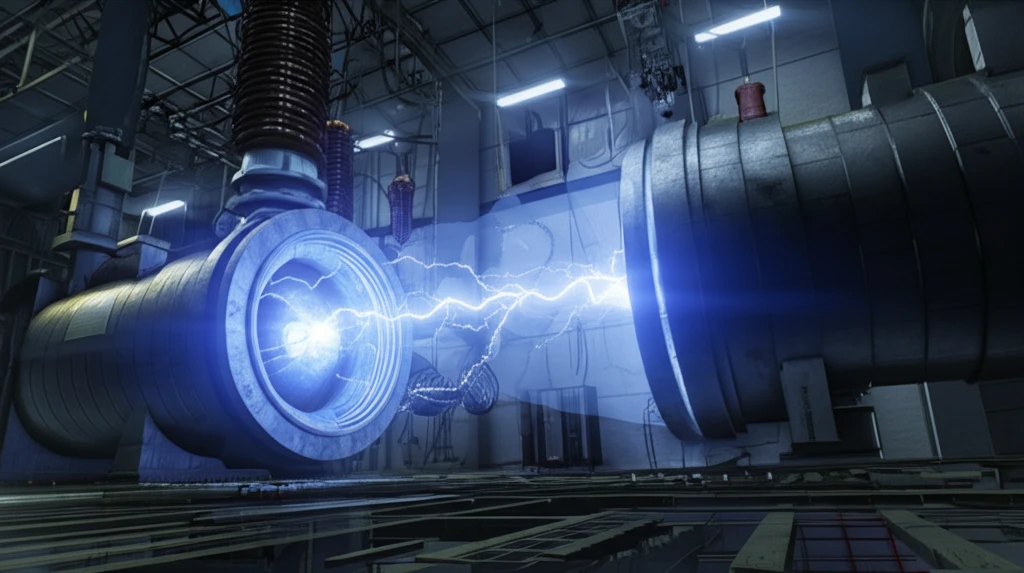
Arc flash quenching system safely containing an arc flash.

Arc Flash Protection: How Cutting-Edge Tech Can Keep You Safe

"Discover how current limiting arc flash quenching systems are revolutionizing electrical safety and reducing workplace hazards."


In today's industrial landscape, ensuring workplace safety is a top priority, especially when it comes to electrical hazards. Arc flash incidents, which can result in severe burns, equipment damage, and downtime, are a major concern. The National Electric Code (NEC) has responded to these concerns by introducing Section 240.87, which outlines methods for reducing arc flash energy in electrical systems operating at 1200A or higher. This article focuses on one of the most promising solutions: energy-reducing active arc flash mitigation systems.

These systems represent a significant leap forward in electrical safety, offering a proactive approach to minimizing arc flash risks. Unlike traditional methods that rely on clearing times of overcurrent protective devices, active mitigation systems can rapidly quench arc faults, drastically reducing incident energy. This article explores the technology behind these systems, how they work, and why they are becoming an essential component of modern electrical safety programs.

We will delve into the intricacies of current limiting arc quenching devices, examining their key components, operational principles, and testing standards. Furthermore, we'll discuss how these systems not only protect personnel but also minimize equipment damage and reduce costly downtime. Whether you're an electrical engineer, safety manager, or simply interested in learning more about arc flash protection, this article will provide you with valuable insights into the future of electrical safety.

Understanding Energy-Reducing Active Arc Flash Mitigation Systems

Arc flash quenching system safely containing an arc flash.

Traditional methods for mitigating arc flash hazards often have limitations when it comes to achieving significant energy reduction. The primary constraint is the clearing time of the main overcurrent protective device, which can be as high as 4 cycles (approximately 67 milliseconds) for power circuit breakers. Given that arc energy is directly proportional to clearing time, these methods may fall short in systems with high available fault current.

Incident energy levels above 1.2 cal/cm² necessitate the use of personal protective equipment (PPE), while levels exceeding 1.9 cal/cm² can cause substantial equipment damage. To address these limitations, energy-reducing active arc flash mitigation systems have emerged as a game-changing solution. These systems work by rapidly detecting and quenching arc faults, minimizing both the duration and magnitude of the incident energy.

Here's a look at different NEC Methods for reducing arc flash energy:
  • Zone-Selective Interlocking
  • Differential Relaying
  • Energy-Reducing Maintenance Switching With Local Status Indicator
  • Energy-Reducing Active Arc Flash Mitigation System
  • An instantaneous trip setting that is less than the available arcing current
  • An instantaneous override that is less than the available arcing current
  • An approved equivalent means
The core principle behind these systems involves creating a lower impedance current path that diverts the arcing fault away from the original point of ignition. As defined by the new UL Standard for Arcing Fault Quenching Equipment, these systems function by "creating a lower impedance current path, located within a controlled compartment, to cause the arcing fault to transfer to the new current path." This rapid transfer effectively extinguishes the arc fault, limiting the incident energy released.

Embracing a Safer Future with Arc Flash Quenching Technology

In conclusion, current limiting arc quenching devices represent a significant advancement in arc flash safety. By rapidly detecting and extinguishing arc faults, these systems minimize incident energy, protect personnel and equipment, and reduce costly downtime. As industries continue to prioritize safety and efficiency, arc flash quenching technology is poised to become an essential component of modern electrical safety programs, ensuring a safer and more productive future for all.

About this Article -

This article was crafted using a human-AI hybrid and collaborative approach. AI assisted our team with initial drafting, research insights, identifying key questions, and image generation. Our human editors guided topic selection, defined the angle, structured the content, ensured factual accuracy and relevance, refined the tone, and conducted thorough editing to deliver helpful, high-quality information.See our About page for more information.

Everything You Need To Know

1

What are energy-reducing active arc flash mitigation systems, and how do they differ from traditional arc flash protection methods?

Energy-reducing active arc flash mitigation systems are advanced electrical safety solutions designed to rapidly detect and quench arc faults, significantly reducing incident energy. Unlike traditional methods that depend on the clearing times of overcurrent protective devices, which can be slow (e.g., 67 milliseconds for power circuit breakers), these systems proactively minimize arc flash risks by creating a lower impedance current path that diverts the arcing fault, effectively extinguishing it. This rapid action limits both the duration and magnitude of the incident energy, offering superior protection compared to relying solely on overcurrent device clearing times.

2

How do current limiting arc quenching devices work to mitigate arc flash hazards, and what is the significance of creating a lower impedance current path?

Current limiting arc quenching devices function by quickly detecting an arc fault and then creating a lower impedance current path to divert the fault away from its original ignition point. This is achieved within a controlled compartment. The new UL Standard for Arcing Fault Quenching Equipment defines this process as 'creating a lower impedance current path, located within a controlled compartment, to cause the arcing fault to transfer to the new current path.' By diverting the fault to this lower impedance path, the arc is rapidly extinguished, significantly reducing the incident energy released and minimizing the potential for damage to personnel and equipment.

3

What role does the National Electrical Code (NEC) Section 240.87 play in arc flash protection, and how do energy-reducing active arc flash mitigation systems relate to its requirements?

The National Electrical Code (NEC) Section 240.87 addresses arc flash energy reduction in electrical systems operating at 1200A or higher. It outlines various methods for reducing arc flash energy. Energy-reducing active arc flash mitigation systems are a direct response to NEC's concerns, offering a technology-driven approach to proactively minimize arc flash risks. These systems help organizations comply with NEC requirements by providing a means to rapidly quench arc faults, thereby significantly reducing incident energy and enhancing workplace safety.

4

What are the potential benefits of implementing current limiting arc quenching devices in industrial settings beyond personnel safety?

Beyond protecting personnel from severe burns and other injuries, current limiting arc quenching devices offer several additional benefits in industrial settings. By rapidly extinguishing arc faults, these systems minimize equipment damage, which can be costly to repair or replace. Furthermore, they reduce downtime, allowing for quicker restoration of operations after an arc flash incident. The enhanced safety and reduced downtime contribute to increased productivity, improved operational efficiency, and lower overall costs associated with electrical safety management.

5

How do incident energy levels relate to the selection of personal protective equipment (PPE) and potential equipment damage in the context of arc flash incidents?

Incident energy levels are crucial in determining the appropriate level of personal protective equipment (PPE) required to protect personnel during electrical work. According to industry standards, incident energy levels above 1.2 cal/cm² necessitate the use of PPE to prevent burns and other injuries. Moreover, incident energy levels exceeding 1.9 cal/cm² can cause substantial equipment damage, leading to costly repairs or replacements. Energy-reducing active arc flash mitigation systems aim to minimize incident energy levels, reducing the need for higher-rated PPE and mitigating the risk of equipment damage. By rapidly quenching arc faults, these systems ensure that incident energy remains within safer limits, enhancing both personnel safety and equipment reliability.

Newsletter Subscribe

Subscribe to get the latest articles and insights directly in your inbox.