
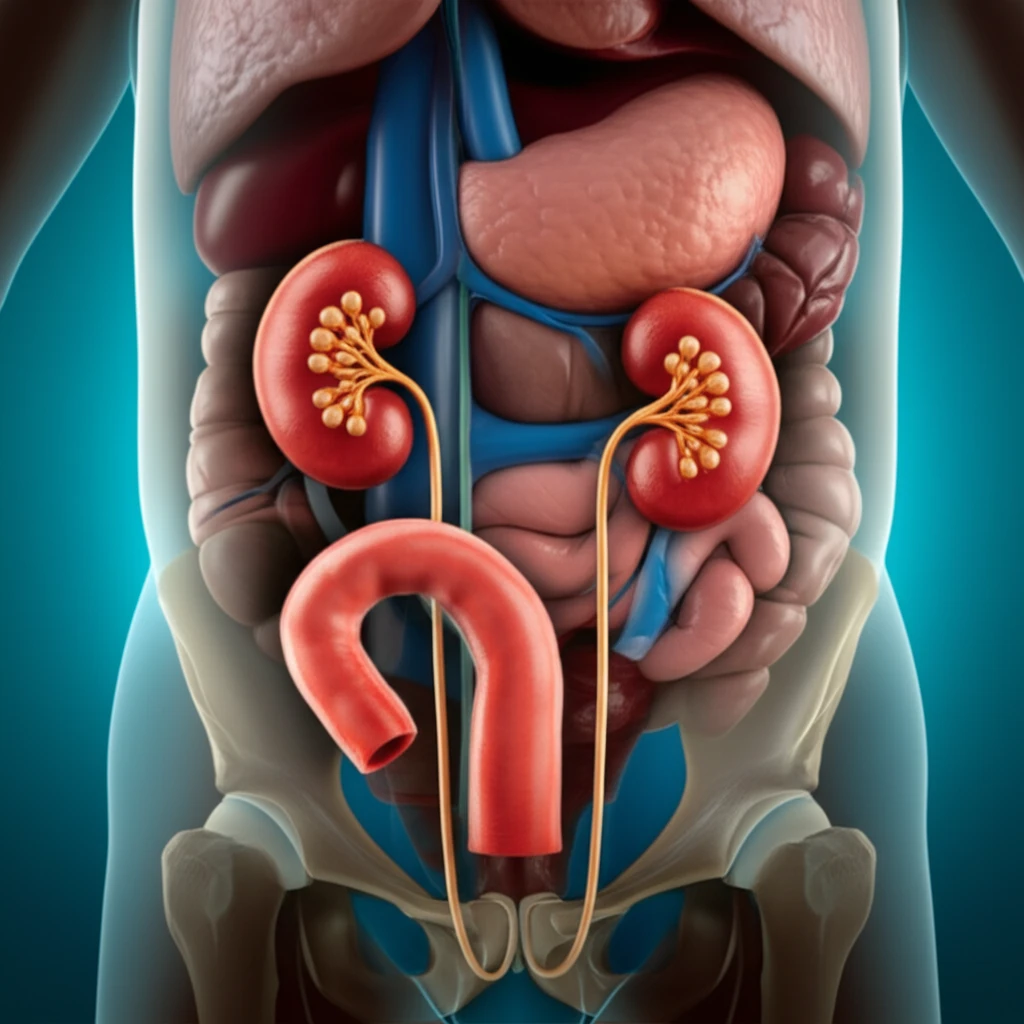
Appendix to the Rescue: A Novel Approach to Complex Pediatric Ureteral Reconstruction

"When standard procedures fall short, surgeons are turning to innovative techniques like staged appendix-assisted ureteral repair to restore kidney function in young patients."
Ureteral loss and strictures pose significant challenges in pediatric urology. While ileal ureter replacement is common, using the appendix for reconstruction remains rare. Reconstructive procedures in critical situations are often avoided in favor of temporary solutions, but a new approach offers hope.
A recent case presents a staged ureteral reconstruction utilizing the appendix in a young patient. This innovative method provides a potential solution when standard techniques are not feasible.
This case highlights the successful use of the appendix to bridge a significant ureteral gap, offering a pathway to restore kidney function and improve the patient's quality of life.
A Complex Case: Rebuilding a Child's Urinary Tract
A 6-month-old girl was admitted to the PICU with sepsis. Her condition worsened, leading to multiple abdominal complications: cholecystostomy, ileostomy, and various fistulas. An ultrasound revealed hydronephrosis, and a MAG-3 scan confirmed a complete right ureteral obstruction. Attempts to place a stent failed, necessitating a nephrostomy.
- Temporary Diversion: The appendix was connected to the proximal ureter and skin, creating a temporary urinary diversion.
- Hydronephrosis Improvement: This diversion effectively drained the kidney, reducing hydronephrosis.
- Staged Reconstruction: At 2 years old, the appendix was connected to the distal ureter, with a double-J stent placed to support healing.
- Ileostomy Closure: The ileostomy was closed after the appendix anastomosis.
The Appendix Advantage: A Simple Solution for Complex Problems
While various techniques exist for ureteral reconstruction, the appendix offers unique advantages due to its location and ease of mobilization. This allows for tension-free anastomosis without compromising blood supply.
The staged approach, as demonstrated in this case, minimizes the risk of complications by dividing the reconstruction into manageable steps. This is particularly beneficial in patients with prior complex abdominal issues.
Cutaneous appendix-ureterostomy provides a valuable temporary solution in critical conditions, facilitating definitive reconstruction once the patient is stabilized. It expands the options for managing challenging ureteral injuries.