
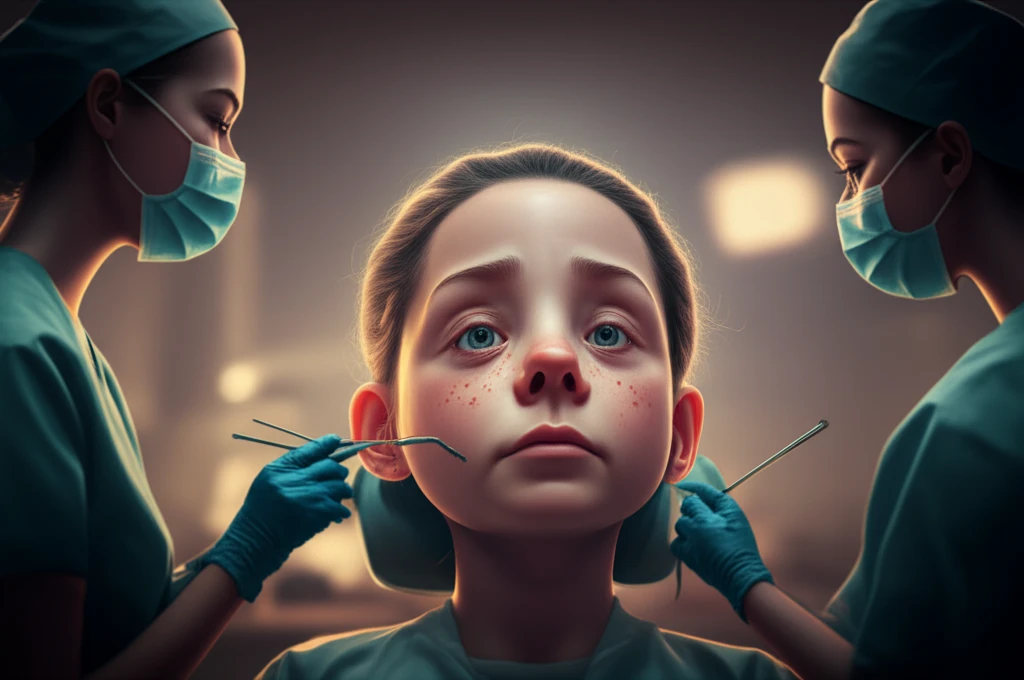
Apert Syndrome and Dental Care: Ensuring Patient Comfort and Safety

"Discover how deep sedation and local anesthetics provide a safe and comfortable experience for Apert syndrome patients undergoing oral surgery."
Apert syndrome (AS) is a rare genetic disorder characterized by craniosynostosis (premature fusion of skull bones), midface hypoplasia, and syndactyly (fusion of fingers and toes). This condition, affecting as few as 1 in 160,000 individuals, is caused by mutations in the FGFR2 gene, which plays a crucial role in bone and tissue development. The complex craniofacial malformations associated with AS can lead to significant challenges, particularly in managing the airway during medical and dental procedures.
Oral surgical procedures in patients with Apert syndrome require careful planning and execution due to potential airway difficulties and other complications. Traditional approaches to anesthesia may not always be suitable, making it essential to explore alternative methods that ensure patient comfort and safety. This article delves into a case study demonstrating the successful use of deep sedation combined with local anesthetic blocks in an outpatient setting, providing valuable insights for clinicians managing similar cases.
The case involves an 18-year-old African American female with Apert syndrome who presented for the extraction of non-salvageable teeth. Given her medical history, which included previous brain shunt placement and reported maxillary hypoplasia, the dental team opted for an anxiolytic anesthesia treatment plan. This approach aimed to minimize the risks associated with general anesthesia while ensuring the patient's comfort and cooperation throughout the procedure.
Deep Sedation with Local Anesthesia: A Balanced Approach
The anesthetic protocol involved a combination of 25 µg fentanyl and 1 mg midazolam, titrated to achieve the desired level of sedation. Continuous monitoring by an anesthesiologist ensured that vital signs and airway patency were maintained throughout the procedure. Local anesthesia, using 2% lidocaine with 1:100,000 epinephrine and 4% articaine HCl with 1:100,000 epinephrine, was administered to ensure complete nerve blockage at the surgical site. The combination of these agents allowed for a shorter and more controlled anesthesia time, optimizing the safety of the patient.
- Patient Comfort: Deep sedation minimizes anxiety and discomfort.
- Airway Management: Allows for better control and immediate intervention.
- Synergistic Drug Effects: Fentanyl and midazolam reduce the required dosage of each drug.
A Safe and Effective Approach
In conclusion, the use of deep sedation combined with local anesthetic blocks presents a safe and effective treatment option for patients with Apert syndrome undergoing oral surgery. This approach ensures patient comfort, minimizes potential complications, and allows for efficient management of dental procedures in an outpatient setting. By carefully considering the patient's medical history, individual needs, and the synergistic effects of medications, clinicians can provide optimal care for individuals with Apert syndrome.