
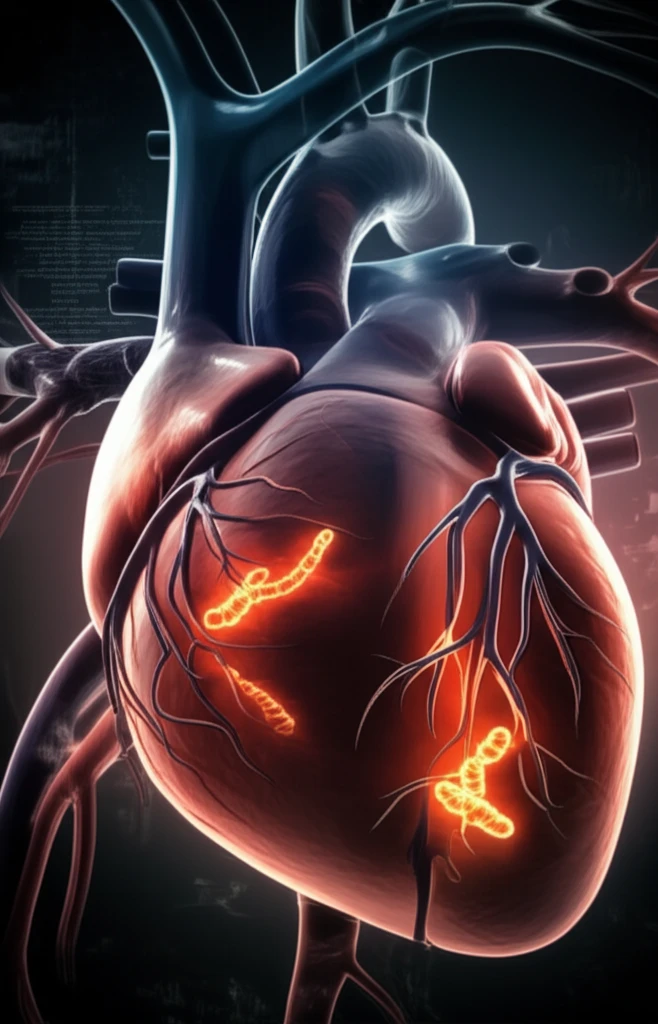
Illustration showing the connection between the heart, aorta, and mitochondria

Aortic Root Ectasia: Unmasking a Hidden Link to Mitochondrial Health and Your Well-being

"Unraveling the Connection Between Aortic Root Ectasia, Mitochondrial Disorders, and Early Detection for a Healthier Tomorrow"


In the realm of health, understanding the intricate connections within our bodies is crucial. Recent research has illuminated a fascinating, yet often overlooked, relationship between aortic root ectasia (ARE) and mitochondrial disorders (MIDs). This connection could have profound implications for your well-being, highlighting the importance of early detection and proactive health management. ARE, characterized by an enlargement of the aorta near the heart, and MIDs, affecting the energy-producing mitochondria within our cells, may seem unrelated. However, emerging evidence suggests they could be intertwined, offering new insights into cardiovascular health.

This article delves into the complexities of ARE and MIDs, exploring the latest findings and their significance. We aim to demystify the science, present the implications in an accessible manner, and offer practical advice for those who may be at risk. Whether you're curious about your own health or seeking to understand a loved one's condition, this guide provides a comprehensive overview of this crucial health topic.

Our goal is to empower you with the knowledge and tools to make informed decisions about your health. By exploring the ARE-MID connection, we aim to provide you with the latest information and actionable steps towards safeguarding your cardiovascular health and overall well-being.

What is Aortic Root Ectasia? Understanding the Enlargement of the Aorta

Illustration showing the connection between the heart, aorta, and mitochondria

Aortic root ectasia (ARE) refers to the dilation or enlargement of the aorta, the main artery carrying blood from the heart to the rest of the body. Specifically, it involves the area where the aorta connects to the heart's left ventricle. This condition is typically diagnosed when the aortic diameter measures between 40 and 50 mm. While ARE can be asymptomatic in its early stages, it poses a potential risk for more severe cardiovascular events if left unaddressed.

ARE can result from several factors, including age-related changes, high blood pressure, and certain genetic conditions. It's vital to recognize that the aorta is responsible for carrying oxygenated blood, any structural issue can lead to significant health problems.

  • Age-related changes in the elasticity of the aorta.
  • High blood pressure, increasing pressure on the aortic walls.
  • Genetic conditions like Marfan syndrome or certain connective tissue disorders.
Early detection through imaging techniques, such as echocardiograms or CT scans, is crucial for managing ARE effectively. Regular monitoring, lifestyle adjustments, and, in some cases, medical interventions can help to slow the progression and mitigate potential risks.

Embracing a Proactive Approach to Health: The Path Forward

Understanding the connection between ARE and MIDs is a crucial step toward safeguarding your cardiovascular health. Regular check-ups, awareness of potential risk factors, and a commitment to a healthy lifestyle are key to managing this complex condition. By taking proactive steps and staying informed, you empower yourself to make the best decisions for your well-being.

About this Article -

This article was crafted using a human-AI hybrid and collaborative approach. AI assisted our team with initial drafting, research insights, identifying key questions, and image generation. Our human editors guided topic selection, defined the angle, structured the content, ensured factual accuracy and relevance, refined the tone, and conducted thorough editing to deliver helpful, high-quality information.See our About page for more information.

This article is based on research published under:

DOI-LINK: 10.1002/ccr3.1652, Alternate LINK

Title: Aortic Root Ectasia As A Phenotypic Feature Of A Mitochondrial Disorder

Subject: General Medicine

Journal: Clinical Case Reports

Publisher: Wiley

Authors: Josef Finsterer

Published: 2018-06-17

Everything You Need To Know

1

What exactly is Aortic Root Ectasia (ARE), and how is it typically diagnosed?

Aortic Root Ectasia (ARE) is the dilation or enlargement of the aorta, specifically where it connects to the heart's left ventricle. It's generally diagnosed when the aortic diameter measures between 40 and 50 mm. Diagnosis typically involves imaging techniques such as echocardiograms or CT scans to visualize the aorta and assess its size. While the text doesn't mention specific diagnostic criteria beyond diameter, other factors like the rate of enlargement and the patient's overall health history are likely considered by healthcare professionals. The article does not specify if MRI's are used to diagnose the condition, however that would be a valid consideration.

2

What are the primary risk factors or causes associated with the development of Aortic Root Ectasia (ARE)?

Several factors can contribute to Aortic Root Ectasia (ARE). These include age-related changes in the aorta's elasticity, high blood pressure which increases pressure on the aortic walls, and genetic conditions like Marfan syndrome or certain connective tissue disorders. The text does not explicitly detail lifestyle factors, but it is reasonable to assume that smoking, poor diet, and lack of exercise could exacerbate the condition, particularly in individuals with pre-existing risk factors. More research would be needed to correlate the effect of lifestyle risks.

3

The text mentions a connection between Aortic Root Ectasia (ARE) and mitochondrial disorders (MIDs). How might problems with mitochondria affect the aorta?

The text suggests a link between Aortic Root Ectasia (ARE) and mitochondrial disorders (MIDs), which affect the energy-producing mitochondria within cells. The exact mechanisms are not fully explained in the text, but it is implied that mitochondrial dysfunction may compromise the structural integrity or repair processes within the aortic wall, potentially leading to dilation or enlargement. The article does not specify how mitochondrial disfunction affects other parts of the body, for example, muscle weakness, neurological problems, and other organ-specific issues that would typically be seen with MIDs.

4

What proactive steps can individuals take to manage Aortic Root Ectasia (ARE) and safeguard their cardiovascular health?

To manage Aortic Root Ectasia (ARE) and protect cardiovascular health, the text advises regular check-ups, awareness of potential risk factors, and a commitment to a healthy lifestyle. Early detection through imaging techniques is also crucial. Specific lifestyle adjustments or medical interventions are not detailed, but these could include blood pressure management, dietary changes, exercise programs, and medications to slow the progression of ARE. It is important to consult with a healthcare professional to determine the most appropriate course of action. The text does not mention other lifestyle related considerations such as smoking.

5

Given the potential link between Aortic Root Ectasia (ARE) and mitochondrial disorders (MIDs), what are the broader implications for understanding and treating cardiovascular conditions?

The connection between Aortic Root Ectasia (ARE) and mitochondrial disorders (MIDs) suggests that cardiovascular conditions may have underlying metabolic or genetic components that are not always considered in traditional diagnoses and treatments. This implies that a more holistic approach, considering mitochondrial function and genetic predispositions, could lead to more effective strategies for preventing and managing cardiovascular diseases. Future research may focus on therapies that target mitochondrial dysfunction to improve cardiovascular outcomes in individuals with ARE or related conditions. The article does not discuss if the treatments of MIDs will impact ARE.

Newsletter Subscribe

Subscribe to get the latest articles and insights directly in your inbox.