
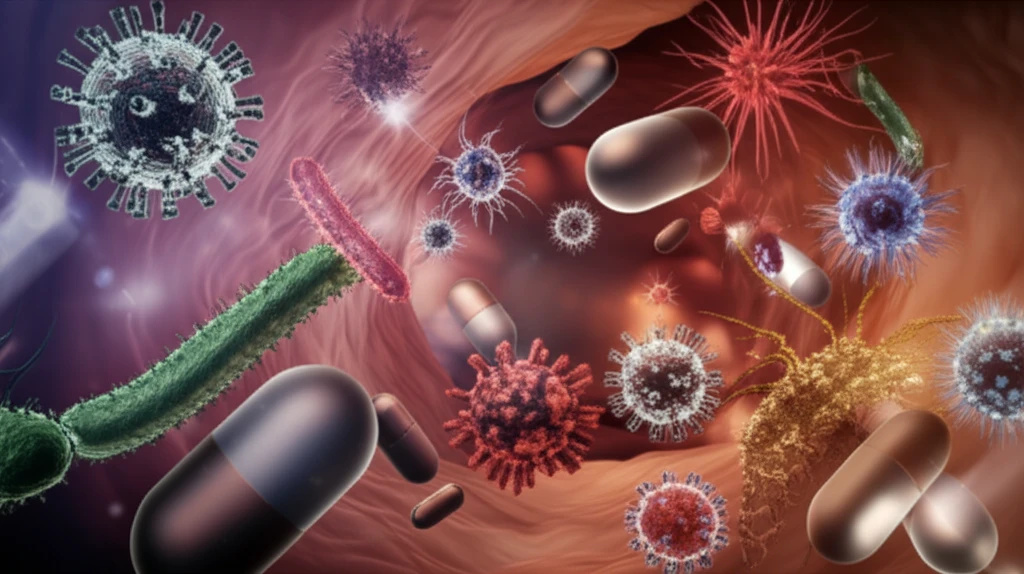
Illustration of viruses and bacteria in the gut and oral cavity, with antibiotic capsules.

Antibiotics and Your Gut: What the Latest Research Reveals About the Hidden World of Viruses

"New studies show how antibiotics can impact the intricate ecosystems of your mouth and gut, highlighting the unexpected role viruses play in your health."


Antibiotics have revolutionized medicine, saving countless lives by combating bacterial infections. Yet, their widespread use has also raised significant concerns about unintended consequences, including the disruption of the delicate balance of our internal ecosystems. Recent research sheds light on one such area: the impact of antibiotics on the complex communities of viruses residing in our bodies, specifically in the oral cavity and gut.

These viral communities, or viromes, are vast and diverse, playing a crucial role in our overall health. They interact with bacteria, influence immune responses, and can even impact our susceptibility to disease. This new research explores how antibiotics, while targeting bacteria, can indirectly affect these viral ecosystems, leading to unexpected outcomes. Understanding these interactions is essential for a more holistic approach to health and wellness.

This article dives into the findings of a groundbreaking study, analyzing the effects of long-term antibiotic therapy on the human oral and fecal viromes. We will explore the key discoveries, including the surprising link between antibiotic use and the rise of certain viruses, and discuss the implications for your health and the future of medicine. Prepare to uncover a hidden world, and to understand how the choices you make about antibiotics can have far-reaching effects.

The Gut and Oral Viromes: Understanding the Viral Ecosystems Within

Illustration of viruses and bacteria in the gut and oral cavity, with antibiotic capsules.

To understand the impact of antibiotics, it's crucial to first grasp the nature of these viral communities. The human body is home to trillions of viruses, many of which are bacteriophages – viruses that infect bacteria. These viruses are not simply passive bystanders; they actively shape the bacterial landscape, influencing bacterial diversity, evolution, and even the development of antibiotic resistance. The oral cavity and the gut, with their distinct environments, harbor unique viral populations.

The oral virome, found in saliva, is typically less diverse than the gut virome, which resides in the feces. This difference likely reflects the more variable environment of the gut, with its constant influx of food, diverse bacterial populations, and varying levels of acidity and oxygen. Researchers in the study found that the oral viromes are significantly more diverse than fecal viromes. In addition, the composition of these viral communities varies considerably between individuals, highlighting the personalized nature of our viromes. This intricate interplay between viruses, bacteria, and our own bodies forms the basis of a complex ecological system.

  • Bacteriophages: Viruses that specifically target and infect bacteria.
  • Diversity: The oral cavity has a lower viral diversity compared to the gut.
  • Individual Variation: Each person's virome is unique, reflecting their individual environment and history.
  • Ecosystem: The interplay of viruses, bacteria, and the human body, forming a complex ecological system.
The composition and function of these viral communities are not static. They are dynamic, constantly adapting to changes in the environment, including the presence of antibiotics. This study delves into how these changes occur and what the implications might be for your health.

Looking Ahead: The Future of Antibiotics and Viral Research

The research presented in this article provides a crucial insight into the complex relationship between antibiotics, viruses, and the human body. It underscores the need for a more nuanced understanding of antibiotic use and its broader impact on our health. Future studies should focus on detailed characterization of the virome, including the identification of specific viruses and their roles in health and disease. Further research is also needed to clarify the potential of targeted therapies that spare beneficial bacteria and minimize disruption to the viral communities in the gut. By focusing on these aspects, we can refine and develop more effective strategies that preserve gut and oral health while effectively combating infections. This will ultimately improve the quality of life for us all.

About this Article -

This article was crafted using a human-AI hybrid and collaborative approach. AI assisted our team with initial drafting, research insights, identifying key questions, and image generation. Our human editors guided topic selection, defined the angle, structured the content, ensured factual accuracy and relevance, refined the tone, and conducted thorough editing to deliver helpful, high-quality information.See our About page for more information.

This article is based on research published under:

DOI-LINK: 10.1371/journal.pone.0134941, Alternate LINK

Title: Effects Of Long Term Antibiotic Therapy On Human Oral And Fecal Viromes

Subject: Multidisciplinary

Journal: PLOS ONE

Publisher: Public Library of Science (PLoS)

Authors: Shira R. Abeles, Melissa Ly, Tasha M. Santiago-Rodriguez, David T. Pride

Published: 2015-08-26

Everything You Need To Know

1

How do antibiotics impact the viral ecosystems in our bodies, specifically the oral cavity and gut?

Antibiotics, while designed to combat bacterial infections, can inadvertently disrupt the delicate balance of viral communities, known as viromes, residing in the oral cavity and gut. These viromes, including bacteriophages, play a crucial role in regulating bacterial populations, influencing immune responses, and impacting susceptibility to disease. Antibiotic use can alter the composition and diversity of these viromes, potentially leading to unexpected health outcomes. This impact highlights the complex interplay between antibiotics, bacteria, viruses, and the human body, emphasizing the need for a holistic understanding of health and wellness.

2

What are 'bacteriophages,' and what role do they play in the context of our gut and oral health?

Bacteriophages are viruses that specifically target and infect bacteria. They play a significant role in shaping the bacterial landscape within the gut and oral cavity. By infecting and lysing bacteria, bacteriophages influence bacterial diversity, evolution, and even the development of antibiotic resistance. They are not passive entities but active participants in the complex ecological system of the human body. The oral cavity and the gut viromes both contain bacteriophages.

3

How does the diversity of the oral virome compare to that of the gut virome, and what factors contribute to these differences?

The oral virome, found in saliva, is generally less diverse than the gut virome, which resides in the feces. This difference in diversity likely reflects the distinct environments of the oral cavity and the gut. The gut experiences a more variable environment, characterized by a constant influx of food, diverse bacterial populations, and varying levels of acidity and oxygen. In contrast, the oral cavity has a more stable environment. These environmental factors contribute to the differing compositions and diversities of the oral and gut viromes. However, according to research the oral viromes are more diverse.

4

What implications does the research on antibiotics and viromes have for the future of medicine and antibiotic use?

The research underscores the need for a more nuanced understanding of antibiotic use and its broader impact on human health. The study highlights the intricate relationship between antibiotics, viruses, and the human body. Future research should focus on detailed characterization of the virome, including identification of specific viruses and their roles in health and disease. Additional investigation is needed to clarify the potential of targeted therapies that spare beneficial bacteria and minimize disruption to the viral communities in the gut. This will improve the quality of life for all.

5

To what extent does the composition of viral communities, or viromes, vary between individuals, and why is this important?

The composition of viral communities varies considerably between individuals. Each person's virome is unique, reflecting their individual environment and history. Factors such as diet, lifestyle, genetics, and exposure to antibiotics all contribute to the personalized nature of our viromes. This individual variation is important because it highlights the need for personalized approaches to healthcare, considering the unique microbial and viral landscape of each individual. Understanding these differences can lead to more targeted and effective therapies that promote overall health and well-being.

Newsletter Subscribe

Subscribe to get the latest articles and insights directly in your inbox.