
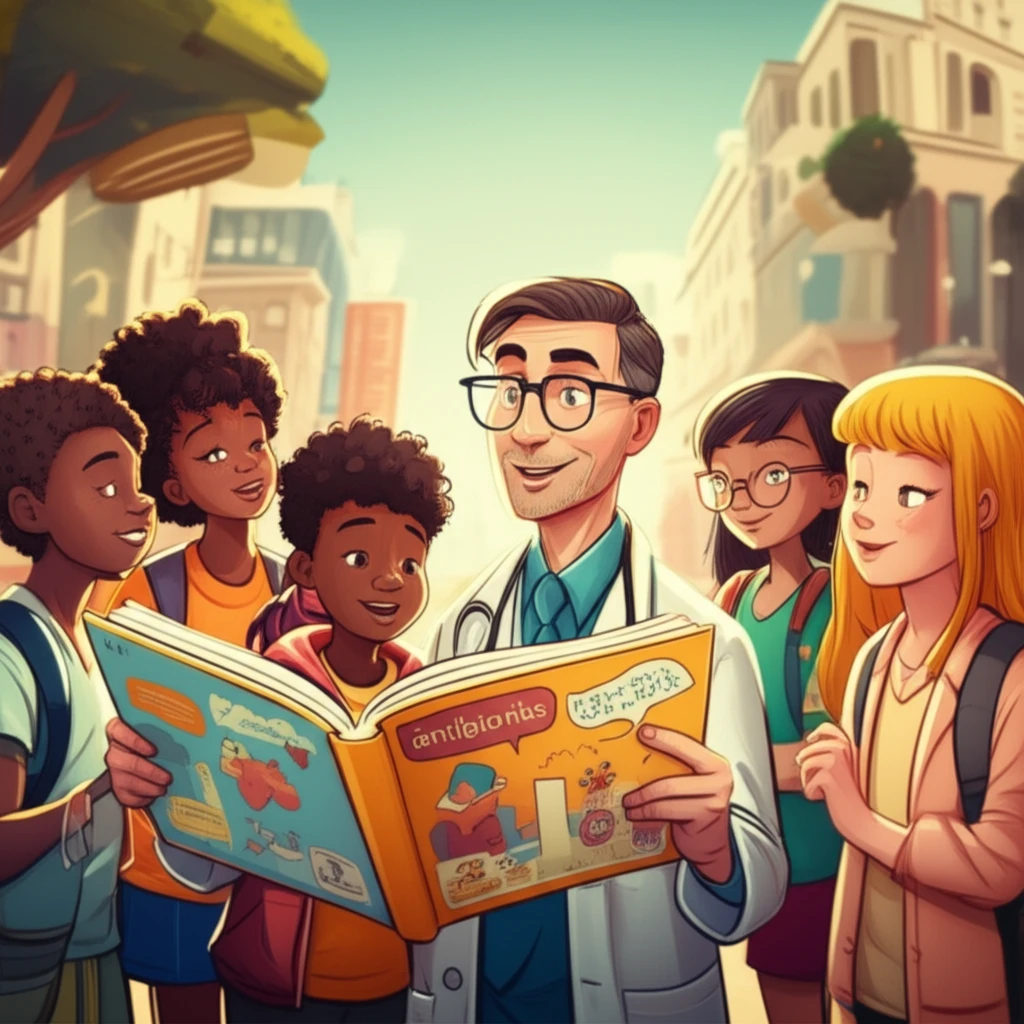
Children learning about antibiotics through a comic book.

Antibiotic Education for Kids: A Creative Comic Book Approach

"How a Brazilian study used comic strips to teach elementary school children about responsible antibiotic use and combat antibiotic resistance."


The World Health Organization (WHO) has long emphasized the critical need for the rational use of medications. Irrational or improper medicine consumption leads to wasted resources, health risks, and antimicrobial resistance. Globally, over 50% of all medicines are inappropriately prescribed, dispensed, or sold, while a significant portion of the world's population lacks access to essential medicines.

In Brazil, irrational medicine use is significantly influenced by self-medication and misleading advertising. These practices can lead to poisoning and even death. Educating the public, especially children, about the proper use of medications is vital to changing behaviors and improving health outcomes. Health education involves learning about different aspects of diseases and integrates health promotion by considering the knowledge of a population and creating connections between their way of thinking and acting daily, not only in disease situations.

Recognizing the potential of educational interventions, Brazilian researchers developed a health education tool focused on the rational use of antibiotics. The goal was to create a comic strip designed to teach elementary school children about the importance of using antibiotics responsibly. This project offers a unique model for community-based health education and provides insights into how to engage young learners on critical health issues.

Why Teach Kids About Antibiotics? Understanding the Urgency

Children learning about antibiotics through a comic book.

Antibiotic resistance is a growing global health crisis. Overuse and misuse of antibiotics in humans and animals are major contributors. When bacteria become resistant to antibiotics, infections become harder to treat, leading to longer hospital stays, higher medical costs, and increased mortality. Educating children about responsible antibiotic use is crucial for several reasons:

Firstly, today’s children are the future consumers of healthcare and medications. Instilling good habits early can lead to more responsible decision-making as adults. Secondly, children often influence their families' health behaviors. By educating children, we can indirectly educate parents and other family members. Finally, children possess critical and reflective abilities, making them powerful agents of change within their families and communities.

  • Future Decision-Makers: Today’s children will be responsible for their own healthcare choices in the future.
  • Family Influence: Educated children can positively influence their parents and family members.
  • Critical Thinking: Children can understand complex health issues and become advocates for responsible antibiotic use.
Given these points, this study aimed to recount the experiences encountered while developing a health education instrument about the rational use of antibiotics with elementary school students.

Empowering Future Generations Through Health Education

This Brazilian study showcases a powerful approach to health education by using creative tools to engage young learners. By empowering children with knowledge about responsible antibiotic use, we can foster a culture of health literacy and contribute to combating the global threat of antibiotic resistance. This model encourages greater cooperation between health professionals and academics to promote health education in schools on a variety of topics. By teaching about their needs, all research will achieve better and faster results to apply to our lives.

About this Article -

This article was crafted using a human-AI hybrid and collaborative approach. AI assisted our team with initial drafting, research insights, identifying key questions, and image generation. Our human editors guided topic selection, defined the angle, structured the content, ensured factual accuracy and relevance, refined the tone, and conducted thorough editing to deliver helpful, high-quality information.See our About page for more information.

This article is based on research published under:

DOI-LINK: 10.1590/s1413-81232012000500026, Alternate LINK

Title: Uso Racional De Antibióticos: Uma Experiência Para Educação Em Saúde Com Escolares

Subject: Public Health, Environmental and Occupational Health

Journal: Ciência & Saúde Coletiva

Publisher: FapUNIFESP (SciELO)

Authors: Bruna Werner Dandolini, Lilian De Bem Batista, Lúcia Helena Fernandes De Souza, Dayani Galato, Anna Paula Piovezan

Published: 2012-05-01

Everything You Need To Know

1

What was the main goal of this project?

The main goal of this initiative was to develop a comic strip to educate elementary school children about the responsible usage of antibiotics. This method aimed to teach children the importance of rational medicine use. The implications are significant because the misuse of antibiotics contributes to the rise of antibiotic resistance, a major global health concern.

2

Why is it important to educate children about antibiotics?

This method is crucial because children represent future consumers of healthcare and medications. Early education can establish good habits, leading to more responsible decision-making in adulthood. Moreover, children often influence their families' health behaviors, acting as agents of change within their communities. By teaching children, you indirectly educate their parents and other family members, promoting a broader understanding of health issues.

3

What is antibiotic resistance and why is it a problem?

Antibiotic resistance arises from the overuse and misuse of antibiotics in both humans and animals. When bacteria become resistant, infections become harder to treat, leading to prolonged hospital stays, increased medical costs, and higher mortality rates. This study from Brazil focuses on health education regarding the rational use of antibiotics to combat this growing global health crisis.

4

What are the specific problems related to medicine use in Brazil?

In Brazil, self-medication and misleading advertising significantly influence irrational medicine use, which can lead to poisoning and even death. This is why educating the public, especially children, on the proper use of medications is vital to change behaviors and improve health outcomes. This project emphasizes the importance of health education in schools and encourages collaboration between health professionals and academics to promote health literacy.

5

What is the role of health education in addressing these issues?

Health education involves learning about diseases and integrates health promotion by considering the knowledge of a population and creating connections between their way of thinking and acting daily, not only in disease situations. This approach recognizes the potential of educational interventions and aims to engage young learners on critical health issues through creative tools. The goal is to create a culture of health literacy and contribute to combating the global threat of antibiotic resistance.

Newsletter Subscribe

Subscribe to get the latest articles and insights directly in your inbox.